Your body is designed to move, work, and recover. But modern life takes a toll. Stress compounds, sleep suffers, and the daily grind leaves you depleted. LED light therapy offers a science-backed way to help your body restore itself from the inside out.
What Is LED Light Therapy?
LED light therapy, scientifically known as photobiomodulation (PBM), is a non-invasive treatment that uses specific wavelengths of red and near-infrared light to stimulate your cells without heat or damage. Unlike UV light from the sun or tanning beds, these wavelengths work beneath the surface to support your body's natural healing and repair processes.
Think of it as charging your cellular batteries. The light targets specific molecules in your cells (particularly in the mitochondria, your cells' energy centers) to boost function and support many natural processes, from skin circulation to mood regulation.
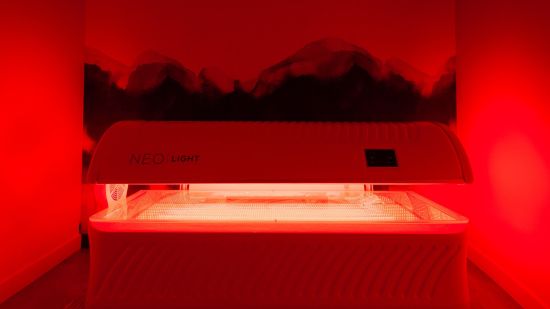
Pause Las Vegas offers LED Light Therapy in the NEO Light bed, our choice clinical-grade LED light bed, which delivers multiple wavelengths — including red light (633 nm), near-infrared (810 nm, 850 nm, and 940 nm), green (532 nm), and blue (415 nm) — all calibrated to penetrate at different depths and support various biological responses. These wavelengths are combined in four preset modes that can be selected at the start of each session. These modes target recovery, skin health, calmness, and detoxification.
The Benefits: What Science Shows
Skin Health and Anti-Aging
LED therapy enhances collagen production and accelerates tissue repair, making it effective for skin rejuvenation and wound healing. In a 2024 study, red LED treatment protected skin from UV radiation damage, improved collagen and elastic fiber density, and strengthened the skin barrier by activating antioxidant pathways.
Another recent study found that LED therapy significantly enhanced skin cell viability and expedited healing by modulating inflammation and boosting antioxidant activity. The result: healthier, more resilient skin that repairs itself more effectively.
Mental Clarity and Mood Support
A 2024 systematic review analyzing 11 randomized trials with 407 patients found that PBM significantly reduced depressive symptoms, with a moderate effect size. The therapy appeared to work by improving mitochondrial function, modulating inflammatory markers,
and promoting neuroprotective changes even when light is applied to the body rather than directly to the head.
For systemic applications (light applied to the body), the best outcomes occurred with sessions of 5 minutes or less per area, at least 3 times per week, for more than 15 total sessions.
Metabolic Health
In a 2024 study, a single 15-minute exposure to 670-nanometer red light before a glucose tolerance test reduced participants’ overall blood sugar rise by 27.7% over two hours and lowered peak glucose spikes by 7.5%. Researchers concluded that PBM can blunt post-meal blood sugar spikes, likely by increasing mitochondrial ATP production and raising glucose demand in tissues.
Pain Relief and Recovery
An umbrella review synthesizing 204 randomized controlled trials found significant effects for pain relief in conditions like burning mouth syndrome, improved disability in knee osteoarthritis, and reduced fatigue in fibromyalgia. For wound healing specifically, LED therapy modulated inflammatory markers, reduced oxidative stress, increased antioxidant defenses, and accelerated the healing process while increasing collagen deposition.
How to Use LED Light Therapy (with NEO Light)
The NEO Light bed uses preset programs like RESTORE, PULSE, CALM, and CLEANSE that are customizable to your goals, whether that’s recovery, anti-aging, or stress relief. Sessions last around 10 minutes, shorter than many older systems thanks to the bed’s clinical-grade energy output across multiple wavelengths.
Research shows best results with 3 or more sessions per week for systemic benefits, with improvements becoming noticeable after 15+ total sessions.
Along with frequent use, consistency over time matters too . Like any wellness practice, regular use over weeks produces better outcomes than one-off sessions. The signaling that drives tissue repair and cellular optimization requires repeated exposure.
Clinical Grade LED vs. At-Home Devices
If you've used an LED mask at home, you're already familiar with the benefits of targeted facial treatment. If the proper intensity of light is delivered, at-home devices can benefit skin health between professional sessions, and many people find them valuable for consistent care.
That said, professional-grade LED beds can deliver higher power density and precise wavelength control, which research indicates affects therapeutic outcomes. The clinical-grade equipment, like Pause’s NEO Light Bed, can deliver optimal fluence (energy per area) across larger treatment zones, something difficult to achieve with handheld or small-panel at-home devices.
If you are seeking benefits beyond skin health, research shows that light applied across the body has a greater impact than one localized area. Think of it as the difference between spot-treating one muscle group versus a full-body recovery session. The key difference with full-body LED therapy lies in scope and intensity. While face masks typically deliver light to the face only, a full-body LED bed treats your entire surface area simultaneously, exposing not just your face, but your torso, arms, legs, and back to therapeutic wavelengths.
Safety and Considerations
LED light therapy uses non-ionizing light, not UV radiation or X-rays. It is considered a low-intensity, non-ablative treatment with a strong safety profile when properly dosed. Dermatologists describe low rates of serious adverse effects, with the most common being mild, temporary skin redness or dryness.
A systematic review on oncologic safety found no evidence that PBM at therapeutic wavelengths increases cancer risk or causes precancerous changes in healthy tissue.
While LED therapy is considered safe, there is still an optimal dose. Too little has no effect, the right amount is beneficial, and too much can diminish results. This is why professional protocols matter.
Standard precautions: If you have photosensitive conditions, take medications that increase light sensitivity, or have active cancer in the treatment area, consult your healthcare provider before starting LED therapy. Most clinical studies incorporate eye protection when light is directed near the face, even though adverse eye effects are rarely reported.
Experience Full-Body LED at Pause Las Vegas
Ready to move beyond surface-level wellness? Our full-body LED light bed delivers clinical-grade PBM in a private, elevated wellness studio designed for complete restoration. In just a 10 minute session, you can give your entire body the therapeutic light exposure shown to support skin health, mood, metabolic function, and recovery.
Book your session now at Pause Las Vegas and discover what LED light therapy can do for you.