Few waterways in America carry a story quite like the Potomac River. Long before rooftop cocktails, waterfront promenades and luxury hotels lined its shores, the Potomac served as a lifeline for commerce, politics and the shaping of a young nation. As America approaches its 250th anniversary, the river once traveled by presidents, visionaries and revolutionaries continues to define how people gather, celebrate and experience the nation’s capital.
For centuries, the Potomac has connected communities, fueled commerce and framed some of the nation’s most important moments. Today, that same river tells another story: one of reinvention. Along its shores, America’s history and modern luxury now exist side by side, creating a distinctly elevated journey through the Mid-Atlantic.
On one side of the story sit Washington’s enduring legacy properties, places where history lives not in museum cases but in grand ballrooms, marble corridors and stories whispered over generations.
The iconic InterContinental The Willard Washington, D.C., often called "the living room of America," has welcomed presidents, diplomats and world leaders for more than a century. Political deals, inaugural celebrations and defining conversations have unfolded beneath its chandeliers. Its halls remain part hotel, part living archive.
Nearby, The Hay-Adams continues to embody old-world Washington elegance. Overlooking the White House, the historic property delivers timeless luxury with one of the city’s most coveted views. The St. Regis Washington, D.C., another enduring landmark, brings nearly a century of glamour and refined hospitality to the capital.
Then there is The Watergate Hotel, whose dramatic curves and striking midcentury architecture make it one of Washington’s most recognizable addresses. Positioned along the Potomac, the hotel occupies a unique place in both design and political history. Long associated with one of the most talked-about moments in American history, the property has evolved far beyond the headlines that first made it famous. Today, following a thoughtful renovation, The Watergate blends sleek contemporary luxury with subtle nods to its storied past. Guests can take in rooftop views overlooking the Kennedy Center and Potomac, unwind in sophisticated surroundings and experience a property that remains one of Washington’s most recognizable and enduring destinations.
While Washington's iconic hotels tell the story of the nation's past, The Watermark Hotel in Tysons showcases the region's modern evolution. Since opening in 2021, the boutique property has become a destination in its own right, blending contemporary design with elevated hospitality just minutes from the capital. Guests can enjoy Japanese-inspired cuisine and handcrafted cocktails at Wren, unwind with skyline views, or head upstairs to Perch Putt, an expansive rooftop featuring miniature golf, lawn games and seasonal events. Together, the experiences offer a fresh perspective on luxury, proving that the spirit of the nation's 250th anniversary extends beyond historic landmarks and into the vibrant communities shaping its future.
Beyond Washington, another icon quietly continues its own remarkable chapter.
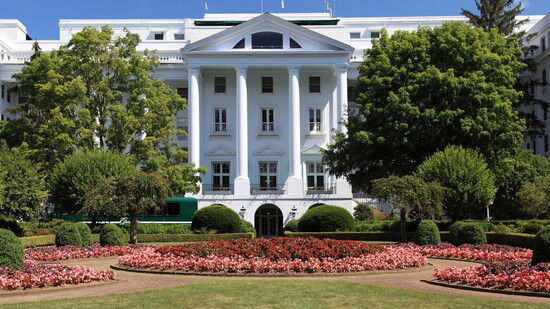
Nestled within the Allegheny Mountains of West Virginia, The Greenbrier has welcomed guests since 1778, dating back to the Revolutionary era and placing it on the doorstep of America's own 250-year celebration. Known as "America’s Resort," the legendary retreat began as a destination where visitors traveled to experience the area's natural mineral springs. Over nearly two and a half centuries, The Greenbrier has hosted 28 U.S. presidents, international dignitaries and generations of travelers seeking equal parts grandeur and escape.
History permeates every corner. During the Civil War, the property served as a hospital and military command center. Decades later, it housed a secret Cold War congressional bunker hidden beneath the resort. Yet despite its remarkable past, The Greenbrier never feels frozen in time. Dorothy Draper’s vibrant interiors, grand staircases and signature hospitality continue to make it feel both nostalgic and unexpectedly fresh.
These destinations represent a version of luxury rooted in permanence, places that have endured because they offer more than accommodations. They preserve experiences.
Still, the Potomac’s newest chapter may be equally compelling.
Along Washington’s Southwest waterfront, The Wharf has transformed into one of the capital’s most dynamic luxury destinations. Once an industrial waterfront, the area now blends marinas, music venues, restaurants and waterfront living into a modern gathering place that feels distinctly Washington.
Among its standout properties, InterContinental Washington D.C. – The Wharf offers a sophisticated interpretation of waterfront hospitality. Floor-to-ceiling views overlook the Potomac, while rooftop spaces frame sunsets that seem designed specifically for long evenings and unhurried cocktails.
Inside the hotel, Willowsong has quickly emerged as one of the waterfront’s most exciting culinary experiences.
Named for the willow trees woven throughout the nation’s capital, the restaurant celebrates the Mid-Atlantic’s agricultural abundance through a modern American menu led by Executive Chef Jeffrey Williams. Nearly 60% of ingredients are sourced within 150 miles of Washington, creating dishes that feel deeply connected to the surrounding region.
Williams returns to Washington after building an acclaimed career across Los Angeles and Miami, earning recognition through national television appearances and culinary accolades along the way.
One menu item has already developed a following of its own: Willowsong’s milk bread.
The restaurant sold nearly 3,000 orders during its opening year, transforming a seemingly simple dish into something guests now seek out intentionally. Warm, rich and perfectly indulgent, it reflects the larger philosophy behind Willowsong: familiar flavors elevated through craftsmanship and attention to detail.
Inspired by a favorite milk bread from Little Tokyo in Los Angeles, Williams created his own pull-apart version rooted in a traditional milk bread recipe. The dough is intentionally slightly over-proofed, then steamed before baking, allowing each order to be prepared fresh and creating its signature texture. Served with brown butter whipped with miso and yuzu and finished with salmon roe, the dish balances sweet and savory flavors in a way that feels both elevated and comforting.
The pairing feels fitting. Along the Potomac, the story has always been about gathering.
Centuries ago, that meant trade routes and diplomacy. Today, it may look like rooftop cocktails overlooking the river, dinner reservations at the waterfront or weekends spent wandering between historic landmarks and luxury hotels.
As America approaches its 250th anniversary, the Potomac remains what it has always been: a place where stories converge.
Only now, historic ballroom chandeliers share the spotlight with rooftop sunsets.
And history comes with a waterfront view.
“Historic ballroom chandeliers and rooftop sunset cocktails now tell the same Potomac story.”
Kirsten Nicholson
Luxury Icons
InterContinental The Willard Washington, D.C.
1401 Pennsylvania Ave. NW, Washington, D.C.
washington.intercontinental.com
The Hay-Adams
800 16th St. NW, Washington, D.C.
hayadams.com
The St. Regis Washington, D.C.
923 16th and K St. NW, Washington, D.C.
marriott.com
The Watergate Hotel
2650 Virginia Ave. NW, Washington, D.C.
thewatergatehotel.com
The Watermark Hotel
1825 Capital One Drive South, Tysons, VA
thewatermarkhotel.com
The Greenbrier
101 Main St. W, White Sulphur Springs, West Virginia
greenbrier.com
InterContinental Washington D.C. - The Wharf
801 Wharf St. SW, Washington, D.C.
dcwharf.intercontinental.com
Willowsong
Located inside InterContinental Washington D.C. - The Wharf
801 Wharf St. SW, Washington, D.C.
willowsongdc.com
Must-Try Dish: Milk Bread
Willowsong’s signature milk bread became an instant guest favorite, with nearly 3,000 orders sold during the restaurant’s opening year. Warm, buttery and perfectly shareable, the dish reflects the restaurant’s elevated yet approachable Mid-Atlantic dining philosophy.