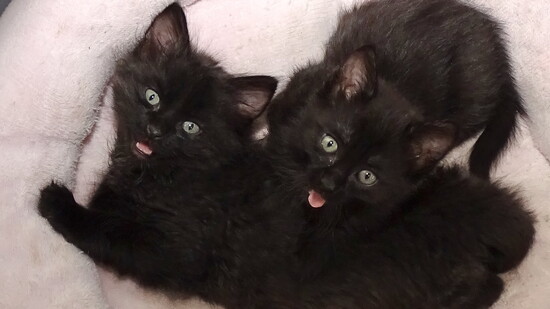
Dan Greenberg, the writer, once said,” There is no way of talking about cats that enables one to come off as a sane person.” At the risk of proving Mr. Greenberg right, for our Kids and Pets issue, I would like to share my insights from a life lived with cats.
I didn’t start off as a cat person. My family always had dogs when I was a kid. Once I started dating, however, every woman that I’ve ever had a relationship with had cats, so I got used to a feline presence in my life. Moreover, I’ve lived in the mountains in Western Maryland and in rural areas of Mexico, so I always had plenty of room when someone was looking to pawn off a litter of kittens. At first, I just took them in out of compassion and to keep them from an unpredictable future at a shelter.
After a time, though, I began to appreciate their complicated and enigmatic nature. Jorge Luis Borges, the Argentine writer and poet, wrote of their mysterious demeanor, “You belong to another time. You are lord of a place bounded like a dream.”
Many writers have been enthralled by cats, and many of the editorials that I’ve written have been produced with a cat sleeping on my lap. Writers are fond of solitude, independence, and aloofness, and cats share those characteristics. Aldous Huxley, Alexandre Dumas, Alice Walker, Allen Ginsberg, Charles Dickens, Cleveland Amory, Edgar Allan Poe, Stephen King, Mark Twain, and many, many other writers were cat people. Mark Twain wrote, “If man could be crossed with the cat, it would improve the man, but it would deteriorate the cat.” Ernest Hemingway was particularly known for his love of cats, writing, “A cat has absolute emotional honesty: human beings, for one reason or another, may hide their feelings, but a cat does not.” Hemingway brought polydactyl (six-toed) cats from Cuba to Key West, and there are still about 60 six-toed descendants at the Hemingway Home and Museum there.
There was a chapter in my life where I spent a lot of time working in Middle Eastern countries: Morocco, Turkey, the UAE, and Oman. In Islamic societies, cats are highly respected and beloved. They are admired for their cleanliness, loyalty, and companionship. The Prophet Muhammad (PBUH) favored cats and said that mistreating or even just not taking care of a cat was a sin that led to eternal consequences. Cats stroll through mosques and homes with impunity. If you sit at an outdoor restaurant, you are likely to have a cat jump on your lap. Hundreds of cats live at the fish market in Istanbul, where scraps are provided by seafood vendors. A cat would definitely not hesitate to live a life of privilege when it is offered. Cats there strut around with an awareness of their status. They are also admired for their utility in eliminating vermin and other interlopers coming into the home from the desert. I had a scorpion problem at my house in Mexico, but it ended quickly when I adopted two cats. Big hairy tropical spiders vanished, too.
I’ve had more than a hundred cats over the decades, so I’ll try to provide some anecdotal insights in case you’re thinking of bringing one into your home and life.
In Albuquerque, and particularly in my neighborhood of Nob Hill, there are a lot of feral and abandoned cats. Apparently, people move and leave their cats to fend for themselves, and they show up cold, hungry, and scared at my door. Cats have remarkable intuition and can spot a food source and a crazy cat guy willing to take them in.
When I first moved into the neighborhood, there was a colony of feral cats, mostly with long, thick fur. They were, I believe, primarily of Northern European origin and were able to withstand nights outside with 20-degree winter temperatures. With the assistance of Street Cat Hub, an Albuquerque Trap-Neuter-Return service, I was able to reduce the number of kittens that kept being born in my garage. The cats are returned to their original communities after neutering, and many are “neighborhood cats” that people feed regularly. This is a good solution if you have stray cats frequently having litters of kittens in your neighborhood. It is a tough life for a kitten outdoors.
Our domestic canine pets are descended from the wolves and wild dogs that decided life looked a lot better with a warm fire and people. Recent studies have shown that modern domestic canines now have this human-bond embedded into their DNA, whereas their feral canine cousins do not. Cats, however, want it both ways. They want the warm fire but still want a free-roaming life. I have cats that are gone for days or even weeks.
I have raised four abandoned kittens with bottle-feeding. If you take this on, they will think of you as their mother and cling to you for the rest of their life. Unfortunately, they like to claw their mothers for comfort. Once, a doctor in ABQ asked me if I installed barbed wire fence for a living after she looked at my hands.
Think about adopting an older cat. One of the long-haired feral cats in the neighborhood decided to retire from the alley cat life and suddenly approached me to be petted, after being elusive and wary for years. I took him in, and he became one of the best cats that I ever had. The veterinarian said she thought he was about ten years old at the time, and he lived another seven years in comfort with a warm home and regular food and water. He was an affectionate “lap cat” and made his appreciation for a much softer life apparent every day.
You must decide whether you’re going to let your cats outside or keep them in 100% of the time. There are many perils for a cat outdoors, including predators here in New Mexico. Coyotes, mountain lions, and bobcats come into the city and surrounding areas at night. Even encounters with raccoons can be dangerous.
If you adopt a cat that has been going outside before you came along, it will be difficult to get them to change their lifestyle. They will always try to run out the door. Keeping them inside all of the time is easier if you adopt them as a kitten. If they do go outside, be aware that the bird population around your house will diminish, and they’ll occasionally bring you avian “gifts.” They may be sweet when they snuggle up with you, but never forget that they are determined and aggressive hunters.
Cats are not for everyone, but when you’re having a coffee in the morning, and your cat jumps on your lap and starts purring, it’s one of the most relaxing things you’ll experience all day. Scientific research indicates that a cat's purr is highly beneficial to human health, reducing stress and anxiety and lowering blood pressure.
The local shelters are full of all manner of pets. Adopt and give them their “forever home.”
A cat has absolute emotional honesty: human beings, for one reason or another, may hide their feelings, but a cat does not.
-Ernest Hemingway
When a person interacts with a purring cat, their body releases serotonin, a neurotransmitter associated with mood regulation. This physiological response can help lower cortisol levels, the primary hormone associated with stress. Studies have shown that cat owners are less likely to suffer from heart disease compared to those without cats. The soothing effects of purring help reduce blood pressure, which can lower the risk of heart attacks and strokes. The calming presence of a cat, combined with the rhythmic vibrations of its purr, contributes to a healthier cardiovascular system.