Hockey entered my life quietly, without a grand plan. I became a hockey mom the way many Arizona families do, partly by accident, partly by curiosity, and eventually by total commitment. In my case, my Manitoba-born and raised husband turned one “let’s just have him try it” moment into everything that followed. It began with a learn-to-skate session in Gilbert with Holly Harrington, then snowballed into early mornings, long drives, and friendships that became lifelong and feel like family.
That’s the thing about hockey in Arizona. It asks a lot. Ice time is precious. Travel is long. Costs are real. And yet families stay, because here hockey becomes more than a sport. It becomes belonging. The rink where your child is known by name. The lobby where parents swap gear and encouragement. The stands where you celebrate a first goal or a first big save.
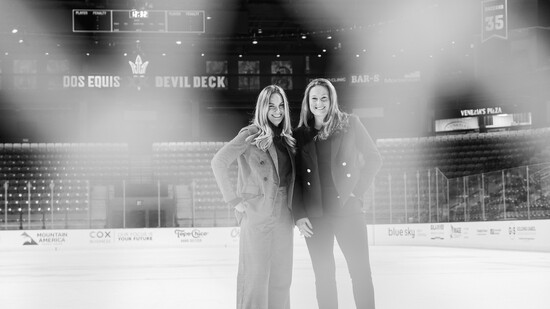
That sense of belonging is exactly what felt threatened when the Arizona Coyotes left in 2024. But it’s also what’s being fiercely protected and rebuilt by two women who understand the hockey heartbeat of this state: Andrea Doan and Lyndsey Fry. Both mothers. Both leaders. Both deeply rooted in Arizona hockey. Both determined to make sure the next generation doesn’t lose what this game has given them and so many other families.
The Heart of Local Hockey
Arizona’s hockey story has never been powered solely by the NHL. It has always been powered by locals, by families who choose a sport that isn’t always easy here, and by a community that keeps showing up.
When the Coyotes arrived in 1996, they sparked a surge in youth participation that changed what was possible in the Valley. Since then, several notable NHL players have grown up or learned to play in Arizona, and many former professionals have chosen to make the Valley home, raising families, coaching youth teams, and strengthening the state’s hockey ecosystem.
What families feel now, though, is how much the absence of a professional team changes that ecosystem. Visibility matters. Opportunity matters. Inspiration matters. It becomes harder to recruit new families when kids don’t see the game on the biggest stage in their own backyard. It becomes harder for young players to imagine a future that stays local when the highest level of the sport isn’t here.
That reality raised the stakes, and it also prompted action.
Two Women, One Mission
In the wake of the Coyotes’ departure, a clear question emerged: What does it take to bring the NHL back to Arizona, and who is willing to do the work?
Andrea Doan and Lyndsey Fry stepped forward as advocates shaped by lived experience.
Andrea was named chair of the Advisory Panel on Pro Hockey in Arizona, a group formed to explore viable paths to returning an NHL franchise to the state. The panel brings together business leaders, hockey experts, and local officials, including former Mesa Mayor John Giles, ensuring the East Valley has a seat at the table.
Lyndsey Fry also serves on the advisory panel, while continuing to mobilize the grassroots hockey community and keep youth development at the center of the conversation. Together, they represent two sides of the same mission: one working strategically at the league and leadership level, the other building momentum on the ice, and within families.
Andrea protects the foundation. Lyndsey builds upward. And both believe the future of hockey in Arizona must be community-driven to succeed.
Andrea Doan: The Quiet Architect
Andrea Doan has lived every layer of hockey life. She is the wife of longtime NHL captain Shane Doan and a mother of four, including a son who captained Arizona State University’s Division I hockey team before turning professional in 2023.
For decades, Arizona wasn’t just where the Doan’s lived. It was home. Andrea describes how their life was built around the rink and how the arena became a second home for their children and their community.
“Home is always about relationships. Your friends, your family, your community. Hockey friendships weren’t just work friendships. They became personal friendships.”
She remembers when the Coyotes moved to Glendale and her children were still small.
“My kids grew up going there. They ran through the building like it was their second home. We had birthday and Christmas parties there.”
Behind those memories are people in our community whose work never showed up on stat sheets. Andrea points to longtime Coyotes equipment manager Stan Wilson and his wife, Shelly, who came to Arizona from Winnipeg when the Coyotes arrived and helped make the desert feel like home. Stan worked alongside Shane throughout his NHL career, while Shelly’s support extended beyond the rink and into the rhythms of the Doans’ family life. Today, their grandchildren are part of the same youth hockey community they helped build — one of them now sharing the ice with my own son.
Those memories shape how Andrea leads today. She understands what professional sports do when they are woven into the fabric of a community.
“The bigger picture of what sports do for a community is what we’re ultimately interested in.”
Andrea speaks candidly about what must be different this time.
“When everyone’s thinking that this team isn’t going to stay here anyway, it’s hard to put your heart and soul into the home team.”
And she’s clear about what stability could restore.
“Bringing a team back with stable ownership, without the constant fear that the team is leaving, would change everything.”
Her leadership is steady and relational, shaped by years of navigating personal health challenges and a belief that the most meaningful leadership comes from walking alongside others with empathy.
Lyndsey Fry: Building the Next Generation
Lyndsey Fry’s résumé is undeniable. Olympic silver medalist. Harvard graduate. Trailblazer for women’s hockey. But in Arizona, her impact is measured less by accolades and more by what she is building now.
A Mesa native and mother to a young daughter, Lyndsey understands what this moment means not just for the sport, but for families like her own.
“I directly benefited from the hockey boom when the Coyotes came here in 1996. I want my daughter to have similar opportunities.”
Becoming a parent sharpened that sense of urgency.
“It was the first time it really hit me that my daughter won’t ever get to go to an NHL game in Arizona as a baby. That’s extra motivation to bring a team back.”
Lyndsey responded with action. She coaches, mentors, and advocates through the Arizona Kachinas, a girls hockey program based in Mesa that ensures every player can compete at the right age and skill level while developing a lifelong love of the game.
“People love that it’s unexpected, living in the desert and playing hockey. We all bond over that.”
She is also candid about what Arizona hockey families carry.
“Because we’re in the desert, there are logistical challenges like ice costs and travel. Families understand the commitment and sacrifice it takes, and that’s something people are very proud of.”
When the Coyotes left, that pride did not disappear. It focused.
“The support for the Foundation and NHL to Arizona has been incredible. It’s given fans a place to come together and share hope.”
That foundation carries the name of Matt Shott, an unsung hero Lyndsey wishes more people knew about, whose decade of work helped grow hockey in Arizona in ways that are still felt every day. During his ten years with the Coyotes, Matt helped open hockey’s doors to nearly everyone, supporting everything from youth and adult learn-to-play to sled, street, and roller hockey. His commitment helped the Arizona Kachinas earn Tier One status, but his impact reached far beyond any designation.
Matt passed away in 2021 at the age of thirty-four. Today, his name and jersey number hang in rinks across Arizona, a reflection of how the game is built—by people who give more than they take. Lyndsey says the foundation does not simply honor his memory. It lives it.
“Everything good I’ve ever had in my life has come from this game. It’s my community, my livelihood, my passion.”
What Comes Next and How We All Fit In
While the NHL chapter in Arizona is on pause, the sport itself is very much alive. Its future is taking shape in local rinks, weekend carpools, and early-morning practices. It lives in kids who lace up despite the odds, and in families who continue to invest their time, energy, and heart into the game.
This effort doesn’t belong to a league alone. It belongs to the community.
Supporting Arizona hockey doesn’t require a background in the sport. It begins with awareness and belief. Staying informed about the effort to bring the NHL back, talking about it with friends and neighbors, and keeping the conversation alive all help build momentum.
That support also shows up locally. Youth, and high school hockey thrive when people are in the stands, when families feel seen, and when young players know their efforts matter. Encouraging learn-to-play programs and inclusive access welcomes new families into the game, while normalizing girls hockey by attending games and treating it as part of everyday sports culture reinforces opportunity and belonging.
Most importantly, it means being vocal about the value hockey brings to Arizona. Hockey families, volunteers, and young athletes are part of our state’s story, and they are worth continued investment.
Andrea Doan and Lyndsey Fry aren’t focused on what was lost. They’re focused on what can still be built, alongside the families who shaped this hockey culture and the kids who will carry it next. And if this movement succeeds, it won’t be because a league gave Arizona another chance. It will be because our community never stopped showing up, building local, and keeping the game alive.
To stay connected, follow @nhltoarizona on Instagram or learn more at azhockeylegacy.org.
"The bigger picture of what sports do for a community is what we’re interested in."
“Everything good I’ve ever had in my life has come from this game. It’s my community, my livelihood, my passion.”
— Lyndsey Fry