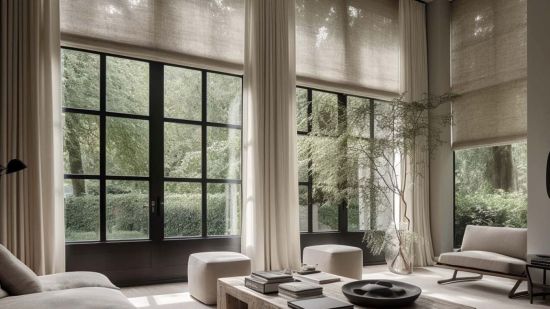
Why Motorized Window Treatments Are Becoming the New Standard
Smart shades used to feel like a novelty — a flashy add-on for tech-forward homeowners. That's changing fast. Across the window treatment industry, automation is no longer the exception; it's quickly becoming the expectation. Here's what's driving that shift, and what it means if you're considering motorized shades, blinds, or drapery for your own home.
Design Comes First, Technology Comes Second
The biggest change isn't the tech itself — it's how it's being hidden. Manufacturers are working hard to make motors, brackets, and wiring disappear into the design rather than stand out as add-ons. Headrails are getting slimmer, cassettes are being wrapped in fabric to match the shade, and hardware is shrinking so it blends into a room instead of announcing itself.
The goal is simple: homeowners shouldn't have to choose between a beautifully designed room and a smart one. The best systems now do both — full function without sacrificing the clean, intentional look a well-designed space calls for.
Quiet Matters More Than You'd Think
Noise has become one of the most important — and most overlooked — factors in motorized shading. A shade that whirs or clunks every time it moves breaks the calm of a room, and homeowners have noticed. As a result, manufacturers have pushed hard to bring operating noise down dramatically, to the point where a motorized shade moving is barely perceptible.
This isn't just a comfort issue. Quieter operation has become a genuine selling point — a way for premium shading brands to stand apart in a market where more and more products offer some form of automation.
Wireless Options Are Opening Up New Possibilities
One of the biggest barriers to motorization used to be practical: retrofitting a home with the wiring and electrical work automated shades required. Battery-powered and cordless motors have changed that equation. Homes and rooms that once weren't realistic candidates for automation — because running power to a window was too costly or disruptive — are now much easier to accommodate.
This has real implications for renovations and retrofit projects especially, where opening up walls for wiring isn't always feasible. Rechargeable battery technology continues to improve too, which is easing long-standing concerns about reliability and how often batteries need attention.
Smart Home Integration Is Getting Simpler
Homeowners increasingly expect their shades to work seamlessly with the rest of their connected home — lighting, voice assistants, whole-home automation systems — without a complicated setup process. As connectivity standards continue to mature, the technical complexity of getting everything talking to each other is being pushed further into the background, leaving homeowners with an experience that just works.
The emphasis has shifted from "look at what this can do" to something closer to invisible reliability — automation that fades into daily life instead of demanding attention.
What This Means for Your Home
If you're weighing motorized shades, blinds, or drapery, the products available today are quieter, easier to install, and far more design-conscious than they were even a few years ago. Wire-free options especially have opened the door to rooms and homes that previously weren't practical candidates for automation.
Ready to explore what motorized options could look like in your own home? We'd love to help you find the right fit for your style and space.