Strength training might get a bad rap — if you picture complicated gym equipment, heavy weights, endless protein shakes, or hours spent in the gym to get results, you aren’t alone.
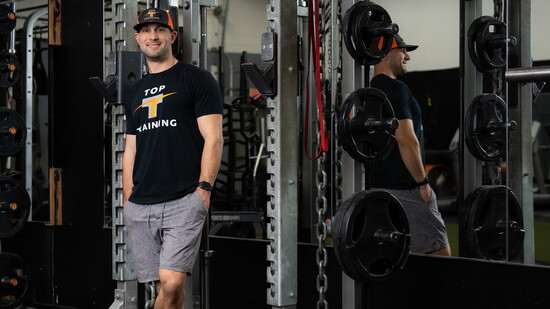
“Over the years, I’ve noticed a few common misconceptions and myths that clients will bring up when chatting with me for the first time. Far and away, the biggest one is lack of time and the time commitment required,” says Sam Topping, owner and founder of Top Training LLC.
“As long as you are consistent with your routine, have it structured properly, and train with a high level of effort, it really doesn't require hours upon hours in the gym every week. I believe in a ‘minimum effective dose' of strength training that will still provide all of the physical, mental, and health benefits, rather than a more time-intensive, ‘high volume’ routine that has you in the gym 4-5 days per week. A couple days per week of strength training for 30-45 minutes can provide tremendous results,” says Sam.
A second misconception is that strength training is inherently dangerous. “The risk of getting hurt during a set of a strength training exercise (especially under supervision) is very low if the movement is appropriate for the individual, they are using an appropriate load, and they use proper form.”
Strength Training Benefits
There is a wide array of benefits from strength training, and it is essential for aging adults, especially women. Strength training regularly can reduce the risk of insulin resistance and Type 2 Diabetes, lower blood pressure, prevent or slow down muscle loss with age, reduce the risk of Cardiovascular Disease, and improve mood.
“For women specifically, reducing the risk of osteoporosis is a big one. With hormonal changes during menopause, women are at a greater risk of losing bone mineral density, along with muscle tissue. Resistance training can help mitigate these age-related changes,” says Sam. “Strength training should be the foundation of, and a non-negotiable part of everyone’s health and fitness routine.”
How to Add in Strength Training
Finding a safe and effective way to add strength training doesn’t have to be complicated, and there are tons of resources to turn to. Sam encourages you to take these tips into consideration when starting a strength training routine.
- Use Proper Form. It is very important to learn and practice (with a light weight at first!) the proper technique for performing a movement to reduce injury. “Perfect the form and movement quality before increasing weight or going to a more advanced variation of a movement,” says Sam.
- Tailor your Exercise to your body. No two bodies are the same, and no two workout routines need to be either. The movements that work well for someone else might not work for you and your body structure. It’s important to select movements that you have the mobility to perform and do not cause pain. “What works well for one person may not work well for another. For example, I might choose a dumbbell bench press for a client with healthy shoulders and a push-up for someone else who has a lot of shoulder issues. Some of my taller clients may do better with more single-leg movements for the lower body instead of squats and deadlifts, where you use both legs at the same time,” explains Sam.
Good for the Brain
While the physical effects of strength training are apparent, it can also help improve cognitive function. “Another area of emerging strength training research has looked at Alzheimer’s patients, dementia, and Mild Cognitive Impairment (MCI). Strength training has been shown to have a very positive impact on people with Alzheimer’s and/or experiencing dementia and MCI,” says Sam.
In a recent research study published in Geroscience, resistance exercise helped to preserve the integrity of the brain’s white matter, which is essential for communication between brain cells. According to the Fischer Center for Alzheimer’s Research Foundation, adding strength training twice a week may protect the brain against dementia. While research on this is still new, the results for brain health are very promising.
Where Do I Start?
If you are serious about adding strength training to your routine, enlisting the help of a professional would be the best course of action, especially if you have injuries or limitations. “I would find a fitness professional who is knowledgeable on the human body to do an assessment with you and create a strength training routine that is customized for you,” recommends Sam. “If in-person training is not feasible, there are many good resources and programs online created by reputable coaches that can help with getting started in the gym.”
What is most important for optimal results is consistency and following an appropriate strength training routine that is based on your ability, age, injury history, and, of course, your goals.
Sam Topping is a Certified Strength and Conditioning Specialist and a Certified Personal Trainer. He works with clients at THE GYM MPLS in Golden Valley. You can reach him at samtoptraining@gmail.com, call 608-333-2181, or visit toptrainingllc.com for more information on how to get started with your fitness journey.
As long as you are consistent with your routine, have it structured properly, and train with a high level of effort, it really doesn't require hours upon hours in the gym every week.
Strength training has been shown to have a very positive impact on people with Alzheimer’s and/or experiencing dementia and MCI.