At its core, Valentine’s Day is about expressing care. Whether that’s saying thank you, checking in on a friend, or simply being kind, the holiday can serve as a reminder to appreciate the people in our lives.
So, when February 14 arrives, remember: Valentine’s Day isn’t just about romance. It’s about connection, appreciation, and finding meaningful ways, big or small, to share a little love.
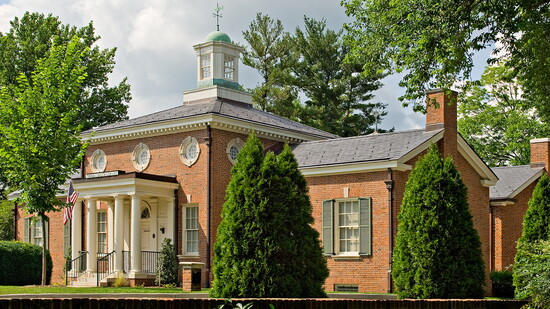
February is also important for Black History Month. Here in Leesburg, the Thomas Balch Library will be holding special exhibits and events.
2026 is the 100th anniversary of the founding of Black History Month. The library is planning to feature an exhibit in the library’s Mercer Room display cases in February and March. This exhibit is in collaboration with the Black History Committee of the Friends of the Thomas Balch Library, featuring the history of Black History Month in Loudoun County and items from the Thomas Balch Library’s archival collections. The Friends of the Thomas Balch Library also plan to debut their latest oral history film, which features local historian Jim Roberts, at a Black History Month program at the Douglass Community Center.
Leesburg history is full of forgotten heroes and leaders within the Black community whose actions impact everyone within the town and county.
Many local African Americans contributed to the Patriot cause during the American Revolution. An example is Daniel Coleman, a Free Black resident of Loudoun County who lived and worked in the Leesburg area. Coleman enlisted in the Continental Army in 1781 and served at the Siege of Yorktown. His later pension application was supported by Leesburg’s second Mayor, Samuel M. Edwards, affirming the presence and patriotism of Black Revolutionary War veterans in Leesburg.
Leesburg and its residents played key roles in important court cases in the effort to abolish slavery before the Civil War. Born free in Leesburg in 1814, Leonard Grimes became a successful businessperson in Washington, D.C. He was tried and convicted at the Loudoun County Courthouse in 1840 for aiding an enslaved family’s escape. After serving two years in prison, he moved to Massachusetts, where he became a minister and a key figure in the abolitionist movement.
Nelson Talbott Gant was tried at the Loudoun County Courthouse in Leesburg in 1847 for rescuing his wife, Anna Maria Hughes Gant, from slavery after her enslaver refused to allow him to purchase her freedom. The couple had been married at Leesburg’s Old Stone Methodist Church in 1843. Gant challenged the legal and moral foundations of slavery within Virginia’s judicial system, which resulted in his acquittal.
Following the Civil War, Leesburg’s Black residents contributed to the improvement and support of their community. As early as January 1866, they established a “Colored Man’s Aid Society” to assist infirm and impoverished Black community members.
A Leesburg barber, V. Cook Nickens, became the Town’s first elected Black official in 1873, serving as constable of the Leesburg Magisterial District for a year and representing Black civic participation during Reconstruction.
A Loudoun County based Black contractor whose firm built major structures in Leesburg, including Loudoun Hospital, William Hall helped secure funds to purchase land for Douglass High School. For a time, his firm, W.N. Hall and Sons, was the only Loudoun County construction firm licensed and bonded and able to handle large contracts. His firm also reconstructed George Washington’s Grist Mill near Mount Vernon in 1933.
Leesburg native and business owner Marie Moton Medley-Howard fought for equal education for African American children, advocating for improved school facilities and curriculum. She served as the first president of the Loudoun County NAACP, formed in 1940, making Leesburg a center of organized civil rights advocacy in Loudoun.
These are names of some people that worked to make our community a welcoming and successful place that all people could be proud to call home. African American history is American history, and I for one am so proud to acknowledge the contributions made by so many within the community.
This February, be proud of our local history and remember your friends and loved ones by being kind and making Valentine’s Day special to those you care about.
*I want to thank the Thomas Balch Library staff for helping with this article.