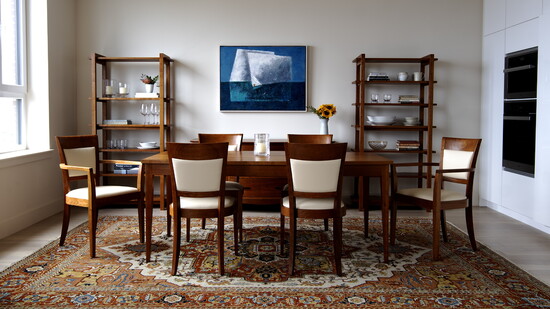
We live in a design world increasingly dominated by composites, and fast-turn furnishings, which makes solid wood feel a little like the grown-up in the room. It doesn’t shout, chase trends, or ask to be noticed, but it always holds its ground. For decades, Thos. Moser has built its philosophy around this quiet confidence, believing that solid wood furniture isn’t just about how a piece looks, but about how it lives: its integrity, its longevity, and the role it plays in the emotional rhythm of a home. Unlike engineered alternatives, solid wood carries the unmistakable feeling of nature itself. Each board is shaped by time, weather, and growth patterns that can’t be replicated or programmed. “Solid wood offers authenticity and permanence that composites cannot,” the Thos. Moser team explains. “Each board is uniquely shaped by nature, imbued with character, and enriched over time.” That individuality is what gives solid wood its staying power, even as design trends come and go.
In Maine, that mindset feels especially at home. Our state’s relationship with the forest runs deep, as does the tradition of making things meant to last. That heritage is woven into the soul of Thos. Moser, shaping not only what they make but how they approach design itself. Here, simplicity, restraint, and purpose take precedence over ornament and novelty. Pieces are built with the same steady discipline that has guided generations of Maine craftspeople, favoring utility and longevity over fleeting style. This regional sensibility shows up in a defining standard the company holds itself to: furniture should last at least as long as it took the tree to grow. Often, that means 80 to 100 years or longer. This philosophy reframes sustainability not as a buzzword, but as stewardship. Designing something meant to outlive us, the team notes, is an act of respect for the material, the craft, and the people who will live with it.
Ask homeowners what they want most from their spaces, and “warmth” almost always tops the list. Solid wood delivers that quality instinctively. Its natural variation in grain, tone, and texture creates a richness that synthetic materials struggle to imitate. Wood invites touch; it softens light rather than bouncing it back; it grounds a room without taking it over. And that warmth isn’t just visual—it’s emotional, too. There’s comfort in living with a material that feels honest and familiar, one that changes slowly and visibly over time. Small marks and subtle wear don’t detract from solid wood. Rather, they add to it, giving a piece personality and a sense of lived-in ease.
At Thos. Moser, wood grain isn’t treated as a background detail: it’s part of the conversation. Pieces are often conceived with the grain guiding the form, allowing natural patterns to shape structure and silhouette. In some cases, grain becomes the star of the show. The furnituremaker’s Harpswell Chair, for example, is designed so that its back crest highlights the bullseye pattern of the wood grain, ensuring that no two chairs are ever exactly alike. Deciding when grain should lead and when form or joinery should take the reins is a careful, ongoing dialogue between material and maker that the Thos. Moser team has mastered over the years. For homeowners accustomed to wood-look finishes, the difference becomes clear once you know what to look for. Solid wood reveals subtle shifts in color and pattern that move naturally across a surface, while engineered materials tend to look flatter, more repetitive, and less alive.
Longevity has become a compelling counterpoint to the world of fast furniture and disposable goods. More homeowners and designers are looking for pieces that outlast trends and even lifetimes. In that sense, solid wood furniture offers not just durability but meaning. Pieces age with grace, gather stories, and carry emotional weight beyond their function. However, designing for decades rather than design cycles requires discipline. Forms are pared back. Proportions are considered in relation to the human body, not the moment. Materials are chosen for their ability to endure and grow more beautiful over time, rather than for immediate impact or Instagram appeal.
This approach aligns neatly with growing interest in biophilic design, the idea that natural materials help foster calm, connection, and well-being at home. Thos. Moser hears this echoed again and again in customer feedback. Many describe their pieces as comforting objects that invite touch, create calm, and help a space feel grounded. Solid wood, they say, brings nature indoors in a way that feels instinctive and deeply reassuring. Beyond aesthetics, these pieces offer continuity. A solid wood table quietly records daily life: meals shared, work completed, conversations lingered over. Over time, it becomes a witness to family rhythms and personal milestones. “If these tables could talk,” the team notes, “they’d tell the story of the people who gathered around them.”
Not every home needs an entire suite of solid wood furniture. For those just beginning, the Thos. Moser team recommends starting with a single, hardworking piece like a hall table that anchors an entryway, a bench that invites gathering, or a rocker that brings rhythm and rest to everyday rituals. These pieces will make an immediate impact, introducing warmth and integrity without overwhelming a space. The team’s advice for Maine homeowners and renters alike is refreshingly simple: invest thoughtfully. Choose fewer pieces that balance function and feeling, that can endure daily use while still bringing joy years down the line. Even one well-made solid wood piece can elevate a home, providing proof that good design doesn’t need to shout to be heard.
We expect our furniture to last at least as long as it took the tree to grow. Designing for that kind of permanence is the truest form of sustainability.
A solid wood table quietly records daily life. It bears witness to meals, conversations, work, celebration, and wear—growing more meaningful with every passing year.