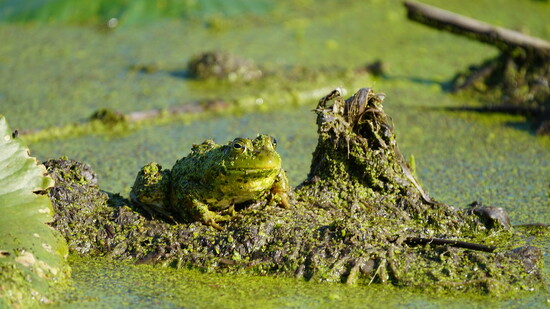
Wildlife, beautiful scenery, and manicured gardens abound in Potomac, Maryland. It's a quiet little town just outside Washington DC. Potomac is in a transition zone between the high-rise buildings of Bethesda and the Agricultural Reserve.
The Green Wedge
The "Green Wedge" between Bethesda's urban growth and the Ag Reserve is a key feature of Montgomery County's land-use planning. It was established by the Wedges and Corridors Plan of 1964 and reinforced by Thrive Montgomery 2050, preserving large swaths of parks, forests, and farmland as environmental buffers and recreational spaces. According to this plan, development is to be focused inward to urban centers like Bethesda and along major corridors like I-270 while preserving green wedges of open space and farmland, including the Ag Reserve.
Chesapeake & Ohio Canal National Historical Park
The C&O Canal Park preserves a 184.5-mile historic waterway and towpath from Washington, D.C. (Georgetown) to Cumberland, Maryland, offering extensive opportunities for hiking, biking, paddling, and exploring American transportation history, diverse nature, and Civil War sites, with amenities like lockhouse stays, visitor centers, and ranger programs. This linear park features over 1,000 historic structures, wildlife, and scenic beauty, with major access points in Maryland and D.C.
Milepost 0 is near the Georgetown Visitor Center in Washington DC. The Canal winds up past Cabin John Creek, Seven Locks, and Carderock, which is just past Milepost 10 in Maryland. Sites that follow include Marsden Tract, Anglers, Great Falls Park, Great Falls Tavern Visitor Center, and Swains Lock.
Living with Wildlife Near the C&O Canal
For residents like Dave Lambert, who lives near the 1860 Old Angler's Inn, the abundant wildlife is both charming and challenging. After deer repeatedly jumped his four-foot brick wall to feast on his vegetable garden, Dave relocated his plants to container boxes on his second-story deck, where only an occasional squirrel and small gray tree frogs, indigenous to Maryland with "sticky" toe pads, visit.
His wife Deborah encounters wildlife regularly on morning walks, spotting deer, foxes, and rabbits. Memorable moments include witnessing a newborn fawn wobbling in the street and a dramatic encounter with a Great Horned Owl that swooped down, circled her twice, and perched on a tree branch above. She turned toward it and saw its piercing yellow eyes looking straight at her. She pointed back at the owl and said, "I see you, too!"
Wildlife Photography Flourishes Along the C&O Canal
During the COVID-19 pandemic, Potomac residents Sam and Danielle Rosenthal discovered an unexpected opportunity along the C&O Canal. As life slowed and wildlife became more visible, the father-daughter duo took up photography, armed with mirrorless cameras and zoom lenses to document the abundant animal life along the canal's towpath.
Stretching for miles along the Potomac River, the canal’s wooded corridors, quiet towpath, and open clearings create ideal habitat and excellent opportunities for wildlife photographers. Morning mist and evening light enhance images, whether capturing a majestic buck or newborn owlets learning to fly. Cooperative subjects, like a fox lounging on a fallen tree, offer particularly memorable shots.
Each season offers unique photographic possibilities: spring and summer showcase lush greenery, with young eagles and songbirds; fall introduces rich colors; winter offers stark beauty, with bare trees and frost-covered ground against long shadows.
Though the pandemic has subsided, Sam and Danielle's passion for wildlife photography continues unabated. Years later, they remain dedicated to appreciating and documenting the rich natural world thriving along the canal. Visit FoggyglenPhotography.zenfoliosite.com
McKee-Beshers Wildlife Management Area
The McKee-Beshers Wildlife Management Area (WMA) on River Road, south of Poolesville, is managed by a division of the Maryland Department of Natural Resources (DNR). In total, 235 acres are managed by DNR's Wildlife and Heritage Service. McKee-Beshers WMA's 30 acres is the largest of Maryland's 20 WMA Dove Fields; It's the only WMA in Montgomery County.
DNR plants over 100 acres of sunflowers, primarily at McKee-Beshers, to provide food for mourning doves and other wildlife. Sunflowers and sunflower seeds are a favorite food source for a host of other songbirds, mammals, and pollinators. These large fields are planted in late April or early May and typically hit peak bloom in mid-July. This Wildlife Management Area is free for the public to visit, photograph, and enjoy.
Mourning Dove Hunting Season starts on September 1 and runs through January of the next year, with several designated time periods. Dove Management Areas are funded with Federal Aid in Wildlife Restoration Funds (Pittman-Robertson Act, 1937) and the sale of hunting licenses. For more information, visit their website at dnr.maryland.gov or call 410-356-9272.
The Backyard Bird Feeder: Connecting Potomac to Nature
Birding is a growing hobby nationwide, especially since the pandemic. The National Audubon Society said, "More than one in three U.S. adults enjoy birding, and the money they spend contributes billions of dollars to the economy." The U.S. Fish and Wildlife Service said 39% of Americans participate. An estimated 50-60 million Americans embrace backyard bird feeding as a way to connect with nature.
For nearly 40 years, Bradford Schmonsees has turned his childhood passion into a successful business. The Backyard Bird Feeder in Potomac Village serves the local Birding Community.
Schmonsees' journey began at age six with his mother's bird feeder and continued through his volunteer work at a Fish and Wildlife Service bird banding station. After starting with the Wild Bird Center franchise in 1985, he and his wife, Amy Dispanet, now own five stores across the DC metropolitan area. Bradford started working at the Wild Bird Center in 1988.
The store offers premium bird feeders, fresh seed, and modern technology, such as camera-equipped feeders that let families share bird-watching experiences via smartphone apps. "Bird feeding has always been about families sharing experiences and memories through nature," Schmonsees explains. "Through technology, it's happening in a new way."
The benefits extend beyond entertainment. Research shows that connections with nature improve mental health, reduce stress, and promote clarity. These benefits have been particularly valued since the pandemic, when their business flourished as people stayed home and sought outdoor connections.
An Eagle Scout who once led bird walks at Great Falls as a teenager, Schmonsees recently came full circle, guiding a Potomac senior group to that same eagle nest, which is still active after 40 years.
Bradford and Amy have made a thriving business of this trend. For more information, visit backyardbirdfeeder.com, their store at 10105 River Road in Potomac village, or call 301-229-2600.
Community Food Forest Collective Works to Restore Nature Through Urban Gardens
A food forest (also called a forest garden) is a diverse planting of edible plants designed to mimic natural forest ecosystems. Unlike traditional gardens that grow flat along the ground, food forests are three-dimensional, with plants growing up, down, and outward.
Think of it as creating a miniature forest ecosystem where nearly everything is edible, everything from fruit and nut trees to berries, herbs, and mushrooms, while working with nature instead of against it.
The Community Food Forest Collective (CFFC) partners with communities to design, install, and maintain food forests on public and private land. The organization educates participants about forest gardening, regenerative land stewardship, and sustainable food systems.
CFFC's mission focuses on creating a culture that integrates nature into society while producing food in ways that restore land and address environmental challenges. The collective brings communities together to build a network of food forests and shares knowledge about ecological food production and land stewardship.
At the Montgomery College Takoma Park/Silver Spring Campus, there is a food forest at the corner of Philadelphia and Chicago Avenues, and another smaller plot elsewhere on campus. Together, they total 30,000 square feet. The nearly three-quarter-acre food forest includes herbs, vegetables, wildflowers, berry bushes, grape vines, hops, and nut trees with over 100 different species. Takoma Park Elementary School also has a Food Forest.
For more information, visit their website foodforestcollective.org.
Potomac Village Garden Club: Cultivating Community and Wildlife
Since 1963, the Potomac Village Garden Club has beautified the community while supporting local wildlife. Vice President Trinka Coster proudly shares their signature event: an annual butterfly release at the Potomac Library, where children open triangular envelopes to free hundreds of "Painted Ladies" (Vanessa cardui) butterflies into the club's carefully cultivated native gardens.
"We couldn't start until the gardens matured enough to support the butterflies," Coster explains. The club maintains multiple garden areas at the library, including a sundial garden (established 1986), butterfly garden, and native plant areas developed in partnership with Glenstone (2021).
Their 36 members, many of whom are also master gardeners, emphasize sustainable practices: native plantings over manicured lawns, leaf litter for overwintering insects, and pollinator-friendly flowers. "Native plants provide the nutrients that naturally adapted insects and birds need," Coster notes. Or to put it another way, Rachel Carson said, "In nature nothing exists alone."
As a volunteer-run organization, they welcome community support to maintain these vital pollinator corridors that benefit butterflies, bees, and birds throughout Potomac.
The 501(c)(3) nonprofit funds operations through garden tours (next scheduled June 6, 2026), plant sales, and holiday arrangements. They also offer garden therapy sessions at local retirement communities and educational programs with Girl Scout troops.
For more information, visit their website potomacvillagegc.org or email pvgcmd@gmail.com.
We are very fortunate to have so much wildlife and natural beauty in and around Potomac!
Stretching for miles along the Potomac River, the canal’s wooded corridors, quiet towpath, and open clearings create ideal habitat and excellent opportunities for wildlife photographers.
A food forest (also called a forest garden) is a diverse planting of edible plants designed to mimic natural forest ecosystems.