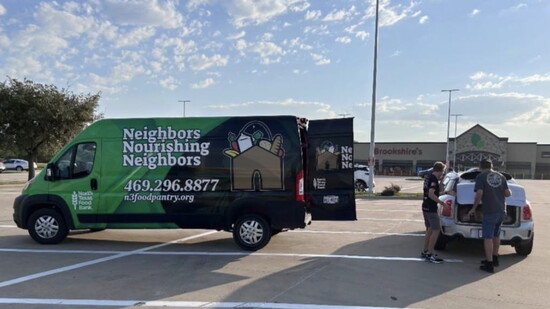
When a devastating fire destroyed the Neighbors Nourishing Neighbors (N3) warehouse in January 2025, the organization lost its inventory, technology and home base. What it didn’t lose was its community. Within days, local churches, the Town of Prosper, and other community partners rallied around the food pantry. Distribution resumed that Saturday, after just two missed days, with more than 200 families being served. Since then, Neighbors Nourishing Neighbors hasn’t missed a distribution day. That resilience is part of the organization’s DNA.
Neighbors Nourishing Neighbors began in the 1980s when a group of women at Prosper United Methodist Church recognized the needs of agricultural workers in the Prosper and Celina area. What started as a small, once-a-week closet eventually became a 12-by-12-foot shed, then a shared 1,000-square-foot space. In 2012, the organization officially incorporated as a 501(c)(3) nonprofit. Today, it operates from a 6,000-square-foot facility in Celina, serving a broad area stretching from Collin, Denton and Grayson Counties. With the capacity to serve 600 to 700 families each week, the pantry is open Tuesday, Thursday and Saturday.
Neighbors Nourishing Neighbors is a full-choice pantry, allowing families to shop for the foods that best fit their needs and preferences. Shelves are stocked with staples such as rice and beans, along with fresh and frozen proteins, culturally appropriate foods and prepared meals. Support from retailers, including Walmart, Costco and four Chick-fil-A locations, helps keep the pantry supplied through food rescue programs.
So, what does a growing food pantry need when food isn’t the biggest problem? It needs the community to help keep the lights on. The organization’s monthly operating expenses have climbed to approximately $15,000, driven in part by the larger facility and dramatically higher utility costs. At the same time, approximately 150,000 people in the pantry’s service area are considered food insecure, according to Robert Daleo, Executive Director of N3.
The need is especially poignant among children. “One in five children go hungry in our area,” Daleo says. That’s why every contribution matters. According to Daleo, $25 can help provide food for a child for a month—roughly the price of a few coffees.
There are also meaningful ways to give time. Volunteers are essential to keeping the pantry operating and ensuring neighbors can access the food and services they need.
And the organization is looking ahead. A new senior supplemental food program provides specially curated, low-sodium and low-sugar food boxes to qualifying seniors. The program currently serves about 50 seniors monthly, with plans to expand to 150 and eventually deliver boxes directly to senior communities and homebound residents. Along with the new Senior Program, 2027 will see N3 launching a children’s hunger box that addresses the daily nutritional need for growing children.
For those looking for a tangible way to strengthen the community, Neighbors Nourishing Neighbors offers three: give, volunteer or receive assistance. To learn more, donate or become a Pantry Patron, visit N3FoodPantry.org. Volunteers can find opportunities at N3FoodPantry.org/volunteer.
Neighbors Nourishing Neighbors invites you to join in their mission to nourish our neighbors and build a stronger, more compassionate community. Your support, whether through donations or volunteering, is crucial in helping them continue providing vital resources to those in need. Because sometimes nourishing a neighbor means more than putting food on a shelf. It means making sure they know their community hasn’t forgotten them.
n3foodpantry.org
“One in five children go hungry in our area. $25 can sponsor a child for a month.”