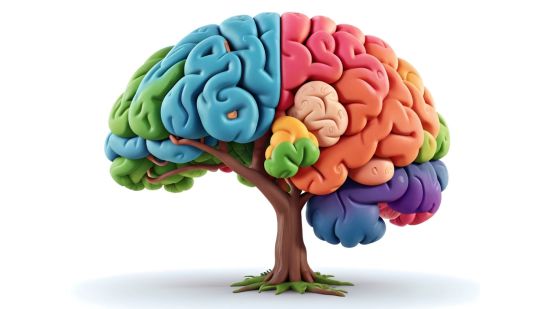
Neuroplasticity: Why the Brain’s Ability to Change Is Crucial for Executive Function in ADHD
For decades, ADHD was widely misunderstood as a fixed deficit—something a person simply had and had to work around for life. Advances in neuroscience have dramatically changed that narrative. At the center of this shift is neuroplasticity, the brain’s remarkable ability to change, adapt, and reorganize itself in response to experience. Understanding neuroplasticity is essential to understanding why executive function skills can improve in individuals with ADHD, and why targeted support, practice, and coaching are so effective.
What Is Neuroplasticity?
Neuroplasticity refers to the brain’s capacity to form new neural connections and strengthen or weaken existing ones based on repeated experiences, behaviors, and environmental input. Rather than being “hard-wired” after childhood, the brain remains malleable throughout the lifespan.
Every time we practice a skill, use a strategy, or engage in focused effort, specific neural pathways are activated. With repetition, these pathways become more efficient—much like a trail becoming clearer the more often it is walked. Conversely, pathways that are rarely used may weaken over time.
This principle is critical for understanding learning, habit formation, emotional regulation, and, most importantly for ADHD, executive function.
Executive Function and the ADHD Brain
Executive function skills are the brain’s self-management system. They include abilities such as:
Planning and prioritizing
Task initiation
Sustaining attention
Working memory
Emotional regulation
Organization and time management
Cognitive flexibility
These skills are primarily associated with networks involving the prefrontal cortex, which develops more slowly than other brain regions and continues maturing into early adulthood.
In individuals with ADHD, these executive function networks tend to develop differently. This does not mean they are broken or absent, it means they are less consistently activated, less efficient, or less well connected. Research shows differences in dopamine regulation, neural connectivity, and activation patterns, particularly in tasks that require sustained effort, delayed gratification, or inhibition.
Importantly, these differences are developmental and functional, not permanent limitations.
Why Neuroplasticity Matters So Much for ADHD
Because executive function challenges in ADHD stem from how neural networks are used—not whether they exist, neuroplasticity provides a powerful framework for growth.
When individuals with ADHD repeatedly practice executive function skills with appropriate scaffolding, the brain responds. Neural pathways involved in planning, focus, self-monitoring, and regulation can strengthen over time. This is why improvement is often gradual but meaningful, and why “trying harder” without structure is rarely effective.
Neuroplasticity explains several key truths about ADHD:
Skills can be built, not just accommodated
Executive function skills are learnable. With consistent practice, external supports, and feedback, the brain becomes more efficient at tasks that once felt overwhelming.Consistency matters more than intensity
Short, repeated practice activates plasticity far more effectively than occasional high-effort attempts. This is especially relevant for ADHD, where motivation and stamina fluctuate.Environment shapes brain development
Supportive environments, those that reduce shame, provide structure, and reinforce progress, actively promote healthier neural wiring.Change takes time, but it is real
Because neural change is incremental, progress may not be immediately visible. However, sustained effort leads to lasting transformation rather than temporary workarounds.
Executive Function Coaching and Neuroplastic Change
Executive function coaching is grounded in applied neuroplasticity. Rather than focusing solely on outcomes (grades, productivity, compliance), coaching emphasizes process, how the brain learns to plan, initiate, monitor, and adjust.
Effective coaching leverages neuroplastic principles by:
Breaking skills into manageable steps
Repeating strategies across real-life contexts
Externalizing executive function (using planners, reminders, visual systems)
Reflecting on what worked and why
Gradually fading supports as skills strengthen
This approach mirrors how the brain naturally learns allowing the brain to practice skills it cannot yet execute independently. Over time, these supports help internalize the process.
Crucially, coaching also addresses emotional neuroplasticity. Repeated experiences of success, even small ones, reshape the brain’s threat and reward systems. This reduces avoidance, increases confidence, and improves willingness to engage in challenging tasks.
The Role of Stress, Shame, and Motivation
Neuroplasticity is highly sensitive to emotional state. Chronic stress and shame, common experiences for individuals with ADHD, impair learning by activating survival circuits rather than executive networks.
When a person repeatedly hears messages like “you’re lazy,” “you should know better,” or “just try harder,” the brain learns to associate effort with threat. This inhibits plastic change.
In contrast, environments that emphasize curiosity, support, and growth foster neural conditions that allow executive skills to strengthen. Motivation improves not because the person is forced, but because the brain begins to associate effort with safety and reward.
A Lifelong Opportunity for Growth
One of the most hopeful truths about neuroplasticity is that it does not expire. Adolescents, college students, and adults with ADHD can all strengthen executive function skills, often with profound impact on independence, relationships, and self-esteem.
While ADHD is a lifelong neurodevelopmental condition, executive function capacity is not fixed. The brain is always responding to what we repeatedly ask of it.
Neuroplasticity reframes ADHD from a story of limitation to one of potential. Executive function challenges reflect differences in brain development, not an inability to grow. With intentional practice, structured support, and compassionate guidance, the brain can build stronger pathways for planning, focus, regulation, and follow-through.
Understanding neuroplasticity helps parents, educators, and individuals with ADHD shift from asking, “Why can’t they?” to “What supports will help the brain learn this?”
For more information about ADHD and Executive Function Coaching, check out our website newagendacoaching.com