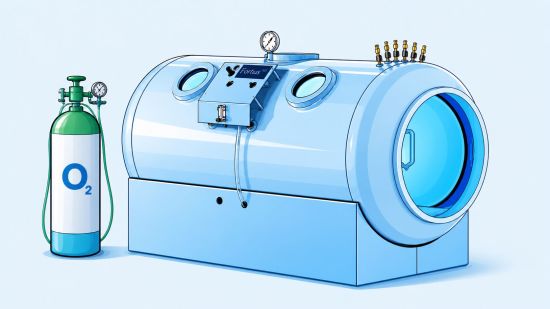
Oxygen - oh, what a molecule! Without O₂, I wouldn’t even be sitting here breathing and writing this. So, what makes this pair of atoms so special?
“Oxygen,” as we commonly say, is actually O₂ - that is, two oxygen atoms bound together. O₂ is responsible for driving nearly all metabolic functions in the human body. Every cell requires oxygen to survive; it is the single most important molecule for living organisms.
The main function of O₂ in our bodies is the production of ATP (adenosine triphosphate), the body’s primary energy molecule. About 94% of ATP production requires oxygen. In fact, O₂ is so important that, aside from highly trained individuals such as free divers, a human can survive only about five minutes without it. No oxygen, no energy, no organ function—no life.
When tissues in the body do not receive a sufficient oxygen supply, they begin to break down. This can result in muscle weakness, skin necrosis, and brain damage. Disorders of the cardiovascular and respiratory systems, certain infections, inflammation, and altitude can all affect how well your body takes in and distributes oxygen. So how can we address this on a large scale? Fortunately, a treatment exists that directly targets oxygen deficiencies: Hyperbaric Oxygen Therapy.
Hyperbaric Oxygen Therapy (HBOT) combines the delivery of concentrated oxygen with increased atmospheric pressure. This elevated pressure allows the lungs to absorb O₂ more effectively, while oxygen levels are simultaneously increased via a concentrator or compressed oxygen delivered through a mask. Unlike simply breathing oxygen under normal conditions, HBOT not only increases oxygen in the bloodstream but also dissolves it directly into body tissues. This means that even areas with poor perfusion (low blood flow) receive an oxygen boost.
HBOT can be highly effective for individuals suffering from a wide range of conditions—from traumatic brain injury to poor athletic recovery, mold toxicity to altitude sickness, and chronic wounds to PTSD. While it is not a miracle cure, it is a therapy that can benefit many people and has produced remarkable results in numerous patients. HBOT is a strong option for those who have not found success with other treatments, as well as for those seeking a safe, non-invasive approach.
Oxygen, being a gas, is compressible. Without getting too deep into gas laws, this means that under increased pressure, O₂ molecules become more concentrated within a given space (in this case, a hyperbaric chamber). This pressure drives oxygen into the blood plasma, increasing tissue saturation beyond what hemoglobin alone can achieve. Typical HBOT treatments range from 1.3 ATA (atmospheres absolute) to 2.2 ATA, although pressures as high as 4 ATA may be used in specialized settings. For reference, 1.0 ATA is the pressure we experience at sea level.
With all of this in mind, it’s easier to understand how HBOT can support healing in so many conditions. Have you ever had a concussion? You may still have lingering, unhealed damage in your brain. By flooding damaged areas with oxygen, HBOT can support neurological healing. Recovering from a knee replacement? HBOT can help reduce inflammation and promote faster, more effective recovery and integration of the joint. The potential applications are extensive.
When combined with other treatments such as physical therapy, stem cell treatments, cognitive behavioral therapy, or chemotherapy: HBOT can further enhance healing outcomes. In some cases, it has even been shown to provide lasting improvements where other treatments only offer temporary relief.
If you or a loved one are looking for an effective, well-studied, and highly safe treatment for an injury or condition that is impacting quality of life, consider scheduling a consultation to learn more about Hyperbaric Oxygen Therapy.
Dive deeper at mountainhyperbarics.com/research
Or call Mountain Hyperbarics for a free consultation: (970) 880-4799