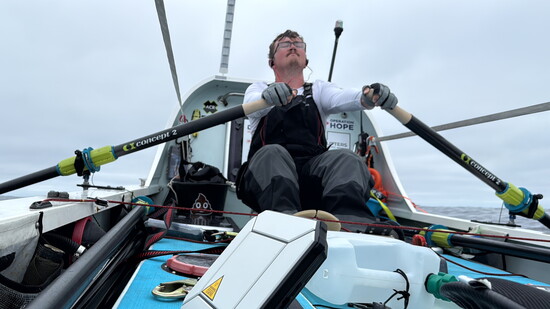
For Tim Crockett, rowing across an ocean was never simply about reaching the opposite shore. The former Royal Marine Commando and Special Boat Service operator has faced some of the world’s most demanding environments, but his most personal undertaking began years after leaving Britain’s elite special forces.
In 2018, Crockett rowed solo more than 3,000 nautical miles across the Atlantic. Seven years later, he and his 19-year-old son, Harrison, covered more than 2,400 nautical miles from San Francisco to Hawaii, becoming the first father-and-son pair to row the Pacific. Harrison became the youngest person to row that route.
The first expedition grew from grief. Crockett had reconnected online with a former 40 Commando colleague and Corps Boxing Squad teammate after more than 20 years apart. Six weeks later, he learned his friend had lost his battle with mental health.
“It hit me much harder than I expected. I think partly because it reminded me how easy it is to lose touch with people we once knew incredibly well, and how little we sometimes know about what someone may be dealing with behind the scenes.”
Crockett wanted to draw attention to veteran mental health and suicide prevention while raising money for organizations already supporting veterans and their families. A 3,000-mile solo crossing offered a challenge significant enough to make people notice.
“So the 3,000-mile solo row became a vehicle for the mission rather than the mission itself.”
For 63 days, he endured storms, injuries, exhaustion, limited sleep and stretches when progress felt nearly impossible. The isolation carried its own burden, leaving him hundreds of miles from another person amid conditions he could not control.
“You quickly learn not to think about the entire ocean. You focus on the next hour, the next meal, the next rowing shift. Sometimes resilience is simply reducing a huge problem into something manageable and continuing to move forward.”
The Pacific demanded a different kind of strength. Every choice now affected his son, and each had moments when the other needed to carry more of the load. Somewhere between California and Hawaii, their relationship evolved.
“We started the journey as father and son. We finished it as the first father and son pair to row the Pacific, but also as very close friends and teammates. That is something I will treasure for the rest of my life.”
Crockett was not a rower when he began exploring the sport in 2016. Today, he trains on an erg or on the water three to five times weekly. He values its physical intensity, technical precision and accessibility for different ages and abilities. More importantly, rowing gave him a new sense of purpose and a way to serve others.
That purpose now drives Row to Recovery, his Georgia nonprofit helping veterans and their families find camaraderie through rowing. Crockett says service members often miss the structure, responsibility and “tribe” military life provided. In a boat, each person has a role, and progress depends on communication, trust and shared effort.
“The aim is not to turn everybody into an elite athlete or ocean rower. It is to create opportunities for veterans and their families to get on the water, be part of a crew, challenge themselves and reconnect with people who understand some of their experiences.”
Crockett does not present rowing as a cure. Instead, he sees it as an opening—a reason to show up, exchange phone numbers and return the next week. His larger message reaches far beyond the boat itself.
“Community creates connection. And connection can sometimes be the first step toward recovery.”