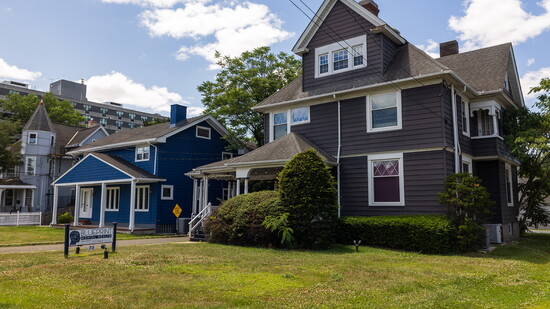
For many people, seeking therapy can feel intimidating long before they ever step into an office. Clinical settings, lengthy intake forms and uncertainty about what to expect often create barriers before healing has a chance to begin. At Blueprint Mental Health, located just 20 minutes north of Flemington in Somerville, those barriers are intentionally replaced with something much simpler: connection.
That philosophy starts with John and Michele Mopper, who own Blueprint Mental Health together. Although their professional journeys were different, they shared a vision of creating a practice that delivers exceptional clinical care in a setting that feels welcoming, personal and anything but intimidating. Today, their team of 13 clinicians, along with their beloved office pup, Charlie, provides a wide range of services while remaining grounded in the belief that meaningful relationships are at the center of emotional well-being.
"I wish I could tell you that from the get-go I was like, 'I'm passionate about being a therapist. I want to help people,'" Mopper says. "It wasn't that at all."
His career initially took him through sales and the music industry before an unexpected psychology course sparked a completely different path. Fascinated by human behavior and the science behind it, he changed direction in his early 30s and began working as a mental health technician.
Michele's path looked different but led to the same destination. After earning an undergraduate degree in education, she quickly realized her passion was helping people navigate life's emotional challenges. She earned her master's degree, worked as both a clinical coordinator and program director, and developed a specialty in relational therapy before joining forces with John. In 2018, they merged their practices, purchased a building in Somerville and transformed their shared vision into Blueprint Mental Health.
"The goal was going to be to offer super, super high-quality clinical work," John says, "but in a way that didn't feel clinical at all."
The welcoming approach extends far beyond therapy sessions. Blueprint Mental Health feels more like a relaxed, comfortable space than a traditional clinical office. Soft lighting, inviting furniture and Charlie, the office pup, help clients of all ages feel at ease. The therapists bring that same approachable energy—professional, but never stiff or intimidating.
For Michele, that environment was never an afterthought.
"We wanted it to feel like a home away from home instead of a doctor's office," she says. "People are much more likely to open up when they feel comfortable and safe."
Today, Blueprint Mental Health offers individual, family, couples and group therapy, allowing clients to receive support tailored to their specific circumstances.
"Our first session here is more of a casual meet and greet," John says. "It's really actually trying to connect with the person."
The approach reflects a broader belief that successful therapy starts with trust. Before discussing treatment plans or diagnoses, clinicians focus on understanding who someone is, what brought them through the door and what success might ultimately look like for them.
"It's kind of like almost having an à la carte menu coming here," John says. "While each client has their primary therapist, we have a team with specialists in art therapy, play therapy, EMDR to treat trauma and ERP for OCD. My wife, Michele, is the practice's couples and family counseling guru, and we even have a Child Life Specialist on staff who helps children and families cope with the stress and uncertainty that comes with illnesses within the family."
For Michele, whose specialty is relational therapy, she works with couples, families and individuals to identify communication patterns that often keep people stuck. Rather than assigning blame or deciding who is right, she helps clients slow conversations down, recognize recurring cycles and uncover the emotions driving conflict.
"Most people actually want the same outcome," Michele says. "They just don't know how to communicate in a way that gets them there."
She explains that parents and children, partners and even close friends often find themselves arguing over surface-level issues when the real challenge is feeling unheard or misunderstood. Especially in high-conflict situations, the immediate goal is not repairing everything overnight but preventing additional damage while creating space for healthier interactions.
The same intentionality extends to the clinical team. Mental health professionals often face significant emotional demands, making burnout and compassion fatigue common throughout the profession. John believes exceptional client care begins by supporting the people providing it.
"People talk about their business being a family," he says. "It actually is a family. People genuinely like each other."
Weekly clinical rounds encourage therapists to collaborate on challenging cases, while monthly clinical advancement meetings focus on continuing education, self-care and professional growth. By investing in the well-being of clinicians, the practice believes clients ultimately receive stronger, more thoughtful care.
As John reflects on today's mental health landscape, he sees many of the challenges extending beyond traditional diagnoses.
"We have endless amounts of pleasure at our fingertips all day long," he says. "Our brains are being programmed to only move toward what feels good in the moment and away from anything that's difficult or uncomfortable."
That constant access to stimulation, he believes, makes it increasingly difficult for people to tolerate discomfort, even though growth often depends on it.
"Growth comes from being uncomfortable," John says.
Helping clients build resilience rather than avoid discomfort has become an important part of the practice's work. He also believes mindfulness—the ability to stay present rather than constantly dwelling on the past or worrying about the future—is one of the most valuable skills anyone can develop in today's fast-paced world.
Success, John says, looks different for every client. For one person, it may mean overcoming years of social anxiety. For another, it may simply mean having a trusted, judgment-free space to talk each week.
As Blueprint Mental Health looks ahead, the Moppers remain focused on delivering exceptional care while continuing to strengthen the supportive culture they've built for both clients and clinicians.
Start healing at BlueprintMentalHealth.com today.
“It's kind of like almost having an à la carte menu coming here," —John Mopper
We wanted it to feel like a home away from home instead of a doctor's office, people are much more likely to open up when they feel comfortable and safe." —Michele Mopper.