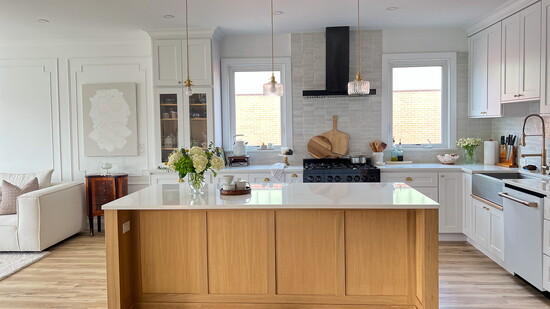
Joey Chan doesn’t believe in wasted space, only unrealized potential.
It’s a philosophy that has shaped his career and the homes he transforms across North Jersey. As the owner of Custom Design Carpentry in Denville, Chan approaches each project as both a master carpenter and strategic problem-solver, rethinking how homes function and turning underused areas into purposeful, well-designed spaces.
Rather than offering one-size-fits-all solutions, Chan takes a collaborative, hands-on approach to every project. From custom built-ins to full-scale renovations, he works closely with homeowners from start to finish, focusing on breathing new life into spaces that no longer serve the way people live today.
That approach is especially relevant in today’s housing landscape. With more than two decades of craftsmanship behind him, Chan understands how closely design decisions intersect with lifestyle shifts and market realities. And as inventory has tightened and moving has become less appealing in recent years, more homeowners are choosing to reinvest in their existing spaces.
“More people are choosing to stay in their current homes instead of moving into a new one,” Chan explained. “So, the trend leans toward renovations.”
That shift has fueled demand for high-impact projects that improve both daily living and long-term value. Kitchens remain the most requested space, followed closely by bathrooms and additions designed to accommodate growing or multigenerational families. One of the most common requests centers on improving flow between dining and kitchen areas.
“Taking down the wall that separates the dining room and kitchen can really open up space,” he added.
Additions follow closely behind, often driven by changing family needs.
“Maybe there’s a family moving out of New York City and into the suburbs, and they might want a new bedroom,” Chan said.
In some cases, those needs are more complex. For Chan, one cornerstone project in Lake Mohawk involved adding an entirely new level to the home.
“It was a complete gut and then rebuild,” he added. “The only element that remained was the kitchen which was prerenovated before the homeowner purchased it.”
Bathrooms are another major focus, with homeowners prioritizing smarter layouts and clear separation between showers, toilets, and soaking tubs. Beyond large-scale renovations, many clients opt for impactful, cost-effective updates such as new lighting, fresh paint, cabinet upgrades, or surface refacing. To support those projects, Chan maintains a dedicated kitchen cabinetry showroom in Garfield.
Design balance also plays an increasingly important role. Homeowners are blending modern features with natural elements, incorporating plants and organic materials to soften the high-tech aspects of contemporary living.
For first-time renovators, the process begins with a detailed phone consultation, where vision, scope, and budget are discussed openly from the start. Transparency is central to Chan’s approach.
“We are very thorough and upfront,” he said. “There are no surprises and no hidden costs.”
Depending on the project, Custom Design Carpentry assembles a trusted network of subcontractors, including plumbers, electricians, and specialty trades, ensuring consistency from start to finish.
Chan’s work ethic is rooted in his family’s immigrant story. His father emigrated from Hong Kong, working two jobs to reunite the family in the U.S. when Chan was five. He credits his parents, along with early hands-on experience as a kitchen designer, for shaping both his craftsmanship and eye for design.
Backed by a finance degree from Seton Hall University and more than two decades in the industry, Chan has built a largely residential business fueled by repeat clients and referrals. Upsizing projects make up the majority of his work, with social media extending his reach to an even larger audience.
When he’s not transforming homes, Chan spends time with his wife and three children in Whippany or planning their next family adventure.
“More people are choosing to stay in their current homes instead of moving into a new one,” Chan explained. “So, the trend leans toward renovations.”