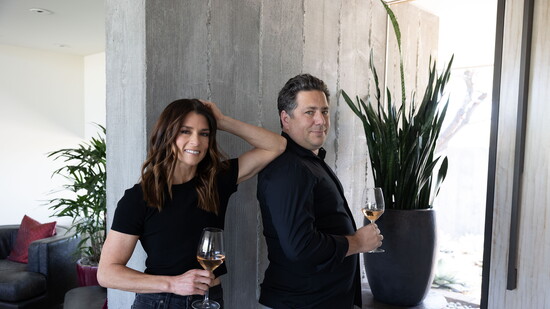
Danica Patrick has spent much of her life understanding the importance of timing. On the racetrack, a fraction of a second could separate winning from losing. Today, timing looks different. It is knowing when grapes are ready to be picked, when a wine needs patience, and when it is time to slow down, pour a glass, and enjoy the people around you.
This side of Danica feels far removed from the fearless driver who became one of the most recognizable women in motorsports, leading laps at the Indianapolis 500 and making history with her 2008 Indy Japan 300 victory. Yet her transition into wine feels like a natural continuation of the precision, discipline, and instinct that defined her racing career.
Danica’s interest in wine began in 2006, when a dinner at The French Laundry led to wine tasting in Napa Valley the following day. What began as curiosity quickly became something deeper. Three years later, she purchased an undeveloped property on Howell Mountain and began creating a vineyard from the ground up. She named it Somnium, Latin for “dream,” and eventually began producing estate Cabernets.
The vineyard introduced Danica to a different definition of success. Racing offered a finish line, a clock and a winner. Wine refuses to operate on the same schedule.
“In racing, winning means being faster than everyone else that one day,” Danica says. “Winemaking doesn’t work that way. The vineyard humbles you like that.”
That slower rhythm has become an important part of Danica’s relationship with wine. Somnium represents Napa's rugged hillsides and wines designed to evolve over time, while Danica Rosé brings another place into the story: Provence. Grown, made, and bottled in the region, the dry Provençal rosé feels especially at home in Danica’s Arizona life.
Helping bring those worlds together is winemaker and business partner Julien Fayard, who grew up among the vineyards of Provence and works with Danica on both Somnium and Danica Rosé.
“In Provence, we are extremely proud of our rosé,” Fayard says. “Having Danica become part of that tradition is one of the best ways to represent our culture and carry Provençal rosé throughout the world.”
Their partnership also makes sense because Danica understands precision better than most, and Fayard says exceptional rosé requires plenty of it. While rosé has a carefree reputation, what happens before it reaches the glass is remarkably technical. Picking must capture flavor without sacrificing natural acidity, while pressing, protecting the juice, and controlling fermentation all require careful attention.
“As easy as rosé is to drink, and it should be enjoyed without thinking twice about it, it is one of the most technical wines to produce,” Fayard says. “It requires tremendous precision and does not tolerate average work.”
For Danica, all that work ultimately serves something simpler. Wine is about connection. It is an invitation to gather, put away distractions and spend more time at the table. That philosophy is reflected in Somnium’s label, where a small red dot reminds you that “you are here.”
“It’s a daily reminder for me as much as anyone,” Danica says. “It’s easy to say be present. It’s another thing to catch yourself doing it.”
That idea connects Danica’s approach with the wine culture Fayard knew growing up in France, where wine naturally belongs beside food, conversation, family and friends.
“In France, wine is rarely separated from the table,” Fayard says. “It is connected to food, conversation, family, disagreement, laughter, and time. Wine is not supposed to be the entire subject of the evening. It is there to make the evening better.”
It is easy to see why that philosophy resonates with Danica. Danica Rosé is dry, made without added sugar and intended to let the fruit speak for itself. Fayard believes the best rosé should appear almost effortless, even when making it is anything but.
“A great rosé should feel obvious when you drink it,” he says. “It should have freshness, texture, salinity, and length, but it should never feel as though it is trying too hard.”
In Arizona, that translates naturally to evenings when the pool becomes another gathering space, something goes on the grill, and a bottle is opened as the temperature begins to drop. Danica Rosé can sit beside grilled shrimp, seasonal vegetables or a cheese board assembled because friends stayed longer than expected.
That ease contrasts with Somnium. With Howell Mountain Cabernet, Fayard considers power, tannin, extraction, barrel aging and what a wine might become years into the future. Rosé demands more immediate decisions around freshness, aromatics and delicacy. Yet the philosophy remains the same: listen to the vineyard, understand the fruit and avoid interfering more than necessary.
Danica has embraced this philosophy beyond racing. The competitive drive has not disappeared; it has found a different outlet. Wine requires patience where racing demanded speed, with the reward found not in a trophy but in creating something capable of becoming part of someone else’s memory.
Napa gives Danica the discipline and patience of the vineyard. Provence brings the ease and culture of rosé. Arizona gives her a place to bring those worlds home.
Her perfect setting is refreshingly uncomplicated: the sun dropping over her Scottsdale patio, the sky turning pink, her dogs outside and a glass of Danica Rosé nearby. Wine is part of the moment, rather than the entire reason for it.
As Fayard puts it, “You cannot put connection into a tank. But you can make a wine that does not interrupt the table. It invites people to stay, pour another glass, and continue talking.”
For a woman who spent years racing toward the finish line, building a second chapter around giving people a reason not to rush feels fitting.
“Wine is about connection, slowing down and enjoying the moment.”
“Wine requires patience where racing demanded speed, creating something meant to bring people together and become part of their memories.”