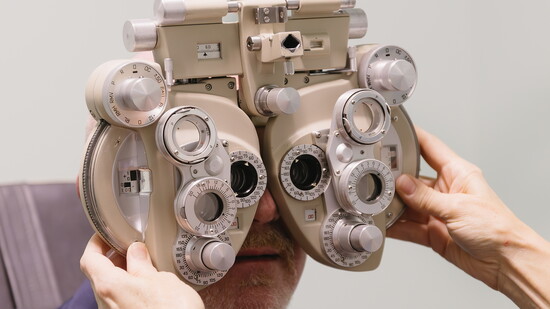
In a world overloaded with information, it’s no surprise that myths about eye health spread quickly. Yet for Lara Dudek, M.D., board-certified ophthalmologist and founder of Heart of Texas Eye Care, these misunderstandings sometimes keep people from getting the care they need.
“There are lots of myths about eyecare,” says Dudek. “People create a lot of anxiety based on conversations with others, but they don’t have the same set of eyes or risk factors.”
Some of the most serious eye conditions, including glaucoma and macular degeneration, carry genetic components. Still, Dudek emphasizes that guessing isn’t a strategy. “Let’s treat what we have, not what we think we have,” she says. “It’s essential to monitor risk conditions.”
Cataracts are especially misunderstood. “A cataract is not a film grown on the eye,” she clarifies. “It’s a clouding of the natural lens of the eye.” And despite the worry the word often inspires, cataracts are a normal part of aging, much like wrinkles. That’s why cataract surgery is the most common surgical procedure performed in the United States each year, and it’s one of the most successful. “Across the population, 90 to 95 percent see better after surgery,” says Dudek.
If there’s one message Dudek wants patients to remember, it’s this: Don’t wait.
“We can’t address what we don’t know about,” she explains. Routine screenings are the key to catching problems early—long before they interfere with daily life.
Regular visits matter because sight isn’t easily regained once lost. “Once you lose vision from glaucoma, we can’t get it back,” she says. “Early detection can minimize loss.”
“We look at the health of all structures of the eye,” she explains. Since the eyes are responsible for so much of how people interact with the world, even a small issue can carry major consequences. But for most patients, solutions are refreshingly simple: glasses, surgery, or lubrication.
During a new patient visit, her team identifies any early signs of disease, evaluates risk factors, and educates patients about how to protect their sight long-term. “People who visit regularly are much more likely to find diseases early,” she says. “We address anything that could become an issue.”
Dudek opened Heart of Texas Eye Care in 2016 after years of experience working in Austin, San Antonio, and across Texas. She and her husband, Ross, moved to Dripping Springs with their two children for the schools and the strong sense of community. It’s a decision that continues to pay off.
“It’s been a treat to take care of friends and neighbors,” she says. “It’s fun to run into them at the grocery store or dinner. Our patients enjoy getting care close to home.”
That small-town connection doesn’t mean small capabilities. Dudek is the only ophthalmologist in Dripping Springs offering emergency care and a decade of surgical experience. Her clinic is also one of the only practices in the Austin area to offer SMILE vision correction.
“LASIK is well known, but SMILE is newer,” she explains. “We started offering it in 2020, making us the most experienced in the area.” Unlike LASIK, SMILE does not create a flap in the cornea, which often means a faster and more comfortable recovery.
Heart of Texas Eye Care combines cutting-edge technology with personal connection—a balance Dudek has honed through years of advanced training and service.
She treats patients of all ages, managing conditions from dry eye and allergies to diabetic retinopathy and glaucoma. She performs cosmetic procedures, cataract surgeries, and medical laser treatments.
Above all, Dudek sees her work as a partnership with the community she calls home.
“It’s a great collaboration with other doctors in town,” she says. In a community like Dripping Springs, collaboration becomes a powerful force for health.
Her mission is simple: equip residents with the information and care they need to keep their world in focus—today, tomorrow, and years into the future.
Because good vision is more than seeing clearly; it’s living fully.
HeartOfTexasEye.com | @htxeye
“Let’s treat what we have, not what we think we have—that’s essential for healthy eyes.” - Lara Dudek, M.D.