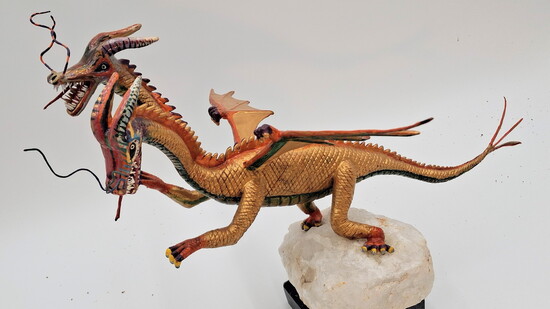
Frank Shepard’s work as a pine resin sculptor has roots that stretch back roughly 70 years, to childhood walks with his grandfather in search of “lightwood,” highly resinous pine traditionally used for kindling fires. “My grandfather taught me what resin is,” Shepard said.
Decades later when Shepard was walking through the woods behind his Albemarle County home, he discovered an interesting wood fragment. Whittling the piece with his knife released an aroma he immediately recognized, along with the amber hues of the lightwood he remembered from childhood. As he continued working with it, he found intricate trails of resin running through the wood.
“I was hooked when I found more potential pieces,” Shepard said.
That discovery in 2016 launched an artistic pursuit that continues today. Shepard searches for partially buried and decaying fragments of pine, then carefully examines each to determine whether it might be suitable for a sculpture.
The transformation is a meticulous process. Using hand-carving tools and steel wool, Shepard works with each piece before applying several coats of wax to reveal the colors and patterns of the resin within it. He considers the opportunity to uncover those natural features a gift from nature and describes bringing the aged pine resin to life as a spiritual experience.
Shepard came to sculpture following a career that combined engineering, entrepreneurship, and building. After earning bachelor’s and master’s degrees in civil engineering from the University of Virginia, he spent 26 years working as a research engineer. He later owned and operated a tent and event company and designed and built custom homes.
While pine resin sculpture became part of his story later in life, after a long list of other achievements, Shepard believes the process he developed produces artwork unlike anything else he has encountered. “I’m the only person that does sculptures as I do,” he said, adding that he has yet to meet someone who has seen artwork created using the same process. Plus, through showings of his sculptures, he estimates he has interacted with more than 600,000 people.
Each sculpture begins with material that Shepard finds outdoors, making the characteristics of the individual piece an important part of the finished work. The patterns created by the resin differ from fragment to fragment, and the carving and finishing process exposes details that were previously hidden beneath the weathered exterior.
Nearly a decade after beginning his work as a sculptor, Shepard continues searching for potential pieces and discovering what lies inside them. The process has also kept him connected to a lesson passed down by his grandfather decades before he knew where it might lead.
That early introduction to lightwood ultimately provided Shepard with both the knowledge to recognize what he had found and the foundation for an artistic pursuit that arrived much later in his life. Seventy years after those walks with his grandfather, Shepard remains grateful for an experience that continues to influence what he creates today.