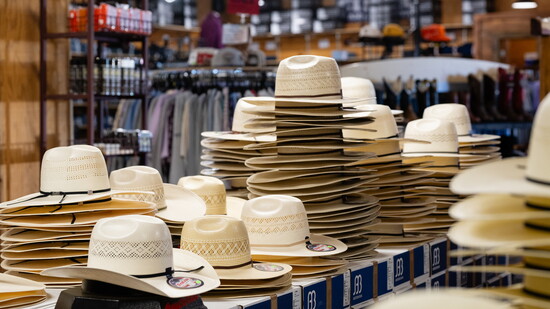
It all starts with a straight pin. Next, comes the steam.
Vapor mist rolls upward from a jewelry steamer in soft bursts as a cowboy hat passes through practiced hands at the shaping station. A brim is curved slightly downward. A crown is pinched and reshaped. Someone studies the silhouette from across the room before making another adjustment measured in fractions of an inch.
Kind of like hand rolling a cigar, nothing about this process feels rushed.
Customers lean against the counter watching the process unfold while conversations drift between rodeos, football, weather, ranch work, and the eternal debate over “is it felt versus straw season”. The atmosphere surrounding the shaping station only adds to the experience. Here, it feels less like a store display, and more like a barber shop.
This experience has become one of the defining elements of Outpost Western Store, the western retailer located just northwest of Manhattan on Highway 24. While the business has built a legit national reputation for high-end, store-exclusive cowboy boots and online western wear sales, the hat shaping process has quietly become one of its greatest attractions.
What separates the shaping process from a simple retail transaction is the amount of intuition involved. Every customer’s head shape is slightly different. Every hat material reacts differently to steam and pressure. A skilled shaper, either Noah Schultz, Blade Winter, or Logan Graber, learns to read both the customer, and the hat itself.
The shaping process starts with fit. Before style is ever discussed, the hat has to sit correctly. That’s where the straight pin comes into play, helping line up the dead center of the hat with the wearer’s eyes. From there, comfort becomes the priority. Too loose, and it blows away in the Kansas wind. Too tight, and it becomes miserable to wear for an entire day. Once the fit feels right, the shaping begins gradually, using steam to soften the material before curves and structure are carefully worked into place by hand.
Straw hats require a particularly delicate touch. Too much pressure in one spot can create hard creases that eventually crack the lacquer finish and shorten the lifespan of the hat. Felt hats respond differently, especially high-end beaver and mink blends that mold smoothly and hold their structure for years.
There is a surprising amount of engineering hidden beneath the style.
Some customers want a classic look, while others arrive with photos pulled from TikTok or rodeo social media accounts. Crown heights, brim widths, and crease patterns all change the personality of the hat. Traditional Cattleman crowns remain timeless, but modern styles like the West Texas Punch, or Cool Hand Luke, with wider brims and softer rounded shaping, have steadily grown more popular in recent years. The result is certainly always something deeply personal.
Long before Outpost became known for premium hats and custom boots, the building housed a family trucking operation. The structure was originally built in the late 1980s for Robert C. Buchanan Incorporated, a family-operated trucking company. Over time, the family business evolved into something much different.
In 2001, the original R.B. Outpost opened as a combination western store, feed operation, and tack shop. The retail business expanded throughout the building as the trucking side slowly began to fade away. Saddles, feed, western clothing, tack, and horse supplies gradually filled more of the former truck facility.
At the time, western retail in the area looked very different than it does today. Tractor Supply had not yet entered the market, and there was an opportunity to create a true destination for horse owners and rural customers around the Flint Hills.
Pam Laird, Robert Buchanan’s daughter, and current co-owner of the store, helped guide much of the original operation despite having little background in retail. Rather than hiring consultants, she taught herself the business through retail textbooks and firsthand experience. The family learned as they went, building the store piece by piece while adapting to changing customer needs.
R.B. Outpost eventually became known for its western wear, horse tack, feed products, and even organized trail rides hosted on the family’s property. For a time, the business became deeply woven into the local horse and ranching community.
But as years passed, the operation became increasingly difficult to manage. Family responsibilities shifted. Leadership structures became complicated. The western retail industry itself was changing rapidly as online commerce began reshaping how customers shopped.
In 2014, the original R.B. Outpost closed its doors.
For Pam’s son and current co-owner, Ty Mosier, the closure felt unfinished.
Mosier had started working at the original store while attending Kansas State University, where he studied public relations and marketing. During those years, he developed a growing fascination with premium cowboy boots, western branding, and the culture surrounding the industry. Even after the store closed and he moved into insurance sales, the vision for what the business could become never completely disappeared.
Friends and former customers continued bringing up the store years after it closed. People remembered the inventory. They remembered the atmosphere. They remembered the sense that Manhattan had something unique.
At the same time, western culture itself was beginning to evolve nationally. Social media expanded the reach of niche western brands. Premium bootmakers developed devoted followings online. Western aesthetics began crossing into mainstream fashion and music culture.
Mosier recognized that the future of the business would look completely different than the original R.B. Outpost.
When Outpost Western Store reopened in 2017, the new version of the business focused heavily on curated inventory, premium boot brands, custom products, and online sales. The website became a priority immediately. Rather than trying to be a massive general western retailer, the new Outpost concentrated on developing a stronger identity.
That focus changed everything.
The store gradually phased out much of its tack inventory and leaned further into premium boots, custom western style, and a wide array of hats. Online sales exploded during the pandemic era as western fashion surged in popularity nationwide, helped in part by the rise of shows like Yellowstone and renewed interest in cowboy culture.
Today, Outpost ships products across the United States and many countries internationally yet still maintains the personality of a locally rooted western store tied closely to Manhattan and the Flint Hills.
Despite all the growth, the heart of the store still feels remarkably hands-on.
Steam still rises from the shaping station. Customers still gather around mirrors debating brim widths and crown styles. People still stop by to browse their large selection of boots.
And somewhere between tradition and reinvention, Outpost Western Store continues shaping something that just feels authentically Kansas.
And it's the perfect fit. Every time.
“Every hat tells a different story. The shaping process is less about following rules and more about creating something personal for the person wearing it.”
“Outpost found its niche by focusing on craftsmanship, western culture, and experience, turning a small Flint Hills store into a destination for customers nationwide.”