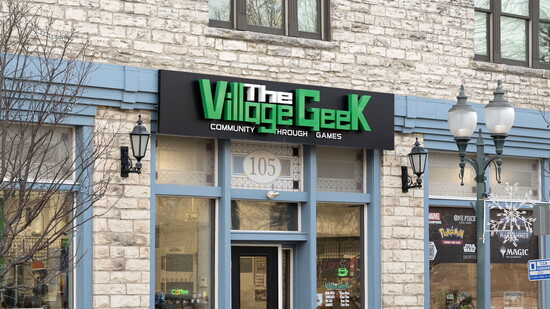
In McPherson, Kansas, game night has always been sacred. Four friends often gathered around a table, dice tumbling, cards shuffling, and boards coming to life. Laughter filled the room, and between moves, talk drifted effortlessly from strategy to the futures they were just beginning to imagine.
Titus Brandt, Jedd Litwiller, Michael Yates, and Richard Martin were simply doing what friends do: showing up for one another, week after week, to play games. Sometimes they would gather at one house, sometimes at another. The location never really mattered, just the comradery did. Then, one night in the middle of an ordinary game night, an extraordinary idea quietly slipped into the room.
“We should open a game store.”
The room was filled with business minds. Michael had already opened a mattress store. Titus worked in banking. Richard had a stack of business plans ready. He had ideas for a bookstore, a computer center, or something along those lines that would take root in a small Kansas town. Within this group, Jedd’s comment didn’t float away. It landed.
Instead of dismissing the idea, they did what they would always do: they talked it through.
Market research followed. Each man did their due diligence. Separately, deliberately. When they compared notes, the numbers lined up. McPherson, Kansas—a town of 13,000—had room for a game store. More importantly, downtown had room for it, too.
In July 2012, that shared table of friends expanded into something bigger. The Village Geek opened its doors on Main Street in McPherson, turning weekly game nights into a storefront built on strategy, passion, and the simple belief that games are better when they’re shared.
In those early years, the store grew alongside its founders. All in their twenties, they built the business while holding full-time jobs, keeping overhead low and reinvesting whatever they could back into the space. It was exhilarating, and occasionally terrifying. They tried a little of everything: toys, collectibles, apparel, novelty items. Some ideas stuck. Many didn’t. Paintball gear came and went quickly. But, board games took off.
So did collectible card games, especially Magic: The Gathering. Miniature games followed. X-Wing exploded into a fiercely competitive scene that no one expected to flourish in rural Kansas. Night after night, players showed up. Tables filled. Community formed.
By the time The Village Geek approached its five-year anniversary, the store had found its footing. One partner, Michael Yates, stepped away as planned, cheered on by the same group that helped him build it. With that transition came a new question: what if this could work somewhere else?
Research began again. Nearly 150 cities across the Midwest from Duluth, Minnesota, to the greater San Antonio, Texas area were evaluated. Demographics, growth rates, distance, and community size all factored into the decision. A dozen to fifteen metrics were carefully weighed, and in the end - Manhattan, Kansas rose to the top. At the time, it was the fastest-growing city in the state, and home to just one game store.
The answer didn’t come from nostalgia or personal ties. None of the founders had attended Kansas State University. None had grown up in Manhattan. Their only real connection came from players who already made the drive south for tournaments, people who had become familiar faces, then friends.
The decision was made in 2017 to open a store in the Little Apple. And once again, one thing mattered most: downtown.
Game stores are destination spaces; places people actively seek out. If players were already planning a visit, they would find it. But the founders wanted more than that: they wanted their store to sit at the heart of the city, supporting local businesses and contributing to the street’s energy. The philosophy had been shaped years earlier in McPherson, where strong downtown partnerships had made all the difference.
The Manhattan location opened in late November 2017, right as winter settled in.
Large front windows became a defining feature. Game tables placed near the glass turned the store into a living display with players leaning in, miniatures lined up, cards spread across the table. Passersby slowed. They stopped. They stared. And often, they came inside. Sometimes they didn’t buy anything at all, and of course, that was intentional.
The Village Geek was built as a “third space”—a place that isn’t home and isn’t work, but somewhere people can simply exist together. Tables are free to use. Players are welcome to bring their own games. Free-play events fill the calendar. Tournaments come with entry fees, but everyday connection does not require a purchase. It’s a philosophy rooted in something older than retail: the belief that people thrive when they gather.
Today, The Village Geek is one of the longest-running game stores in Kansas, nearing fourteen years in McPherson and celebrating eight in Manhattan. Along the way, the space has grown to include a full coffee shop, featuring a custom roast crafted in partnership with Galaxy Girl Coffee. Simple comfort food rounds out the experience, inviting visitors to linger, and word on the street is their “hot honey chicken strips” are some of the best bites in all of Manhattan.
Despite its success, the store remains a passion project. All four founders continue to work full-time in their own fields from finance to pharmaceuticals to nonprofit leadership. That balance keeps the mission clear. The Village Geek was never just about sales. It was about building something meaningful together.
The friendships that started it all have endured, too. Against the warnings that business partnerships rarely survive, these four built their store the same way they built their friendships: through communication, trust, and a shared understanding that no one succeeds alone.
Looking ahead, the vision remains unchanged. Continue building community. Continue creating welcoming spaces and continue celebrating the simple magic of people gathering around a table. Because in a world that moves fast and often apart, The Village Geek is proof that sometimes, the most powerful thing you can do is sit down and just play together.
“We want our space to be open and accessible, a place for everyone to gather, play games, and keep growing our community together.” - Richard Martin
“We aim to pay it forward, stay a part of downtown’s supportive community, and deeply appreciate the work of downtown Manhattan in making that possible.” - Richard Martin