From your experience in this local market, what’s the biggest difference you see between staged homes and non-staged homes when it comes to buyer interest?
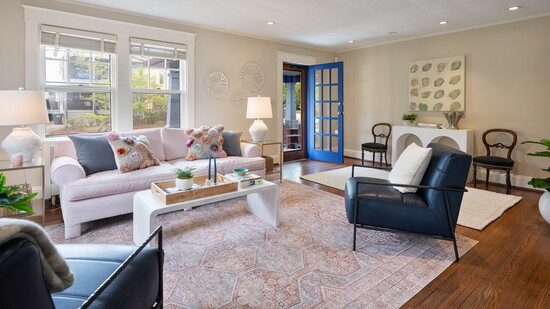
Buyers are extremely visual, and a staged home allows them to better understand a space. By seeing how large a room is and how it can be utilized, potential buyers can more easily envision themselves living in the home. Staging ensures the property feels warm and inviting rather than cold and empty, which often leads to fewer questions and a faster connection to the space. When a home isn’t staged, I find that buyers spend more time trying to figure things out.
How does staging help buyers emotionally connect with a home, especially in competitive neighborhoods?
Staging a home in a competitive neighborhood is just as essential as it is anywhere else. Given the significant influence of social media, HGTV, and design magazines, a staged home feels more luxurious and well-maintained in comparison to its peers. In competitive neighborhoods, staging shows that a home has been thoughtfully prepared and well cared for, which absolutely influences how buyers perceive value.
Are there specific rooms that matter most to stage when selling a home, and why?
I believe the most important areas to prioritize staging are the living room, kitchen/dining, and primary bedroom. Given that these are often the rooms buyers put the most emphasis on, if they are well-staged, a buyer can find a connection earlier and may be more willing to overlook imperfections elsewhere in the home.
What common staging mistakes do you see sellers make when they’re trying to do it themselves?
A common seller misstep is the use of too much furniture. Achieving the correct proportions to highlight space and natural flow can be difficult without a professional eye.
Lighting is often also a challenge. A trained stager understands how to balance and focus on little things with big impact, such as ensuring all bulbs offer a consistent tone and brightness. Finally, an excess of personal items often distracts buyers, leading them to focus on the seller’s belongings rather than the space itself.
How does staging impact days on market and final sale price, based on what you’ve seen locally?
The first week on the market is critical, and staging helps you generate attention to take full advantage of it. In my experience, a staged home sells faster, which typically translates to a higher final sale price.
For sellers working with a limited budget, what are the top three staging changes that deliver the biggest return?
A fresh coat of paint is one of the most effective ways to update a space. I would also focus on strategic lighting by choosing lighting that brightens the room and adds warmth. Lastly, decluttering one’s personal property. Edit, edit, edit! This helps to make a space feel more open and spacious.
How does staging differ between different types of homes, such as older houses, new builds, or smaller properties?
Great question…Staging helps downplay quirky layouts or unusual room sizes while highlighting the home’s inherent charm and character. New builds with high ceilings and open floor plans can feel expansive and cavernous, and furniture helps define the scale of these expansive spaces. In smaller homes, since rooms actually appear larger when furnished, staging is an effective way to demonstrate a smart and efficient use of space.
Who do you rely on when staging a home, and why?
Gail Hoerr and her team at Redsign Staging is my go-to. She is decisive and is always looking at the room from the eye of the photographer to ensure it will attract a buyer’s attention. She has an amazing sense of style, creating spaces that feel truly lived in and not at all staged. Many clients instantly want to hire her to do their next home.
What advice would you give a seller who’s on the fence about whether staging is “worth it”?
I find that visual results often speak for themselves. I make it a priority to show clients before and after staging photos alongside the corresponding market data. In most cases, these staged homes sell quickly and close to or above the asking price. Staging isn’t about decorating a home; it’s about diminishing a buyer’s obstacles and getting them to choose one home over another.
I also ensure my clients are aware of the Nest Home Advantage program. This program allows sellers to access funds prior to closing to cover market preparation costs, including professional staging. Because real estate transactions involve significant out-of-pocket expenses, this is a fantastic resource that helps sellers preserve their cash for a down payment while ensuring their current home looks its best for the market.
Staging ensures the property feels warm and inviting rather than cold and empty, which often leads to fewer questions and a faster connection to the space.
The first week on the market is critical, and staging helps you generate attention to take full advantage of it.
In today’s online-first home search world, how important is staging for listing photos and virtual tours?
We only have one chance to make a first impression. Staging provides a significant advantage in capturing that fleeting interest and ensuring your home stands out.