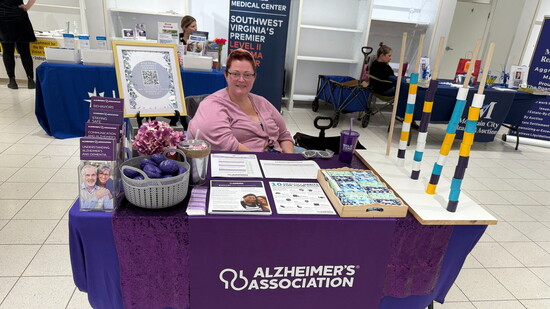
For families facing Alzheimer’s disease or other forms of dementia, the journey can feel overwhelming -- but they are not alone. Across Charlottesville and the surrounding region, the Central and Western Virginia Chapter of the Alzheimer’s Association is working every day to provide education, support, advocacy, and hope.
The organization traces its origins to Jerome Stone, who helped launch the national Alzheimer’s Association after recognizing the need for stronger support networks for families. Today, the organization has grown into the leading voluntary health organization focused on Alzheimer’s care, support, and research, with more than 70 chapters nationwide and over 600 Walk to End Alzheimer’s events across the country each year. Locally, the Charlottesville walk is the largest in the chapter, serving communities across 62 counties throughout Central and Western Virginia.
For Brooke Gill, Senior Program Manager, the concept of “investment” -- a theme that resonates with many in our community -- goes far beyond financial contributions. “When we use the word investment, we talk about programming, care, and support as the why behind the walk,” Gill said. “We’re investing locally, and we cover 62 counties. Everyone has their own needs. It’s not just about the broader research, the race to the cure; it’s about each community, care, and support. We’re not just investing in the microscopes and the science, but we’re investing in who is living here.”
That local investment begins with education and early action. Understanding symptoms, resources, and next steps can dramatically change the experience for families navigating a diagnosis.
“Early intervention gives people the information they need to understand what’s happening with their loved ones,” Gill explained. “Helping people understand what they’re looking for and giving them an opportunity to talk about it. It’s pivotal… we’ve come a long way. There’s no cure yet, but it’s a step in the right direction.”
One of the most impactful resources the organization offers is its 24/7 helpline, which connects caregivers to trained professionals whenever they need guidance or reassurance. “Life doesn’t just happen 9-5,” Gill said. “Helpline workers are trained to help through a hard situation or behavior, or to help you through a hard day. It’s essential.”
In addition to crisis support, the chapter provides ongoing programs designed to strengthen both caregivers and individuals living with dementia. Initiatives like Building Brain-Healthy Habits focus on lifestyle changes that research suggests may reduce risk and promote brain health, while the Empowered Caregiver series helps families balance independence and safety, improve communication, and navigate behavioral changes. “It’s a great program, and one of the most popular pieces is about behaviors and how to deal with them,” Gill said.
Advocacy is another critical piece of the organization’s work. The Alzheimer’s Association has helped advance dementia training initiatives for first responders across Virginia and continues working to create more dementia-friendly communities statewide.
Community connection remains at the heart of the mission -- and nowhere is that more visible than at the annual Walk to End Alzheimer’s, which will take place in cities and towns across Virginia this fall. Sheri Owen, Senior Development Manager, has seen firsthand how the event brings people together.
“We had about 1,000 walkers last year, and momentum grows each year,” Owen said. “The committee is made up of volunteers… high school students up to UVA students, and community participants. It’s an amazing event to bring everyone back together. Walking to find the cure is the most impactful event I have ever been a part of.”
Volunteers play a central role in the organization’s success. Many participants return year after year because of personal connections to the disease and the meaningful sense of purpose the walk provides. “Most of our volunteers have a personal story,” Owen said. “You think it’s an old person’s disease, but it’s really not. The stories are what make it real and what make it impactful.”
One of the most powerful parts of the walk is the Promise Garden, where participants choose and carry flowers representing their personal connection to Alzheimer’s. Each color holds deep meaning: yellow for caregivers, orange for supporters, purple for those who have lost someone, and blue for individuals currently living with the disease. White represents the future -- the cure.
“People pick a color that they identify with -- yellow - caregiver, orange - support, purple for people who lost someone, and blue if they have the disease,” Owen explained. “This is one of the most impactful things that I’ve ever seen, everyone holding these flowers in solidarity.”
Funds raised through the walk directly support free local education programs, caregiver support groups, advocacy initiatives, and resources available to families across the region, while also contributing to research efforts happening nationwide and in our own backyard.
The organization also continues to expand partnerships within the community, including outreach to faith-based organizations and local groups to increase awareness and education.
For those looking to get involved, the path is simple -- and meaningful. “The easiest way is to participate in the walk. Sign up for a team,” Owen said. “Go to alz.org and get your family or get your business involved. There’s always something you can do. There’s always something for everyone to be able to do.”
Ultimately, the Alzheimer’s Association is investing not only in research, but in people -- caregivers, families, volunteers, and neighbors -- creating a stronger, more compassionate community for everyone affected by the disease.