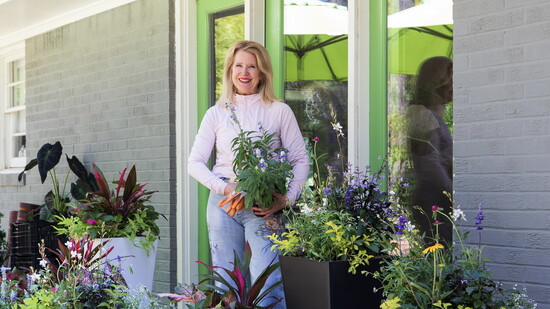
When winter temperatures in the South swing from sun-soaked tennis days to downright freezing nights, it can be tempting to ignore the outdoor garden altogether. But at Jennifer Rust Botanicals, that in-between season is exactly where our attention turns. Founded in East Cobb and serving families and businesses across metro Atlanta and around the country, Jennifer Rust Botanicals specializes in commercial botanical design and four-season subscription planters for clients—creating outdoor and indoor moments that feel intentional, welcoming, and beautiful year-round.
Beginning in October, Jennifer and her talented team start planting winter container gardens for clients. As part of our design process, we keep a close eye on what performs beautifully during the coldest days of February—plants that hold their shape, their color, and their presence when much of the garden is resting in the same way we take note of plants in late August that weather a full season of sun and heat like champions.
These are the plants we say get “invited back to the party” the following year—those we rely on again and again for both our commercial and residential clients, and the very same ones we return to in our own gardens.
JRB’s Winter Guest List: Cold-Weather Container Plants That Shine
Boxwood
A perennial container favorite, boxwood provides year-round structure with only seasonal change-outs of smaller flowering plants. Whether shaped as a topiary (think a rounded ball perched atop a slender stem), a dramatic cone, or multiple shrubs in a long container, boxwood brings timeless elegance. While topiaries are an investment, they reward you with many seasons of beauty before eventually outgrowing their container.
Foxglove
We’re big fans of foxglove for its large green leaves throughout winter, followed by tall, colorful blooms in April and May. Ideal for full-sun containers and beds alike, foxglove planted now will reward you with spring flowers before you know it.
Violas
We always choose violas over pansies for their superior cold tolerance. While they may look a bit peaked in February, violas are often the first to spring back to life—bursting with fresh blooms on sunny winter days and again in early spring when watered through the coldest weeks.
Autumn Fern
By February, autumn ferns can begin to look a little tired, but they continue to provide valuable structure and fullness in containers. They perform well in full winter sun and part-sun settings, quietly anchoring the arrangement.
Lamium
A lesser-known trailing plant and one of JRB’s favorites, lamium is often found tucked away in the ground-cover section of your local garden center (thank you, Pike’s!). Easily overlooked, this delicate variegated plant consistently surprises us with its resilience—holding its own in sunny winter containers and flourishing again in summer when moved to a part-sun location.
Euphorbia
No JRB list would be complete without euphorbia. We love its spiky foliage—available in reds, deep greens, and even rainbow tones—for cold tolerance and strong architectural form. Come spring, it delights again with striking yellow, almost spaceship-like flowers.
Rosemary
Rosemary is the perfect marriage of beauty and utility. With excellent cold and wind tolerance—and the added bonus of fresh cuttings for winter aperitif recipes—this sun-loving plant shines in both tall topiary forms and trailing gracefully over the edge of containers.
Hellebores (Lenten Rose)
Hellebores enter the garden quietly in fall, but right about now they reward us with some of the most beautiful blooms of the season—right in the heart of winter. Perfect for shade beds and part-sun containers, they are a reminder that winter still holds plenty of magic.
Jennifer Rust is the founder of Jennifer Rust Botanicals, a company based in Marietta. JRB creates elegant botanical designs for commercial properties—including national hotels, restaurants, and retail centers—and offers a seasonal subscription service delivering pre-planted outdoor inserts to homes across Atlanta four times a year.