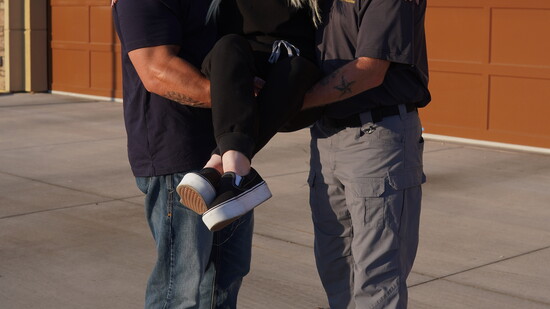
When the alarm sounds, first responders don't hesitate.
Firefighters rush toward danger. Police officers respond to uncertainty. Paramedics arrive on scenes where every second matters. Day after day, they answer the call without knowing what they'll face, placing the needs of complete strangers ahead of their own.
What many people never see are the lasting effects those careers can have long after the emergency is over.
The sleepless nights. The chronic stress. The skipped meals. The physical exhaustion. The emotional weight of witnessing tragedy. Over time, those invisible burdens can quietly impact nearly every aspect of a person's health.
For Lindsay Navarro, MSN, FNP-C, those realities are deeply personal.
Long before opening Beyond Aesthetics & Wellness, Navarro built her career in trauma and emergency medicine. After earning her Bachelor of Science in Nursing, she began working in the Trauma ICU at one of Arizona's busiest Level I Trauma Centers before transitioning into emergency medicine, where she earned certifications in trauma, emergency, and critical care nursing. Later, she was selected as a Trauma Clinician, helping oversee one of the state's busiest trauma programs while continuing her education to become a Family Nurse Practitioner.
Those years shaped the way she practices medicine today.
"I loved emergency medicine," Navarro says. "But I also saw the gaps in healthcare. Patients would tell me, 'I know something is wrong, but everyone keeps saying my labs are normal.' Others were taking multiple medications without anyone addressing why they felt the way they did."
Instead of simply treating illness after it appeared, Navarro became passionate about helping people prevent it altogether.
That philosophy eventually led her to open Beyond Aesthetics & Wellness, where personalized care, education, and long-term wellness take center stage.
Her connection to first responders, however, extends well beyond the emergency department.
"My husband and oldest brother are firefighters, my middle brother is a detective, and my father and uncle are retired Arizona DPS troopers," she says. "I've had a front-row seat to the sacrifices these careers require."
Working alongside firefighters, police officers, and EMS personnel only reinforced what she already knew: those who spend their lives protecting others often neglect their own health.
"They're incredibly good at showing up for everyone else," Navarro explains. "But they're often the last people to schedule their own appointments or prioritize themselves."
It's a pattern she sees repeatedly.
The demands of shift work disrupt sleep cycles and hormone production. Constant adrenaline and chronic stress can affect metabolism, cardiovascular health, and mental well-being. Firefighters also face repeated exposure to smoke, carcinogens, and environmental toxins despite advances in protective equipment. Over time, those occupational hazards can increase the risk of heart disease, hormone imbalances, weight gain, anxiety, depression, burnout, and certain cancers.
Many simply accept those symptoms as part of the job.
Navarro believes they shouldn't.
Her approach focuses on helping first responders become proactive rather than reactive through individualized wellness plans that may include medical weight loss, hormone optimization, IV therapy, preventive lab work, nutrition counseling, and lifestyle coaching.
But perhaps the biggest misconception she hopes to change has nothing to do with medicine.
It's the idea that weight loss is about appearance.
"I always tell patients that weight loss is a byproduct of becoming healthier," she says.
For many of her patients, the goal isn't fitting into a smaller clothing size. It's having enough energy to play with their children. Lowering blood pressure. Sleeping through the night. Reducing inflammation. Preventing chronic disease. Feeling confident enough to enjoy life again.
Those are the milestones she celebrates most.
Collectively, Navarro has helped patients lose more than 1,000 pounds, but she says the numbers themselves are never what matter most.
The greatest reward comes when someone tells her they finally recognize themselves again.
That patient-centered philosophy guides every appointment.
Rather than offering quick fixes or one-size-fits-all programs, Navarro begins with conversation—listening to each person's concerns, understanding their goals, reviewing their medical history, and developing an evidence-based plan tailored specifically to them.
"There is no judgment," she says. "Healthcare should be a partnership."
For first responders especially, that's an important message.
The culture of public service often celebrates pushing through pain, ignoring exhaustion, and putting others first. While those qualities define extraordinary professionals, Navarro believes they can also prevent people from seeking care until problems become much harder to reverse.
Her advice is simple.
Take care of yourself with the same commitment you give everyone else.
Because when first responders invest in their own health, everyone benefits—their families, their coworkers, and the communities they serve.
The strongest responders aren't simply the ones who answer the next call.
They're the ones who make sure they'll still be healthy enough to answer the one after that.
"First responders dedicate their lives to protecting others. They deserve that same level of care in return."
"The strongest first responders aren't the ones who ignore their health—they're the ones who invest in it so they can continue serving their families, coworkers, and communities for years to come."