There’s a shift happening in women’s health—a cultural moment where knowledge, wellness, and self-advocacy are taking center stage. Instead of bracing for aging, more women are preparing for it, embracing conversations around perimenopause, menopause, and longevity with a refreshing honesty. And at the heart of this movement is a deeper understanding of the body’s greatest ally: strength.
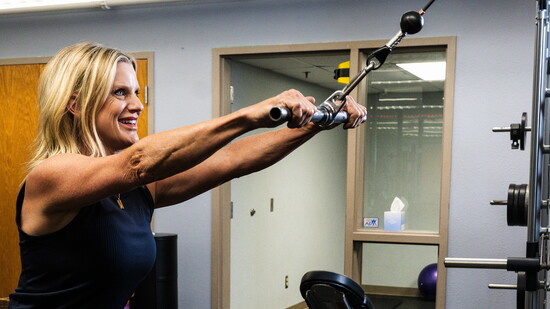
Strength training, also known as resistance training, has moved to the forefront for women as they recognize how essential muscle strength and bone density are for staying active and independent. As a result, more women are stepping confidently into the weight room and embracing training that once felt like a male-dominated space.
“Strength has become cool for women, and that's really amazing to see because it's going to improve their overall quality of life,” says Evan Loomis, a physical therapist who specializes in orthopedic therapy and co-owner of Specialized Physical Therapy of NWA in Rogers and Bentonville.
Why Strength Is So Important
While bone density naturally declines with age in both men and women, women begin losing bone earlier and at a faster rate, Evan says. The decline accelerates sharply after menopause, largely due to the significant drop in estrogen. According to a study published in the National Library of Medicine, osteoporosis is four times more common in women over 50 than in men, and they tend to have fractures five to ten years earlier compared with men.
A growing body of research also shows just how closely bone density and overall strength are tied to long-term health. A decrease of just one standard deviation in bone density—a shift that represents roughly 30% of the population—nearly doubles a woman’s risk of death from any cause as she ages, Evan says. In other words, even a modest drop in bone density can have a significant impact on overall health and longevity.
Strength-related markers tell a similar story. Evan explains that grip strength, for example, has been identified as a predictor of all-cause mortality in older adults, even more closely associated than blood pressure. While grip strength itself isn’t the cause of longer life, it reflects the preservation of lean muscle mass and functional strength—key factors that reduce the likelihood of falls, fractures, illness, and the cascade of complications that contribute to mortality later in life.
But Evan points out that it’s not just about longevity, it’s also about quality of life. As life expectancy increases, being strong and having good bone density can allow seniors to stay active, maintain independence, and fully enjoy the activities they love—hiking, traveling, playing with grandchildren—rather than being limited by injuries or frailty.
“If you don't work at that, as you age, it will creep up on you, and a lot of people suffer from that,” Evan says. “But you can be proactive—it's never too late to start.
Beyond bone density and reduced morbidity, resistance training has a plethora of benefits including: increased lean muscle mass, improved functioning of the immune system, more regulated metabolism, improved balance, and better joint protection.
Even for those who exercise regularly with cardio or endurance activities, strength training is essential, Evan says. It builds a resilient foundation that prevents injuries and improves performance.
“You don't have to love strength training, but for whatever activity you do love or want to do, strength training is one of the best vehicles to get you there to be able to do it,” he says.
General Training Tips from Evan Loomis
- Set your goals: Make short-term strength goals that are realistic enough to achieve, but challenging enough to motivate you. You can always set a new goal once achieved.
- Consistency is critical: Missing workouts once in a while might be fine, but regular interruptions will stall your progress and increase injury risk
- Your form matters: If you don’t have a coach, filming your sets and reviewing technique is the next best way to prevent form breakdowns that can stall progress or increase injury risk.
- Recovery: How much you eat and sleep will impact how quickly and how sustainably you make progress in the gym.
- Training with pain: For occasional aches and pains that interfere with training, see if you feel better after an extended warmup first. If not, modifying training around pain may be imperative.
- Know when to get help: Injuries and setbacks are a small but not totally unavoidable part of both life and training. Some training issues can be worked out solo. Other issues require the help of a qualified coach or PT. Don’t be afraid to ask for help.