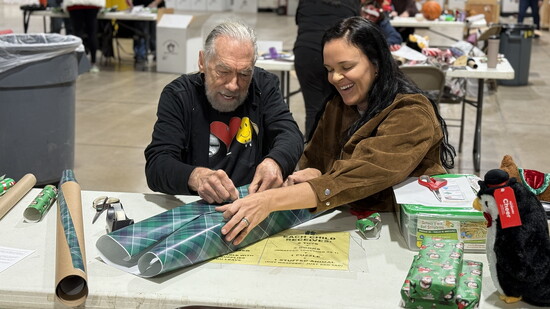
Nearly five years ago, we did a cover story with John Paul and Eloise DeJoria, and I left the photo shoot filled with admiration, inspiration and a desire to do and be better. I fangirled over Eloise and her self-styled sense of fashion, was warmed by the way she and John Paul look at each other, and was amazed to learn how much they give back, both at home in Austin and in remote parts of the world.
With the release of his aptly titled book, Success Unshared Is Failure, I had the privilege of chatting with John Paul again. His passion, purpose, joy and advice once more left me smiling and in awe of the Paul Mitchell and Patrón co-founder, a man who went from homeless single dad to self-made billionaire and has always stayed true to his values of optimism, perseverance and giving back, whether you have a little or a lot.
If you read this month's cover story on the preceding pages, you know it was John Paul's idea to bring SunLife Organics to Austin. His investment got it started here, and all of his profits go to Austin's homeless community. When I ask how much that has added up to, he answers, "Oh, it's in the millions. Multi-millions." That money has gone to Mobile Loaves & Fishes, The Other Ones Foundation and local food banks. "I'm so grateful for all the goodness that's happened in my life," he says. "To me, success unshared is failure."
John Paul has lived by that belief since childhood, when his mother instilled it in him even though the family had very little. "We had nothing growing up, but my mom never let us know it," he says. The family didn't have a television, so he never saw how anyone else lived. His mother never spoke badly of anyone, and she told her boys they could do great things. By age 11, John Paul was selling Christmas cards and delivering newspapers, and he says he was just happy to have a job.
He hopes today's parents will do the same. "My message to fellow Texans, fellow Americans, the whole world is this," he says. "Make sure your kids grow up in an environment where you're happy, you're positive, you're not gossiping about other people, you're not complaining. Spend time with your kids and teach them."
After high school, John Paul joined the Navy, but it was selling encyclopedias door to door on straight commission, with no leads, that taught him a career-shaping lesson. His trainers told him that "you can knock on 50 doors, and if every one closes in your face, politely or not so politely, you must be as enthusiastic at door number 51 as you were at door number one." The average salesman lasted three and a half days. "I lasted three years," he says. He carried that lesson into Paul Mitchell, which he co-founded with $700. "It took us two years to pay our bills on time," he says, "and we had $2,000 each left over. We said, 'We made it.'"
That same persistence shapes how he gives and how he lives every day. John Paul built an entrepreneur center at Mobile Loaves & Fishes, even though people told him homeless residents wouldn't want to work. Within 18 months, residents making ceramics, paintings and other handmade goods had sold about $200,000 worth of work, and they kept every dollar.
At The Other Ones Foundation, he funded a skill center that trains people with mental health challenges for jobs they can do safely. He also met the woman behind Keep Austin Fed, who spent the pandemic collecting unsold food from restaurants after closing time and delivering it to people in need. He paid for her trucks. Today the group has a staff and about 150 volunteers.
And his reach extends beyond Texas. More than a decade ago, he launched Grow Appalachia with Berea College in Kentucky, supplying seeds, tools and training so families across six states could grow their own food. He estimates the program has now produced 40,000 tons of food.
Asked how Austin Lifestyle readers can help, he says, "If you don't have a little money to contribute, contribute your time." Mobile Loaves & Fishes and The Other Ones Foundation both welcome volunteers, and JP's Peace, Love & Happiness Foundation lists more of his causes online.
Our conversation shifts to broader life advice from a man who, his family says, is as positive at home as he is in public, and who has been married to Eloise for more than three decades. His secret to a happy marriage comes down to three words: "You're right, honey." It has worked for the two of them. "I don't think we've ever had an argument," he says. "We talk to each other, we hang out, we start the morning off together with a cup of coffee." And they're best friends.
He still doesn't use a computer or email, and his team runs his new Instagram account. "The reason I don't do email is so I have time to think," he says. "A lot of people don't have time to think. They're so jammed up. I have time to think and time to be with the family."
When asked whether he has a wellness routine that keeps him so vibrant (he's now 82 and climbed Kilimanjaro with his youngest son in his seventies), he says, "I would say the biggest thing is that I'm happy. My priorities are happiness, health and wealth." He adds, "So many people say, 'If I had a million dollars to take care of my bills, or a couple million, I'd be the happiest person in the world,' and they're not, because they're putting their priorities elsewhere. Talk to the people around you, whether it's your wife or someone walking down the street, the way you would want someone to talk to you."
Above all, he believes in the power of what you think and say, and he illustrates it to close our conversation. We all know people who make the same New Year's resolution every year and never follow through, he says.
"Here's the big difference. The universe sees in black and white, not emotion," he explains. "The universe wants to give you everything you want. You may not get it right away, but you'll eventually get it. If I wanted to lose 10 pounds, which I don't, I would not say I'm going to try. I would say, 'I am going to lose 10 pounds this next year.' Then I'd see myself, in my own mind, standing on a scale one year from now, looking down, 10 pounds lighter. That's making a commitment: not only saying you're going to do it, but seeing it done. Look at the end result, and the universe will work for you."
He shares another example. "A friend of mine, a good business associate, would tell me for years how he had the worst luck. About a year ago, when he was over, I sat down with him and said, 'Look, you've been telling me for three years what bad luck you have. You say it, you think it. I know who's giving you your bad luck: you.' His mouth fell wide open."
John Paul challenged his friend to promise that for at least three months, every time he thought he had bad luck, he would immediately tell himself, "That's me yesterday, not today. I am a lucky person."
"What happened? From November through March, five months, the product lines we have together exploded. We can't even fill the orders," he says. "I asked him what the big difference was between now and six months ago, and he said there was only one thing: Whenever he thought he had bad luck, he told himself, 'That's me yesterday. I am lucky. I have good luck now.' That's all that happened. Nothing else changed, and all of a sudden these things started."
"You are the power of what you say and the power of what you think. If you start gossiping about people, they're going to start gossiping about you. What you say and what you think is the world you develop for yourself. Do you want a world of anger and hate, of killing one another, of being miserable? No, you want one of love, peace and happiness. Then that's what you've got to say and do, and be around people who are all about love, peace and happiness, as opposed to warmongers, gossip and news about how bad people are. That's the power of thinking."
Find more of John Paul DeJoria's stories and advice in his book, Success Unshared Is Failure.