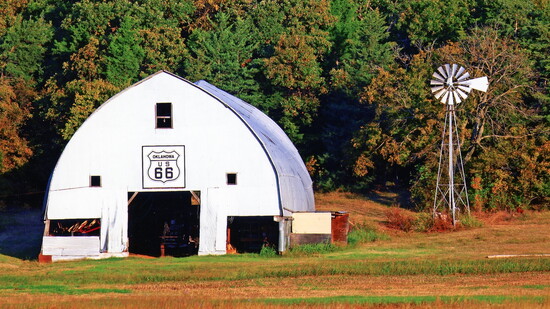
Route 66 is more than just a highway, it’s an American legend. From westward migration to its place in countless songs and movies like the legendary Pixar’s Cars –"The Mother Road" is a living symbol of American culture and history. Beyond the iconic landmarks are the diverse stories of the communities and small businesses that have shaped its past, present, and future.
Today, in partnership with the National Trust for Historic Preservation, Google Arts & Culture is launching a new theme page dedicated to this historic highway in anticipation of the Centennial of Route 66 next year. We’ll also be launching a brand new Google Arts & Culture experiment that uses AI technology like Veo to bring the Route alive, allowing users to journey through time by animating archival photography, exploring over 30 sites, and listening to AI-generated audio tours.
We’re hoping to broaden the public's understanding of Route 66 by bringing to life the vibrant communities that have been central to its journey. This new hub offers an online archive, featuring stories and collections from over a dozen partners, including state-level Route 66 associations and cultural organizations across the country.
Our partners at the National Trust for Historic Preservation have worked on various projects revitalizing and preserving pieces of history along Route 66. They also provide a national, cross-country perspective on the role of the Route through the 8 states it runs through:
- Step behind the scenes of the Mother Road with the National Trust for Historic Preservation on their critical efforts to save sites like the Threatt Filling Station in Oklahoma, a historic safe haven for Black travelers during the era of segregation, and the Osterman Filling Station in Arizona, a key cultural center for the Hualapai Tribe. Both sites represent a shift in preservation focus toward telling a more complete, equitable history of Route 66 by supporting the diverse communities (Black and Indigenous) that created essential, yet often overlooked, safe havens and cultural centers along the Mother Road.
- Learn about Route 66’s role in the rise of automobile culture in the US and its impact on the surrounding economies and communities.
- The rapid growth of the American automobile—skyrocketing from 450,000 registered vehicles in 1910 to 8 million by 1920—transformed Route 66 from a simple road into an economic engine. This vehicle surge fueled a unique ecosystem of mom-and-pop shops, quirky roadside attractions, motels, and theaters that leveraged their charm to connect disparate communities, creating the iconic American road trip experience and the indelible impact of car culture on the economies along "The Mother Road."
- Explore history, neon signage, and food from the start of the road in Chicago to its conclusion in Santa Monica 2,400 miles later spanning across 8 different states.
- Uncover the role of the road as the great connector between big cities such as St. Louis, Tulsa, and Albuquerque and read about reflections from one particular road trip:
- In 2018, a team from the National Trust for Historic Preservation hit the asphalt, embarking on a high-stakes road trip down Route 66. This wasn't just a scenic drive; it was a mission to connect with communities,and champion the highway as a critical, endangered American historic resource. The trip captured the authentic spirit of "The Mother Road" and became the initial spark that ignited their push to secure the road’s legacy and share its stories with the world.
We are also shining a spotlight on Oklahoma City, through a dedicated subchapter, celebrating the city’s cultural landscape and vibrant history. Featured partners include the National Cowboy & Western Heritage Museum, the Oklahoma City Museum of Art, and Red Earth, which spotlights Indigenous craftsmanship, history, and artworks in the region. Oklahoma City marks a turning point between east and west for those travelling Route 66, and is the gateway to the Western segment of the road.
The National Cowboy & Western Heritage Museum tells the story of Route 66 as intricately connected to westward expansion and our collective understanding of “western” culture.
- Discover Indigenous history and culture through the intricate craftsmanship and vibrant artwork highlighted by Red Earth, a non-profit that promotes the arts, cultures and traditions through education of this community.
- Learn about the journeys of photographers and artists such as Joe Andoe inspired by Route 66 featured in the collections of the Oklahoma City Museum of Art.
By bringing these stories online, we hope to preserve the rich history of Route 66 and encourage both American and international audiences to explore these pockets of America. As the nation approaches its 250th birthday next year, come explore with us and discover the heart of this iconic American journey.
"The Mother Road"
We’re hoping to broaden the public's understanding of Route 66 by bringing to life the vibrant communities that have been central to its journey.