Termites in Blue Springs & Lee’s Summit, MO
What Homeowners Should Know
If you own a home in Blue Springs or Lee’s Summit, termites are something worth paying attention to.
Every spring, we start getting calls from homeowners who suddenly see small flying insects around their windows or lights. Many times, those are termite swarmers.
In our area, termite swarms usually happen between April and May. Because of the extra moisture we had this winter and spring, we expect termite activity to be higher than normal this year.
The good news is that if termites are caught early, they can be managed effectively. Understanding what to look for can make a big difference.
What Kind of Termites Live in Our Area?
The main termite we see in Blue Springs and Lee’s Summit is the subterranean termite.
These termites live in the soil and build large underground colonies. A single colony can contain hundreds of thousands of termites.
Because they need moisture to survive, they build mud tubes that allow them to travel from the soil to your home without drying out.
We commonly find termite activity around:
• Foundations
• Crawlspaces
• Deck posts
• Basement framing
• Wood siding close to the soil
• Areas with past water damage
The truth is, any home with wood can get termites, but some homes create better conditions for them than others.
Why Termites Are Common in Blue Springs & Lee’s Summit
One thing many people don’t realize is how much soil type affects termite activity.
In Jackson County, we have several different soil types, and each one behaves differently when it comes to moisture. That moisture is exactly what termites need.
Homes that tend to have more termite activity often have:
• Poor drainage around the foundation
• Downspouts dumping water near the house
• Landscaping that traps moisture
• Wood touching soil
We also see termites show up more often in areas that have had water damage or fire restoration, because those areas tend to stay moist longer.
Signs You Might Have Termites
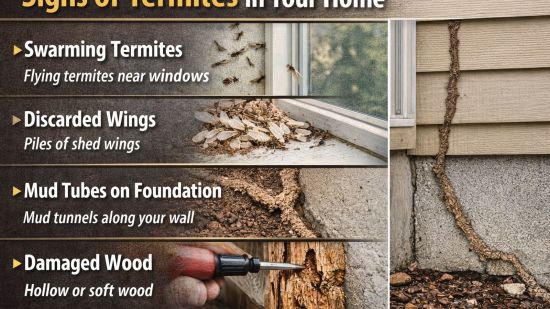
Many homeowners first notice termites when they see flying termites inside the home.
Here are the most common warning signs:
Flying termites near windows or lights
Usually seen in the spring during swarm season.
Small piles of wings
Termite swarmers shed their wings after landing.
Mud tubes on the foundation or walls
These pencil-sized tubes protect termites while they travel.
Wood that sounds hollow when tapped
Soft or moisture-damaged wood
If you notice any of these signs, it’s a good idea to have a professional take a look.
A Common Termite Mistake
One of the biggest mistakes homeowners make is thinking termites can be handled the same way as ants.
They can’t.
Ants can often be controlled with surface treatments or basic baiting.
Termites are different because the entire colony lives underground, often far away from where you see the damage.
Spraying the termites you see rarely solves the problem.
Effective termite control focuses on the colony itself, not just the insects you happen to see.
Another mistake is skipping termite monitoring programs. Even after treatment, monitoring helps catch new activity early.
Termite Treatment Options
Every home is different, so the best treatment depends on the structure and the conditions around it.
Here are the most common options we use.
Liquid Termite Treatment
Liquid treatments use professional products like Termidor® to create a treated zone around the home.
When termites move through the treated soil, the product spreads through the colony, helping eliminate them.
This is one of the most effective ways to control active termite infestations.
Termite Bait Stations
We also install Trelona ATBS termite bait stations around the home.
These stations allow termites to feed on bait that they carry back to the colony.
Bait systems are great for:
• Monitoring termite activity
• Long-term protection
• Homes where trenching or drilling may not be ideal
Foam Treatments
In certain situations, we may use foam treatments with Termidor to treat wall voids or areas where termite activity is found.
These are usually used alongside other treatments to address the problem fully.
Why Choose Local Guy Pest Control?
Termite control requires experience and careful inspection.
Before starting Local Guy Pest Control, I spent years working in the termite industry and completed advanced termite training through Texas A&M’s termite program.
That experience helps us understand:
• termite behavior
• soil treatment methods
• structural risk factors
• long-term termite prevention
Our goal is always simple: give homeowners honest information and the right solution for their home.
No pressure, just clear answers.