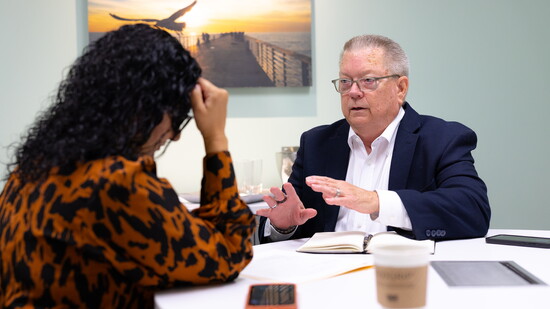
For families living alongside addiction, gratitude can sometimes feel impossibly far away.
Garry Olson, founder of Garry Olson Interventions, believes the work is ultimately about what families can regain: hope, stability, and, when recovery begins, the person they feared they had lost. “Every emotion you can name is in that room at once— anger, sympathy, fear, guilt. But it isn't the same mix for everyone, and it's rarely neat,” he says.
After 12 years of working with families, Garry understands that the first step is not solving the addiction but helping those closest to it regain their footing. “It is usually a moment of clarity,” he says of that turning point, when families decide they can no longer continue down the same path.
That realization allows them to move from reacting to each new crisis to making thoughtful decisions about what they can realistically control.
For Garry, the real work begins well before the intervention itself. Instead of creating another emotionally charged confrontation, he spends approximately two weeks preparing with a family, learning its dynamics, history, and unique circumstances before the intervention takes place.
“My job is not to create more chaos. My job is to understand the entire family and bring structure to a situation that has become unmanageable,” Garry says.
The result can be transformative even before the intervention begins. Families who arrive feeling overwhelmed can leave the initial process with a clearer understanding of addiction and a sense of direction.
“That movement from panic to purpose is one of the most important parts of the work,” Garry says.
While a successful intervention may ultimately lead a loved one into treatment, Garry believes what happens along the way matters, too. Families learn how to establish boundaries, understand their options, and respond from a place of knowledge rather than fear. Because addiction affects everyone around it, those closest to someone struggling often carry their own pain, uncertainty, and exhaustion.
“Recovery is not only about the individual who is using substances. The family needs recovery, too,” Garry says.
For many, that is where gratitude begins. As recovery takes hold, loved ones may find themselves reconnecting with the father, mother, son, or daughter they remember—the personality and relationships that had been overshadowed by addiction.
“They are grateful to see that person becoming themselves again,” Garry says.
He has seen that transformation ripple outward, restoring relationships and giving families reason to imagine a future that once seemed out of reach. “For me, helping one person find a way to live their best life makes all the difficult moments worthwhile,” Garry says.
For Garry, those reunions carry even more weight because of his own experience in recovery. At the end of his own addiction, he says, “I felt empty. I believed my life might end with me being a hopeless drunk.”
A moment of clarity led him to call his sister and ask for help. “Once I entered treatment, I began to see that there could be hope for my future,” he remembers. “I will always be grateful that my family never gave up on me.”
Today, that gratitude continues to inspire the work he does with other families. While Garry doesn’t promise a particular outcome, he does believe an intervention can open a door.
“An intervention is not a guarantee. It is an opportunity for change,” Garry says. Sometimes that change begins with treatment or a family stepping out of the pain to reclaim stability. Either way, Garry believes it opens the door to something better. “For me, an intervention is always an opportunity for hope,” he says.
My job is not to create more chaos. My job is to understand the entire family and bring structure to a situation that has become unmanageable,