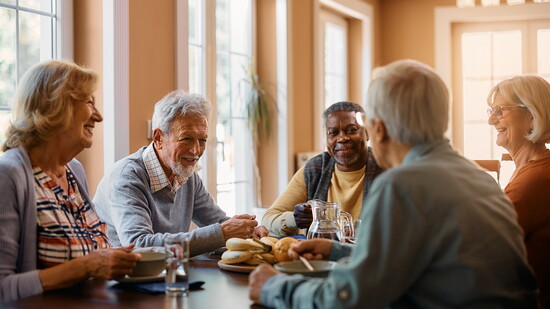
Is it possible to want something and not want it at the same time? Not only is it possible, but it is also a common experience most can relate to. Consider the common desire to lose weight, while also lacking the will to cut out the sugary treats. Desires exist for both things. This internal struggle of wanting two things that may be directly in opposition to one another is best defined as ambivalence. A co-existence of contradictory feelings. A descriptor that could easily be applied to the senior population as it relates to their relationship with senior living.
Today’s seniors were raised by parents who were directly impacted by World War II, The Great Depression, and shaped by early 20th century values. They were raised to have character, defined by a sense of duty, sacrifice and work ethic. This group is also defined by the magnitude of progress they have witnessed with their own eyes. From technological innovation to industry expansion, to the evolution of health care and shift toward patient choice, the volume of changes and adjustments this generation has adapted to is unmatched.
Perhaps one of the most notable shifts in the last 100 years, or even the last 50 years, is the senior living model. It is likely that any reader over the age of 50 can recall a visit to a nursing home as a child. For most, this experience was not a flattering one for the senior housing industry. At one time, caring for elders mirrored the hospital model with an institutional environment that was focused on providing the basics like shelter and food, while ignoring the deeper parts of the human existence.
Fast forward to 2026, and the senior living industry now looks and feels more like a resort with luxurious amenities and services, chef-prepared meals and impressively, spacious apartments. Take West Fort Worth’s very own Stevenson Oaks, recently opened in 2022, it currently offers 172 Independent Living Apartments, 40 Assisted Living Apartments and 24 Memory Support Suites. Soon they will be breaking ground on a Long-Term Care house, which will open roughly 18 months after construction begins in the second quarter of 2026. Adding Long-Term Care to the campus will make Stevenson Oaks a true Continuing Care Retirement Community (CCRC) — a concept that has become especially popular among today’s seniors who consider themselves to be planners, hoping to align all their future care decisions with an organization or group of people they trust.
Stevenson Oaks’ Marketing Director, Harmon Nelson, shared, “When you first drive up to the Stevenson Oaks’ property, you are struck by the beautiful grounds, then you walk inside and it is truly breathtaking. This place is such a long way from what I suspect most people picture when they think of senior living. But most of all, they catch the vision of what Stevenson Oaks is about when they meet the people, active, interesting and thriving seniors, just like them! That’s why we encourage people to come see Stevenson Oaks themselves. Once they do, I am confident it will shatter all preconceived notions. ”
Despite the complete shift senior housing has made, it seems this generation holds a certain level of ambivalence toward making the move. Perhaps it is the core memories of what the industry once looked like, or the reluctance to face the enormous task of downsizing, the reasons to stay in the home are many. And yet, this same group, who has adapted arguably more than any other generation before them, sees the potential excitement in retiring from backbreaking yardwork and housework that comes with home ownership, not to mention the daily cooking and cleaning routine. Interestingly, this group tends to reflect well on the impact of isolation and loneliness on one’s well-being. Perhaps it is the shared experience of the COVID shutdown that makes this an easier topic to broach than ever before, but the frequency of these conversations on both social media and other senior-focused platforms seem to indicate an increased value of how a decline in well-being is a red flag worth monitoring. Plus, when it comes to future care, this group generally remains realistic that relying on their children isn’t likely an option, and for most, not one they would entertain anyway. Nelson weighed in, “We hear this sentiment all the time, they do not want to be a burden to their children. It’s a very common feeling, one that does seem to prompt action to ensure it doesn’t land on the kids, while others can’t quite overcome the pull their own home has on them.”
When it comes to senior living, should the baby boomer generation also be called the ambivalent generation? A generation of seniors with an internal tug of war inside themselves. They want their home, but they don’t want the chores that come with it. They want to plan for their future, but they don’t want to make any changes today.
It is this familiar, ambivalent spirit that somehow wants both things. Resident Christina “Chris” Shahan of Stevenson Oaks shared her own experience saying, “My husband, Mike, and I lived in a lovely home close to the TCU campus. We loved our home and the neighborhood: large swimming pool that easily held all eight grandchildren, easily accessible activities at TCU, wonderful neighbors and nearby restaurants. However, it was getting harder and harder to keep up a home that was built in the 1940s. And we had stairs that were getting harder and harder to climb.”
You see, the love they had for their home didn’t fade when the desire to leave the home began to set in. The odd tension between loving their home and desiring to leave it behind is a perfect example of ambivalence. When asked if the tug toward the house lingered after making the move she shared, “It took very little time for us to feel comfortable in our new home. The community was very friendly and welcoming. We loved being able to walk to the dining room, sit down and be served. Mealtimes were a great time to sit and visit and get to know our neighbors. Mike and I have a blended family. All four of our children are glad we moved here. When they come to visit, they see what a loving community it is. They are glad that we moved into such an aesthetically pleasing building and that I feel so comfortable here.”
She was also quick to point out that the adjustment period had its challenges too. She explained, “Packing up our things and deciding what we would not have room for was very hard. We had some beautiful, large antique furniture and my husband loved to do woodworking in the garage where he had tools that he had acquired over many years. We did feel ready to move because of some health problems my husband had and dreading how much harder moving would be if we put it off.”
Nelson added, “The internal tug of war is a bit different for each person, for some it is the draw between wanting to simplify their life, and the tug to stay at home where they have built a comfort zone. For others, it is a determination to do things on their own, you know, making their own decisions, while also wanting to wait as long as possible before making any changes. It doesn’t always have to be logical; it really is possible for two things to be true when it comes to what seniors want. But what’s interesting is what happens to those who make the decision to move to Stevenson Oaks, almost 100% of the time they say they regret not doing it sooner!”
It seems our lived experiences gather up on one side or the other in this internal tug of war, shifting a bit as we age but ever tugging us in one direction or the other. Nelson added, “Another thing we hear repeatedly is seniors who say they don’t feel ready yet. But, you see, that’s the problem. Because if you are waiting around to feel ready, that day will likely never come — at least for most people.”
For Shahan, the timing of the move came just at the right moment. “Six weeks after we moved in, my husband died unexpectedly of cardiac arrest,” she explained, “the community could not have been kinder or more comforting toward me. When you move in, your life continues with all the ups and downs it has always had. The best thing about a place like Stevenson Oaks is that you have friends and neighbors with which to share those ups and downs.”
Ultimately, seniors who are feeling a tug toward senior living should expect that the feelings of loss will assuredly be mixed into any decision they make. Embracing senior living also requires embracing a new season. This emotional journey can feel especially difficult as this age group is facing more major life changes annually than any other.
Nelson shared, “I encourage seniors to explore the ambivalence they may be experiencing toward senior living, check out the options in the area, talk to the kids, discuss with their advisors, and try to really understand what they want most out of this season. Then, align their decisions accordingly. We have a little saying in the senior living business, ‘where you live matters.’ There is no substitute for a community of like-minded people through the ups and downs of life. Now that’s something your house can’t do for you. There is no doubt in my mind: Choosing where to age will most certainly determine how you age.”