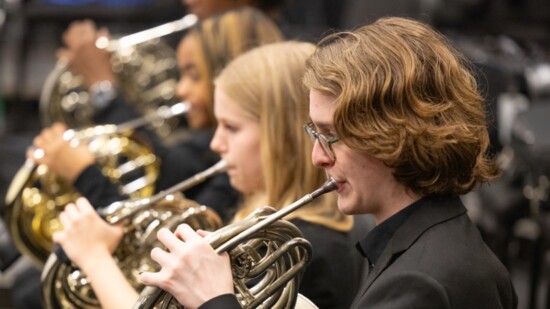
According to Suzanne Tucker, Executive Director of the Georgia Symphony Orchestra, "Studying music doesn't just make you a better musician, it makes you a better human."
That's why the Georgia Symphony Orchestra (GSO) founded the Georgia Youth Symphony Orchestras (GYSO) to enhance the quality of music education for children in Cobb County and beyond.
Michael Alexander, the director of Cobb Symphony Orchestra until 2015, started the kid-friendly program in 2006. Just as the Cobb Symphony became the Georgia Symphony Orchestra due to its increasing popularity across the State, GYSO was born, drawing students from 17 Georgia counties to be a part of the program's 11 different ensembles.
Today, GYSO is cherished for many reasons. The program doesn't just teach students to hone their musical skills, but gives them the chance to play in a large group setting unlike any other. The ensemble environment requires a different kind of musicianship and, in turn, offers top quality teachers and a strong support system. Each ensemble exposes students to a broad range of music genres and advanced music. For that reason, GYSO programs can and should be supplemented on top of school programs and/or private lessons. For students that are home schooled or only take private lessons, GYSO poses additional benefits thanks to its unique, performance-based setting.
There's no time like the present to learn a new skill, and the earlier students begin their music journey, the more time they'll have to reap the social and educational benefits. For that reason, Dr. Timothy Verville, GSO's Music Director, urges parents to start students in the right place.
"Let your child explore all that is out there from singing to instrumental performances. And if they have an interest, find classes/ensembles either through their school or outside organizations. The first choice isn’t necessarily the one that is right for the student," he advises.
For those wondering why music, the statistics speak for themselves. The study of music promotes curiosity, creativity and collaboration. Music students regularly out-perform their peers on standardized tests and are statistically more likely to be elected to school office, have perfect attendance, and attend and graduate college. But the benefits permeate even deeper than intellectual capabilities. Playing and performing music engages every part of the brain, fostering collaboration, harmonization, confidence and broader cultural and artistic horizons.
As GYSO's Artistic Director Nat Parker puts it, "There are many immediate and long-term benefits for children who are involved in music. Perhaps the most significant is that—whether as a profession or a hobby—music offers a vehicle for individual expression that children will be able to engage with throughout their entire lives."
Cobb County students and their families are invited to glimpse the magic at two upcoming GSO performances geared toward families. The GSO will kick off its 74th season with a shortened concert presentation featuring George Gershwin's Rhapsody in Blue on October 12, perfect for young attention spans. Additionally, on November 9, the orchestra will present two concerts of special interest to young families: a Sensory Friendly concert and Family Concert. Both feature music from epic Marvel movies and an Instrument Petting Zoo for a hands-on music making experience. The Sensory Friendly concert offers reduced volume levels, limited ticket sales to avoid crowding, sensory tools, freedom of movement and access to a quiet room.
For information about these and upcoming concerts, and to learn about GYSO, visit georgiasymphony.org.
*Pullquote for page 4: "Music has a special power to transform. It shouldn't be 'extra' for children. It should be core—something that everyone has access to. Studying music doesn't just make you a better musician, it makes you a better human." - Suzanne Tucker, Executive Director