Bill Dumas has made sausage out of just about everything.
Peach cobbler. Macaroni and cheese. Kangaroo. Even chicatana ants from Mexico.
But for the Texas pitmaster known as “The Sausage Sensei,” pushing the boundaries of sausage-making isn’t simply about creating something unexpected. It’s about transforming an often-overlooked staple of Texas barbecue into something worth experiencing in a new way.
“Food is not just nourishment,” Dumas says. “It’s community and it’s art.”
That philosophy has taken Dumas around the world, where he teaches sausage-making and collaborates with local chefs and pitmasters, incorporating the ingredients and culinary traditions of the places he visits. But his roots in barbecue begin much closer to home.
Dumas grew up cooking alongside his grandfather in North Texas, where he learned to direct-grill split chickens over hot coals and coat them in a family-made molasses-and-coffee-based sauce.
Those memories took on new meaning in 2012 after the death of his son, Samuel Curtis Dumas. While grieving, Dumas found himself drawn back to barbecue. An episode of “BBQ Pitmasters” brought back memories of his grandfather and the time they spent cooking together.
“It made me start thinking about myself, my grandfather, what he did, how we worked together, food, and I really crawled down a rabbit hole,” Dumas says. “So it was kind of a soothing salve over the open wound after my son had passed.”
Dumas eventually connected with Austin’s barbecue community through Smokey Denmark Smoked Meats, where he learned the science and regulations behind commercial sausage-making and began experimenting with unexpected flavors.
“We opened up the food truck for Smokey Denmark, and I started making all kinds of wild, unusual things, still trying to find my way in the industry,” Dumas says. “I certainly didn’t know anything about running a restaurant or food truck, but I was willing to make it good.”
Soon, those experiments included sausages made out of everything from apple pie and blueberry mince to macaroni and cheese.
“I started making some really crazy things,” Dumas says, describing them as “composed dishes, exploded and reassembled in a tube.”
As Dumas became more involved in the Central Texas barbecue scene, his unconventional approach to sausage began attracting attention. In 2015, he joined the team at Stiles Switch BBQ & Brew, where he gained experience producing barbecue at a much larger scale.
“We were producing probably about 80 to 100 briskets a day, along with everything else,” he says. “It was insane. Twenty-four hours a day, seven days a week. At volume.”
After helping open The Switch in Dripping Springs in 2018, Dumas eventually returned his focus to sausage. In 2020, pitmaster John Brotherton brought him onto the team at Brotherton’s Black Iron Barbecue, where Dumas developed a sausage program that included Central Texas hot gut, jalapeño cheese, and brisket boudin.
“I joined John’s team and immediately, right out of the gate, developed a program for him,” Dumas says. “I started making unusual sausages once again.”
That creativity produced combinations such as supreme pizza, Polynesian, and peach cobbler sausage. But another opportunity soon expanded Dumas’s reach beyond the restaurant.
Around the beginning of the coronavirus pandemic, Dumas was asked to film a sausage-making class. Its popularity helped spark a new chapter: teaching others the craft he had spent years learning.
“Not everybody can come to me,” Dumas says. “So I started going to them.”
His classes eventually took him around the world. Wherever he travels, Dumas says he looks first to the culture and ingredients of the place itself.
“Wherever I go in the world, no matter where it is, I always like to consider what’s important to the people, and also to the land itself, because that often translates to the foods we eat,” he says.
In Mexico, that philosophy led to a chicatana ant sausage made with the large leafcutter ants traditionally harvested during the rainy season. In Australia, he created one of his personal favorites: kangaroo sausage seasoned with regional ingredients including wattle seed, lemon myrtle, native thyme, and bush tomato.
The point, for Dumas, isn’t simply to put something unusual inside a casing. It’s to use sausage as a way to explore a place and its food traditions while sharing a tradition deeply rooted in Texas barbecue.
After Brotherton died in 2024, Dumas stepped away from live demonstrations for a time. Eventually, a new collaboration brought him back.
Dumas connected with Dripping Springs resident Spencer Whelan, former executive director of the Texas Whiskey Association, who saw an opportunity to create the kind of in-person culinary experience that had become increasingly important in a digital world.
“Especially in the world of AI, if you can’t be sure that what you’re seeing and what you’re hearing are true, then you should be there physically and touch, taste, and smell it,” Whelan says. “Dumas provides the ultimate kind of experience. He does sausage, which is visual, textural. He’s explaining it; he’s talking about the science of it, the emulsification process.”
Together, Dumas and Whelan began developing the Sausage Sensei experience, including a dinner at Turtle Creek that presented different sausages as composed, plated dishes paired with complementary garnishes.
“With differing sausages with appropriate garnish, I think that tells the story of the sausage itself better and then elevates it as well,” Dumas says.
For Whelan, that transformation is part of what makes Dumas’s approach compelling.
“You take the most mundane thing and turn it into something exceptional,” Whelan says. “That’s what art is, right?”
Sausage, he says, can be dismissed as “mundane and boring” or as “the leftovers of the barbecue world,” when historically it has played an important role in shaping Texas barbecue.
Dumas and Whelan have since continued building the Sausage Sensei concept, taking Dumas’s unconventional approach to new events, demonstrations, and competitions. At Memphis in May’s World Championship Barbecue Cooking Contest, Dumas entered the seafood category with a paella-inspired sausage—another example of his tendency to look at a familiar dish and ask whether its essential flavors can be reimagined inside a casing.
In July, they brought that same curiosity to YouTube (@sausagesensei), launching Sausage Sensei as a way to demystify sausage-making and make the craft more approachable. Their first series features Dumas’s peach cobbler sausage, walking viewers through the process while demonstrating just how far the concept can be pushed. Future episodes will take it even further, with creations inspired by everything from an In-N-Out Double-Double and animal-style fries to Thanksgiving dinner.
For all the unexpected ingredients, however, Dumas’s work remains grounded in a much older tradition. Sausage has long been a way to transform humble ingredients into something greater than the sum of their parts.
Dumas is simply seeing how far that idea can go.
SausageSensei.com | @sausage_sensei
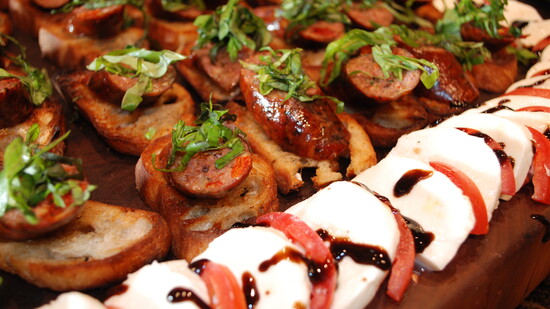
Dumas uses sausage as a way to explore a place and its food traditions while sharing a tradition deeply rooted in Texas barbecue.