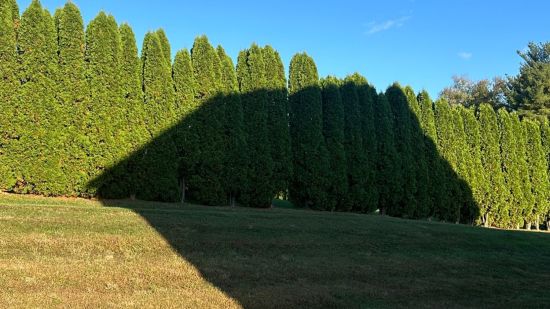
When Is the Best Time to Plant Arborvitae in Maryland?
HO-HO-HO Lovely people. Its Micayla C
And so the great debate continues-Spring vs. Winter Planting — Pros, Cons, and What Actually Works
One of the most common questions we get as a Potomac, Md. tree planting company is….
“When is the best time to plant arborvitae?”
So here is the nitty gritty short answer…(drum rolls please)…
There isn’t one perfect season that works for every situation.
The longer and more realistic answer is that both spring or winter planting can work in Maryland, but only if the area, the soil, and the expectations line up.
A1 Tree Pros plants arborvitae year round. And frankly, we’ve seen great results in all seasons. BUT….with great results we’ve also seen preventative (avoidable) mistakes year round.
The best advice we can give you is the “WHEN” is not as important as the “HOW”
So, without further ado, here is a little cheat code on what Arborvitae Actually Need to Succeed
Before we talk seasons, lets shed some light and understand what arborvitae care about most:
Consistent moisture
Time for roots zones to establish (this requires something most of our beloved Gen Z’ers wouldn’t understand- a little PATIENCE goes a long way)
Protection from extreme heat or drying winds
Decent drainage
Arborvitae are resilient. In other words, they’re tougher than people think, but they aren’t magic trees. Most problems don’t come from when they’re planted — they come from what happens after.
Spring Planting Arborvitae: Pros and Cons
Then general consensus is Spring is the most popular time to plant, and for good reason.
The Pros of Spring Planting
Soil temperatures are warming which brings with it higher microbial activity in the soil
Root growth kicks in quickly
It’s easier to keep up with watering
You can literally see visible growth in the same season (God Bless Mother Nature)
For many homeowners, spring planting also just feels more intuitive. The rest of the landscape is waking up, and general thinking is Arborvitae will follow suit.
The Cons of Spring Planting
Again (because it is worth repeating) the most common mistakes we see people make isn’t a planting issue — it’s a follow-through issue.
An all too common occurrence is homeowners stop watering too early
It’s the old adage-Spring rain creates a false sense of security
The inevitable Heat stress of June and July hit HARD
Many arborvitae that struggle in summer were planted perfectly in spring — they just didn’t get enough consistent water once temperatures climbed.
This actually surprises a lot of people but believe it or not-Winter Planting Arborvitae is A1 Tree Pros FAVORITE time to plant…
There is a misconception that planting in winter is not ideal….
We respectfully disagree. First off; Maryland winters aren’t continuously frozen. Any one who lives here knows we get plenty of mild stretches where soil temperatures are still workable, and roots can establish slowly below ground even when top growth is dormant.
The Pros of Winter Planting
No summer heat stress
Less transplant shock
More time for root establishment before spring growth
Often easier scheduling and availability
Also, when it’s done correctly, winter-planted arborvitae can enter spring FRESH (already settled and ready to grow).
Cons of Winter Planting
Winter planting isn’t “set it and forget it.”
Watering is still important during dry spells
Wind burn can be an issue in exposed areas (especially in Potomac and Frederick MD)
Poor drainage becomes a bigger problem with snow
Not every site is suitable
As a Potomac, Md. tree planting company we’re more cautious with winter installs on hilltops, open fields, or properties with heavy low quality clay based soil that stays wet.
When Winter Planting Works Best in Maryland
Based on our experience, winter planting tends to succeed when:
The site is sheltered from strong wind
Soil drains with relative ease
The trees are properly mulched (not buried)
Watering continues during more mild dryer periods
This is especially true in areas like Potomac, where mature landscapes and wind protection are common.
Size Matters: Small vs. Large Arborvitae
Timing matters more as arborvitae get larger.
Smaller trees (5–6 ft): These are more forgiving in both seasons
Larger trees (8–12 ft): Require better planning, watering, and site conditions
Bigger trees give instant privacy, but they demand more attention — especially outside of spring.
So… What’s the Best Time to Plant Arborvitae?
Here’s the honest answer we give customers:
Spring is easier but Winter is our favorite because it can be just as effective — if it’s done right.
Sorry to be the bearer of mundane generalized fortune telling…
There’s no universal rule. The “best” time depends on:
Your property
Exposure
Soil
Tree size
Willingness to water consistently
In a nutshell-some of the healthiest arborvitae we see today were planted in late fall or winter while some of the weakest were planted in spring and ignored during summer.
Final Thoughts
The biggest takeaway is simple-when newly planted Arborvitae fail its not usually due to the time of year they were put in the ground but rather about homeowners assuming.
Assuming rain is enough
Assuming dormant trees don’t need water
Assuming one season is always better than another
If you’re unsure which timing makes sense for your property, it’s worth slowing down and evaluating the site before planting. A little planning up front can mean the difference between thriving evergreens and a costly replacement a year later. Happy Holidays good people! This is Micayla C over and out……….