The next time you pop an almond into your mouth or bite into a crisp apple, take a moment to thank a bee. While some people fear them or dismiss them as pests, bees are among the most essential contributors to our food system.
“If they aren’t around, we simply don’t have food,” says Charlie Koenen, a beekeeper, advocate and president of the Milwaukee Waukesha Beekeepers Association in Brookfield. In fact, he is quick to challenge the way people refer to bees.
“They aren’t just insects,” he says. “They are super organisms.”
Koenen’s passion is rooted in experience. Twenty-five years ago, he walked away from a career selling Apple computers to pursue beekeeping full time, jokingly referring to himself as a “poor beekeeper” ever since. “I do it for the bees in the box, not the money in the honey,” he says.
What he gave up in income, he gained in purpose.
Today, Koenen works at Heritage Honeybee in Sullivan, the nation’s largest distributor of package bees, nucleus colonies and queens. The bees are sourced from top producers in Georgia, Northern California and Texas, then shipped to Wisconsin and distributed across the Great Plains, Midwest and the Great Lakes regions for the spring and summer seasons.
Each spring, truckloads of bees arrive at the facility. Koenen and his colleagues carefully sort and distribute the crates, known as nucleus colonies. Beekeepers from across a five-state region place their orders months in advance, then travel to Wisconsin between March and May to pick up their bees and begin the season.
At home in Milwaukee’s River West neighborhood, Koenen continues his work as both a beekeeper and educator. He places hives in visible, accessible locations such as church grounds, where people can observe them safely. The goal is simple: reduce fear and build understanding of their importance.
That importance extends far beyond honey production. In southeastern Wisconsin alone, there are more than 500 species of bees. Surprisingly, only one species, the honeybee, produces honey and survives the winter as a full colony. Most other species overwinter as a single queen and emerge in spring to pollinate.
Aside from bumblebees, the majority are solitary bees. These native pollinators do not live in hives or produce honey, but they are responsible for pollinating much of the region’s native plant life. Many of them nest quietly in the ground, often going unnoticed.
Koenen emphasizes that supporting these native bees is just as important.
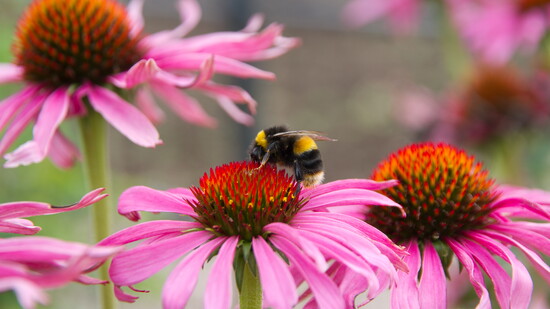
“The best thing homeowners can do is plant native species,” he says, pointing to plants like purple coneflower, bee balm, milkweed, asters and goldenrod. He also urges people to avoid pesticides, which can harm both honeybees and native pollinators.
He notes that many homeowners mistakenly assume that bees emerging from their yards or patios are honeybees.
“People see bees coming out of the ground and think they have a hive problem,” Koenen says. “In reality, those are solitary native bees emerging to meet the spring flowers. They are not aggressive, and they play a critical role in pollination.”
Despite their importance, bee populations face growing threats. Unpredictable weather patterns, urban development, chemically treated lawns and the widespread use of non-native plantings all contribute to pollinator decline. Large scale monoculture agriculture also limits the diversity of food sources available to bees.
Honey Love
When it comes to honey, Koenen is equally passionate. He believes consumers are often missing out on the real thing.
“Most of the honey in grocery stores is highly processed,” he says. “When people try local honey from a farmers’ market, they often say it is the best they have ever tasted. That is because it is real honey.”
Beyond its flavor, honey is valued for its potential health benefits. It has natural antibacterial and antifungal properties and has been used in treating wounds, skin conditions and even diabetic ulcers. Some people also believe that local honey can help reduce seasonal allergy symptoms.
Bee Alert
Interest in beekeeping continues to grow, especially among young people and retirees looking for a meaningful hobby.
For those in Brookfield, getting started requires following local regulations. Residents must submit a notarized application and obtain permission from neighboring property owners, and specific guidelines for hive placement must be followed. The application fee is $70. More information is available on the city’s website by searching “beekeeping” at ci.brookfield.wi.us.
Koenen encourages anyone curious about beekeeping to start by learning. He often recommends educational resources, including a new documentary series on PBS, Paramount and Hulu called the “Secret of the Bees,” and invites newcomers to connect with experienced beekeepers.
Homeowners can attend a monthly meeting of the Milwaukee Waukesha Beekeepers Association, held the first Monday of the month at 7 p.m. at the Brookfield Public Library, 1900 N. Calhoun Rd. New beekeepers are invited to come at 6 p.m. for introductory sessions. The next meeting dates are July 6 and Aug. 3.
"If bees aren’t around, we simply don’t have food. They aren’t just insects. They are super organisms.”