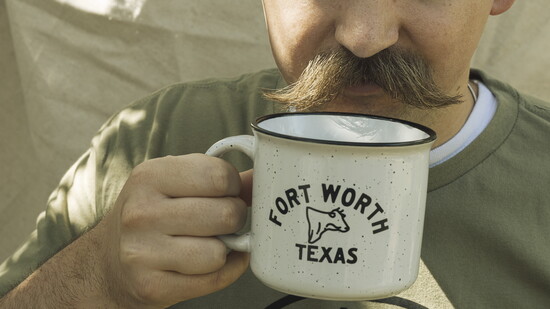
The mustache has been making statements long before it ever became a trend, showing up everywhere from Ancient Egypt to the Iron Age Celts. Early on, it wasn’t just about appearance—it signaled status, strength, and even desirability. The word itself comes from the French ‘moustache,’ derived from the Italian ‘mustaccio,’ meaning the hair that grows on the upper lip.
By the 19th century, the mustache had become more than just facial hair—it was a statement. Across Europe, it was closely tied to masculinity, authority, and honor, especially among military men, who were often expected to wear one. As noted by Smithsonian Magazine, facial hair at the time signaled discipline and status.
That dominance didn’t last forever. By the early to mid-20th century, the clean-shaven look began to take over, especially in professional settings. Corporate culture favored neatness and uniformity, but there were also practical reasons for the shift. During wartime, certain styles of facial hair interfered with equipment like gas masks, making shaving the safer option. Over time, the mustache faded and became less common in everyday life.
But it never disappeared completely. Instead, it took on a different role, becoming less about authority and more about personality. In pop culture, the mustache became a signature look for some celebrities. Think of Freddie Mercury, whose look became inseparable from his stage presence, or Tom Selleck, whose signature look practically defined a generation of television. Even fictional characters like Ron Swanson lean into the mustache as a symbol of a certain kind of old-school masculinity.
There’s also a psychological side to it. Research published in Evolution and Human Behavior suggests that facial hair can influence how people perceive traits like dominance and maturity. A mustache, in particular, tends to stand out—it’s more deliberate than stubble, but less conventional than a full beard. Whether intentional or not, a mustache tends to send a message before a person even speaks.
Lately, the mustache has found its way back into the mainstream, though not quite in the same way as before. Its comeback has been driven by nostalgia, shifting trends, and a touch of irony. What was once a rigid symbol of masculinity is now more flexible—something that can be styled, joked about, or worn sincerely, depending on the person. Publications like GQ have even tracked its return as part of a broader revival of classic grooming.
Today, the mustache doesn’t come with strict rules or expectations. It can be polished, ironic, nostalgic, or entirely personal. It’s no longer about fitting in, but about standing out—on your own terms.
Fun Facts about the Mustache:
- Due to its popularity in the 19th century, a special spoon called the "Mustache Spoon" was designed with a guard to prevent hot soup or tea from melting mustache wax.
- The oldest known portrait of a mustache is on an Egyptian prince named Rahotep, dating back to roughly 2500 B.C.
- To hide a split lip from a moped accident in 1965, Paul McCartney grew a mustache. The band later included cardboard cutout mustaches in their Sgt. Pepper's album for fans to mimic the look.
- In 1698, Russian Tsar Peter the Great introduced a "beard tax" to force men to conform to Western European fashion, which often meant keeping only a mustache or going clean-shaven.
- During the Dark Ages, knights would have armor custom-made to emphasize and protect their luscious locks.
- On average, a mustache wearer touches their mustache over 700 times a day.
- The world's longest mustache belongs to Ram Singh Chauhan of India, measuring 14 feet long.
T-Shirts + Mugs
Fort Worth Locals
shopfwlocals.com/
1455 W. Magnolia Ave., Suite 121
Fort Worth, TX 76131