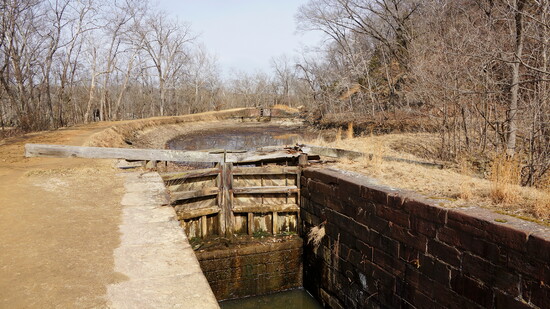
The roar of the Great Falls of the Potomac was once a sound of defiance. For the early American republic, these crashing waters represented a jagged barrier between the bustling Atlantic ports and the untapped wealth of the Ohio River Valley. Yet, in the late 18th century, this geological obstacle became the catalyst for a monumental "Cartography of Cooperation." The construction of the Patowmack (Potomac) Canal was not merely an engineering triumph; it was a physical manifestation of a "continental vision" that helped forge a unified nation from a collection of fractious colonies.
The Vision of Unity
The canal was the "pet project" of George Washington, who recognized that without a reliable commercial link between the East and West, the fledgling United States might splinter into competing regional factions. Washington’s background as a surveyor gave him a unique perspective on the terrain; he envisioned the Potomac as a "great avenue into the Western Country." In 1785, this vision required an unprecedented diplomatic breakthrough: the passage of identical laws by Maryland and Virginia to charter the "Potowmack Company."
This legislative harmony was revolutionary. At a time when the Articles of Confederation were failing to provide federal authority over interstate commerce, the two states reached across the river, which was the very boundary that often divided them, to find common ground. Their cooperation laid the groundwork for the Mount Vernon Conference and, eventually, the Constitutional Convention, illustrating that economic self-interest could be a powerful unifying force.
Engineering Against the Granite
If the diplomacy was complex, the physical labor was Herculean. The rugged terrain at Great Falls presented a sheer drop of nearly 80 feet through solid blue-grey schist and granite. Surveyor notes and historical journals from the era describe the grueling task of "cutting the rocks," a process that involved manual drilling and the dangerous early use of black powder for blasting.
The engineering at Great Falls was the "center of canal engineering" in the young nation. To bypass the falls, engineers designed a skirting system approximately 5,400 feet long. The most impressive feature was a series of five locks, which were required to lift or lower boats through the vertical descent. Construction proceeded in "fits and starts" for over 15 years, hampered by periodic floods, financial shortages, and the sheer difficulty of the geology. By 1802, the project reached completion, featuring one of the first deep-rock lock systems in the world.
A Metaphor for the American Experiment
The history of the canal bears an "astonishingly direct relationship" to the formative events of the U.S. Constitution. The project forced a divided people to resolve questions of authority and internal improvements. As laborers from different backgrounds carved a path through the ancient stone, they were inadvertently mapping the future of American governance.
The ruins of the canal today, including the remnants of the town of Matildaville, which served as the company’s once-thriving headquarters, stand as silent witnesses to this era of visionary unity. Though the canal eventually failed as a commercial medium and was superseded by the Chesapeake and Ohio (C&O) Canal, its legacy is not found in the weight of the cargo it carried, but in the precedent it set. The Potomac Canal proved that the "Union" could act for a common social and commercial goal, turning a rugged, divided landscape into a shared corridor of progress.
References
- National Register of Historic Places. (1982). Potomac Canal Historic District Inventory-Nomination Form. Virginia Department of Historic Resources. https://www.dhr.virginia.gov/wp-content/uploads/2018/04/029-0211_Potomac_Canal_HD_1982_Nomination_NHL_public.pdf
- Constance, E. (n.d.). Washington, the Engineer. Knowledge Bank, Ohio State University. https://kb.osu.edu/bitstreams/fdbb7cf8-e2e6-5531-930a-189f93fe94ce/download
- Federal Highway Administration. (n.d.). The Nation's First Mega Project: A Legislative History of the Cumberland Road. U.S. Department of Transportation. https://highways.dot.gov/sites/fhwa.dot.gov/files/Mega_Project_National_Road_Final%20.pdf
- LC Civil War Maps (2nd ed.), 53.4. https://www.geographicus.com/P/AntiqueMap/washingtondcpotomac-uscs-1862