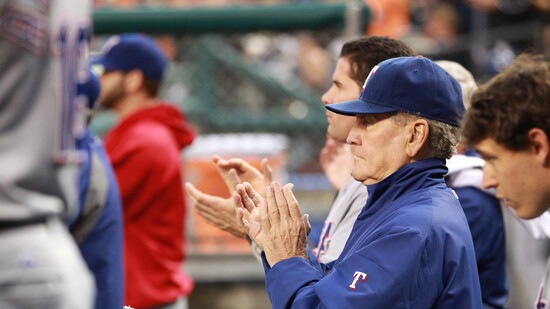
Jackie Moore, known to many as “Skip,” remains one of baseball’s most beloved figures, admired by fans and players across the country. Over a remarkable 57-year career (1957–2013), he devoted himself to the game and continues to share that passion today. In this exclusive Q&A, Jackie reflects on his legacy, revisits his proudest moments, and offers insight for the next generation.
What started your love for baseball? Was it always something you were interested in?
Growing up in Houston, my dream was always to play professional baseball. We didn’t have a lot of money, so I would force my sisters to throw rocks for me to hit, which, in hindsight, probably fueled my love for baseball. In 1957, I graduated from high school and signed my first professional baseball contract with the Detroit Tigers.
Back then, there were no free agents. The Tigers gave me $4k as a signing bonus, which, at that time, I thought I could live off for the rest of my life! I knew with a signing bonus like that, I needed to stay on the roster for at least three years. I figured I’d spend a couple of years in the Minor Leagues and then move up to the Big Leagues. I finally got my shot in 1964 with the Detroit Tigers and came to the Big Leagues. My dream came true as a Big League player.
Let’s talk about your long coaching career – how did that start? What were some of your favorite memories while coaching?
My first job was with the Boston Red Sox, then I managed the Jamestown New York Rookie Club, then went back with the Red Sox as the bullpen coach. In my second year with the Red Sox, I was asked to go to the Double-AA club to teach someone how to catch. I left the Red Sox and went to Winston-Salem.
I worked with him on the fundamentals – throwing, how to call a ball game, etc. On day three, we worked on blocking balls in the dirt, which is very important for catchers. You want to make sure the ball doesn’t get by you. We soon found out that day he wasn’t wearing a cup and had gotten hurt during that drill. Once I mustered up the courage to tell the general manager what happened, he just replied, “Well, is he going to be alright? Sounds like he’s got a lot of talent, but isn’t too smart.” That moment taught me never to take anything for granted. 57 years later, and I was still in professional baseball.
That player was Carlton Fisk, who went on to play for the Boston Red Sox and the Chicago White Sox for 24 seasons.
What kept you motivated to stay in baseball for so many decades, across so many different roles and teams?
The love of the game. I always dreamed about a career in baseball, and it's what I wanted to do my entire life. I always had the opportunity to be in the game, which I feel really thankful for.
Once I realized I wanted to stay as a coach, I ended up coaching 12 different teams. I had the opportunity to be a Big League manager, player, and coach.
You’ve worked with a wide range of organizations—are there particular teams or seasons that stand out as especially meaningful?
Winning the Texas League Championships with the Round Rock Express, a Minor League affiliate of the Houston Astros, was absolutely a highlight of my career. I got to watch these young players come in and essentially be their father away from home. I taught them how to be a man first – they all had the talent, and I felt honored to help make their dreams come true.
Interestingly enough, the kids with the most talent didn’t always make it; they didn't have the passion or determination to get to the Big Leagues. It taught me a lot about young prospects. We went from Double-A to Triple-A, and I got the opportunity to tell players they were headed into the Big Leagues.
I’d call them into my office and say, “We’re going to the show!” (That’s what we called the Big Leagues). I really enjoyed being a part of that big moment. I thought I would end my career there, but the Astros wanted me to be a bench coach, so I did that. The next year, Nolan Ryan took over the Rangers and asked if I wanted to come home to Arlington to coach with the Texas Rangers. We had a great relationship, and we went to the World Series twice! I finally retired in 2013.
Over my career, I went to 8 All-Star Games and 3 World Series. I coached a lot of great players and touched many lives, and they touched mine. Baseball is so much like life – sometimes you win, sometimes you lose. You need to learn how to handle winning and defeat, and try to pass that along to young players.
What was it like being part of a World Series–winning staff with the Cincinnati Reds?
It shocked the baseball world when the Reds ended up sweeping the A’s. Since the Reds were seen as a major underdog, a lot of people assumed the Oakland A’s were going to win. It was a unique opportunity to go to the World Series, play against the organization I previously managed, and end up sweeping them to win the World Series.
You were part of multiple playoff runs with the Texas Rangers—can you talk more about that?
The Rangers went to two World Series. During Game 6 of the 2011 World Series against the St. Louis Cardinals, we had the lead twice with two outs and two strikes to win the World Series, but ended up not being able to close it out. I tasted both ends of it – winning and defeat. They say there’s no crying in baseball, but they are wrong. It’s not over till it’s over.
Did you always envision yourself as a coach or manager, even while you were still playing?
I really did. Being a catcher, you’re basically the quarterback of the team. You have to know what every position is supposed to be doing, and you have the unique responsibility of having to handle an entire pitching staff. Knowing all this information made the transition to coaching a bit easier, thanks to my knowledge of the game.
How would you describe your coaching philosophy, and how did it evolve over time?
When I was managing Oakland for the Big Leagues, the players that work for you make more money, have longer contracts, and you can't fire them. You can take them out of the lineup for a day or two, but you have to be a pretty good salesman and get the trust of your players. Big League players should all have their identities and personalities, but your job as a coach or manager is to get them all on the same page. Teach them to be team players; you can’t let one disrupt your team.
How did you approach mentoring younger players, especially those just breaking into the majors?
Some were more mature than the others, and sometimes it was their first time away from home. These young men want to play in the Big Leagues; it's their dream, like mine was. I would learn their personalities, teach them how to become men, and then teach them the fundamentals of baseball. I would tell them, “Look, where you guys are trying to go, I’ve already been. I’ve covered all the bases. Let’s be professional and try to improve every day.” Getting that call to send them to the Big Leagues was just a thrill. They touched my life, too. It was so special to watch their journey.
How different is the perspective from the dugout as a manager versus as a coach?
As a coach, if something comes up, you can check with the manager about what they think. You always have someone behind you. Once you're a manager, you don’t have someone behind you, so you'd better have an open mind and be prepared as much as possible to find a solution. A good coach can make a manager's job a lot easier.
Your clubhouse chemistry is also really important. Your best players would make sure the clubhouse had its problems settled before it came to the coach. Everyone worked together and trusted each other. It is so important for the chemistry of a clubhouse.
An example was a group of Texas Rangers players. Michael Young, Ian Kinsler, Mike Napoli, and Adrián Beltré came to play every day. They really respected the coaching staff, held young players accountable, and led by example. With the schedule baseball presents to you, they had the attitude that they would play nine innings every single day. Having those types of players on your roster makes it a lot easier for the coaching staff.
You’ve seen the game change dramatically over the decades—what are the biggest differences between the game when you started and today?
A lot of it is the mindset. These days, they focus a lot on pitch counts. But when I was coaching, if you started a game, you’d finished it. Every day we would take to the infield and the coach would be hitting balls to the outfielders and take a round of ground balls to the infielders, every day, every game.
Were there any managers or coaches who had a particularly strong influence on your approach to the game?
So many. I started with Dave Bristol in Milwaukee, who gave me my first Big League job, then coached Texas with Whitey Herzog, and later spent seven exciting years with Billy Martin. There was never a dull moment. As a coach, you watch these people, and their whole mindset is to win. So I thought to myself, “Well, what is each of their approaches to winning? How does that differ?”
Billy’s philosophy was that you’re going to win 50 and lose 50 -- it's what you do with the other 60 games that determines your season.
When you look back on your career, what are you most proud of?
I was so fortunate to be part of so many different clubs and work with so many different players. They touched my life and my family's lives. Knowing it's something these players really enjoy and watching their dreams come true was so special. As someone who was signed straight out of high school, I worked with a lot of people. It’s a tough business to last that long.
What advice would you give to young players or aspiring coaches today?
You learn from the managers you spend time with. But if you are going to be successful yourself, you need to be yourself. Learn from others, but find your own makeup. Take what you’ve learned and create your own spin. Be yourself and cross your fingers.
There are no shortcuts in this business. For example, when Hunter Pence was at Round Rock, he was the first to show up and the last to leave. He would put in extra practice and was determined to become a big-league ballplayer. He worked hard at it, no matter how long it took. Because of his determination, he did really well playing for the San Francisco Giants.
Don't let anyone tell you you can't be a Big League ball player; it's how bad you want it. Hunter worked hard, he got the job done, and he was very determined.