Ask a parent of a high school senior, or a grandparent watching a grandchild graduate, what mattered most in their child’s education, and the answer is rarely test scores. With the passage of time, the metrics shift.
They speak of confidence. Of independent thinking. Of resilience in the face of difficulty. Of friendships that endured. Of curiosity that never dimmed. Of character. And sometimes, quietly, they admit what they might have done differently: less pressure, more wonder, a slower pace — a school aligned not just academically, but philosophically.
For younger parents at the beginning of that journey, the questions feel heavier. Public or private? Faith-based or secular? Outdoor immersion or traditional structure? The Santa Ynez Valley offers meaningful options, and with them, decision fatigue. Choosing a school can feel like choosing a future. It is precisely in that space, between urgency and hindsight, that Hundred Hills School finds its purpose.
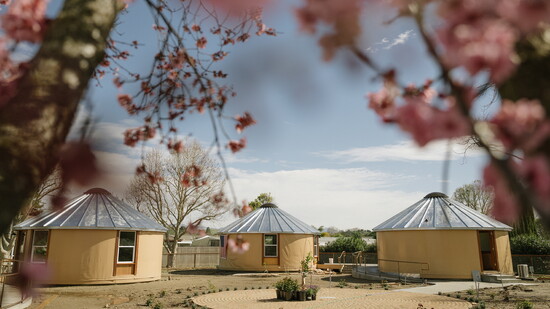
Opening a new campus in Buellton, the Waldorf-inspired preschool through Grade 8 school is built on a long-view philosophy: education not as short-term output, but as generational investment. “When we approached building a new school,” says founder and Joint Head of School Whitney Stevenson Chanana, “the question was not, ‘What is the immediate output?’ but rather, ‘What kind of adult will this child become at 25, 40, or 70?’”
That framework resonates in a valley shaped by vineyards, ranches, and multigenerational stewardship. The most meaningful returns here are rarely immediate; they are cultivated patiently. At Hundred Hills, that cultivation is both philosophical and tangible. Organic snacks and freshly prepared lunches are included in tuition, with meals cooked from scratch under the guidance of Kitchen and Garden Steward Katie Rose Isaacson Hames. Students share meals and participate in gardening and food preparation, learning where nourishment comes from and how it is grown. In a region defined by agriculture, this daily rhythm reinforces reverence for land, community, and gathering around a table.
That same intention extends to educating the whole child — head, heart, and hands. Intellectual rigor is paired with emotional intelligence, creativity, and practical life skills. Learning unfolds in rhythm with developmental stages, protecting wonder in the early years and introducing academics in developmentally appropriate ways. The result, the founders believe, is a young person equipped with options; the freedom to choose a path rather than be constrained by circumstance. In financial language, optionality is powerful. In human terms, it is life-shaping.
For the overwhelmed parent weighing school philosophies, that long horizon offers clarity. Instead of asking, “Which environment produces the highest scores?” the question becomes, “Who do we hope this child becomes?”
A confident thinker?
A compassionate leader?
A resilient problem-solver?
An adult who continues to learn long after formal schooling ends?
The campus on Dairyland Road signals another investment — not just in children, but in place. Schools are among the most enduring institutions in any town, anchoring traditions and community life. By building a purpose-designed campus in Buellton, the founders are making a declaration of permanence, a long-term commitment to the families entrusting them with their children’s formative years.
Looking twenty years ahead, Chanana says, “Success will be measured by the character and capability of the adults our students become. If our alumni are known for intellectual seriousness, sound judgment, and a moral compass shaped by their time here, that reputation will be our ultimate success.”
For grandparents reflecting on decades past, and young parents just beginning, the conversation often converges on the same realization: the work of raising and teaching children is less about acceleration and more about formation. Some investments are measured in percentages. Others are measured in people.
In building Hundred Hills School, its founders are betting on the latter — investing not only in the children who walk through its doors today, but in the adults who will one day be the parents, grandparents, and stewards of the Santa Ynez Valley.