Every empire has an origin story.
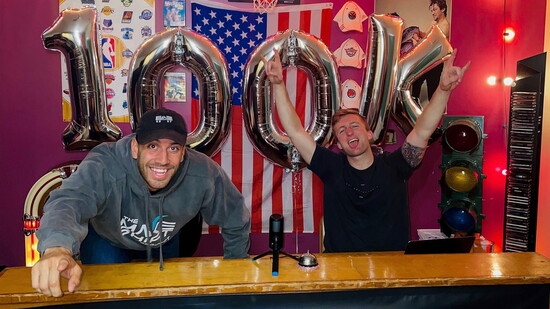
For Brian Conz and Zach Misischia, it began in a suburban basement in New Jersey—childhood desk, old gaming setup, random memorabilia on the walls. Not a sleek studio. Not a polished launch strategy. Just two best friends and a microphone.
Before the 6 million followers. Before the sponsorship deals. Before the brand expansion. There was a banner they bought on a whim and a decision to stop talking about creating—and actually create.
Twenty Years in the Making
Brian and Zach met in first grade, growing up making videos and experimenting with creative projects long before content creation was a career.
“Brian does this every day for other people,” Zach says, referencing Brian’s professional work in sports media. “Let’s do it for ourselves.”
At the time, it was less business plan and more instinct. They filmed once. It flopped. They hesitated. Then they filmed again.
The first intro video pulled roughly 50,000 views. The second—a video game bracket—surged past half a million.
“I guess we’ve got to keep doing this,” Zach recalls.
That moment wasn’t viral luck. It was validation.
Everything You Didn’t Know You Cared About
The Makeshift Project is not niche in the traditional sense. It is deliberately broad—sports debates, pop culture commentary, entertainment breakdowns and the kinds of arguments that spiral at a bar long after they should have ended.
“It’s two best friends starting a podcast in a basement,” Brian says. “Everything you didn’t know you cared about.”
The brilliance lies in its simplicity. The show captures the cadence of real friendship—interruptions, laughter, sharp takes and ridiculous hypotheticals that somehow become serious conversations.
It feels unfiltered because it is.
Five years later, The Makeshift Project has grown into a multiplatform ecosystem spanning TikTok, YouTube, Instagram, Facebook and Snapchat. Across platforms, the brand reaches more than 6 million followers.
But the real evolution is strategic.
Underneath the main channel, Brian and Zach have launched subchannels focused on golf, football, basketball and music—content verticals that allow them to speak directly to specific audiences while maintaining a larger umbrella brand.
The long-term vision resembles a modern media network model—one central, personality-driven brand expanding into specialized lanes.
“We’re not co-workers. We’re friends having a good time creating content together,” Zach says.
Their team includes childhood friends, former teammates and siblings. It is a tight circle by design.
Viewers. Fans. Community.
Success in digital media is often measured in numbers—views, impressions, subscribers. But Brian and Zach are focused on something deeper.
“I feel like we have the viewership,” Brian says. “Now it’s going from viewers to fans to community.”
That progression is intentional. Viewers scroll. Fans return. A community builds alongside you.
The Makeshift Project is about participation—creating a space where debates continue and listeners feel part of the conversation.
Despite the growth, the basement remains central to the brand’s identity. It is not a gimmick. It is a reminder.
The microphones are better. The cameras are sharper. The reach is global.
But the foundation remains unchanged—two lifelong friends pressing record and letting the conversation unfold.
In a digital landscape obsessed with polish and production, The Makeshift Project proves something refreshing: authenticity scales.
From a childhood basement to a 6-million-strong audience, Brian and Zach did not reinvent themselves. They amplified who they already were.
And that may be the most strategic move of all.
Visit themakeshiftproject.com for podcast episodes, platform links and more. You can also listen to The Makeshift Podcast on Apple Podcasts and Spotify, follow @themakeshiftproject on Instagram, and watch on YouTube.