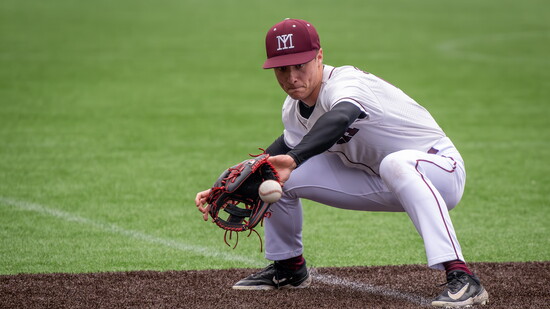
It starts quietly.
A phrase passed from coach to player. From teammate to teammate. From one moment to the next.
Next pitch.
At first, it sounds like instruction. Reset. Refocus. Move on.
But over time, it becomes something else.
It becomes a mindset.
Because baseball has a way of teaching what it doesn’t say out loud. It doesn’t promise fairness. It doesn’t guarantee outcomes. In a game where failure is built in—where succeeding three out of ten times is considered exceptional—you learn quickly that the only thing you control is your response.
Next pitch.
On Mercer Island, that mindset shows up everywhere.
It shows up in the youngest players, still learning the rhythm of the game—curious, open, willing to listen. It shows up in the way they prepare, the way they carry themselves, the way they begin to understand that the game is played long before and long after any single moment.
It shows up in the veterans too—players who understand that the game doesn’t always unfold the way you expect.
Injury.
Last season, Joey Weiss emerged as a dominant presence on the mound—the Junior Varsity Golden Arm. This year, he’s been working his way back from injury. Not removed from the game, but embedded in it—present, engaged, still showing up for his teammates.
At the far end of the dugout, he’s there with the pitchers. Watching. Encouraging. Staying connected.
Next pitch.
Theo Roodman, last year’s Junior Varsity Silver Slugger, is navigating his own setback—coming back from a dislocated shoulder after a hard slide into the bag. Another interruption. Another test.
And yet, the response is the same.
“I’ll be able to DH this week,” he says with a grin.
Not dwelling. Not retreating.
Turning the page.
Next pitch.
You begin to notice something.
Resilience here isn’t loud.
It doesn’t announce itself. It doesn’t ask for attention.
It shows up in presence.
In the players who aren’t in the lineup but are still fully part of the team. In the seniors who find new roles when the game takes something away.
Trent Martin steps in as a team manager.
Dash Karlinsky documents the season from behind the lens.
Matt Hansen, working his way back, continues to invest in the group. Even running drills for the Freshmen when time allows.
Different roles. Same commitment.
Still part of it.
Still showing up.
And that idea carries forward.
During breaks in the action, older players like Chase Koehler and Matt Hansen, spend time with younger ones. No speeches. No structure. Just conversation. Experience being passed down in real time.
Players helping players.
Because they want to.
Because they remember.
Because someone once did the same for them.
Next pitch.
You see it in the dugout. You see it in the stands. You see it in the way people show up, again and again.
At Island Crest Park, the rhythm continues beyond the field.
Eric Hansen (father of two players) flips burgers at the snack bar.
DJ Smooth, a.k.a. Johnny Anderson (father of two players) sets the tone with music that carries across the park.
Enrico Pozzo (father) captures moments through his lens.
Dozens of volunteers. The Booster Club. Families.
All part of it.
All contributing.
What emerges isn’t just a team.
It’s something more connected.
An ecosystem built on presence, effort, and belief.
Because baseball, at its core, is perfect at being imperfect.
Errors happen. Slumps come. Injuries interrupt. Moments slip away.
The game doesn’t promise anything.
But it teaches everything.
How to respond when things don’t go your way.
How to stay connected when your role changes.
How to support others when it would be easier not to.
And over time, something else begins to take shape.
Continuity.
Players become mentors. Mentors become stewards. Families invest not just in outcomes, but in experience. What starts as a season becomes something longer—a thread connecting generations.
The game gives structure.
But the people give meaning.
And in the end, that’s what stays.
Because baseball doesn’t just teach you how to play.
It teaches you how to prepare, how to adjust, how to respond.
It teaches you how to fail—and keep going.
And if you’re paying attention, you realize something even more important.
The game will always be there.
But it’s the people—the friendships, the connections, the shared journey—that stay with you.
Always.
Next pitch.