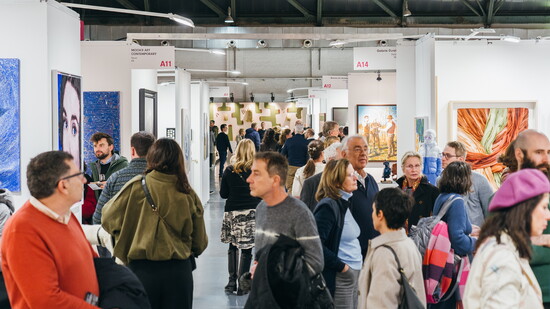
For Cori Teague, Director of Affordable Art Fair Texas, art is a lifelong journey of discovery, connection, and possibility.
“Halfway through pursuing two degrees at Baylor University, I took a leap of faith and dove into art. Art became more than the work I made. I was choosing the world that I wanted to spend my life in.”
Teague’s first gallery job was at The Signature Gallery in Laguna Beach in 2013. She was hired by Ramsay Fairs as the Fair Director for Austin in 2023. She wrapped artwork and assisted with gallery installations, helped to open a gallery, sold works by blue-chip artists, and spent time as an event planner. Her first sale by a major artist was a Jeff Koons Balloon Monkey, which taught her that selling art is more than knowing the object. It is about understanding why someone connects with the piece and helping them feel confident in that connection and decision to buy.
“There are thousands of artists, mediums, and visual languages. People’s lives influence how they experience artwork.” Teague encourages collectors to educate themselves about artwork and ask questions, but also to pay attention to how the art makes them feel. “If an artist has poured thought, skill, and intention into creating something, and someone else finds meaning in it, that is a powerful exchange,” she says.
Teague’s creative and commercial background gives her a unique perspective on producing art fairs. “I work with galleries to talk through curation, understand their artists, and position them for success,” Teague explains. “At the same time, Affordable Art Fairs creates opportunities for people to discover an artist, connect, and choose a piece to live with.”
Houston has extraordinary collectors, institutions, galleries, and generations of cultural knowledge, and this is only growing. Teague explains that 44% of galleries report more younger buyers, while 46% of Gen Z and 43% of millennials are buying more art than they did two years ago. “Younger collectors want to support the artist, the process, and the story behind the art. Online exposure may introduce them to an artist, but it does not replace the physical experience of galleries or art fairs, which can turn discovery into a deeper relationship with the artist and their work,” she says.
Teague notes that 86% of collectors find art at fairs, and most buy something on-site. “There is something irreplaceable about standing in front of a work, experiencing its scale, texture and materiality, and being able to ask about the artist, the process and the story behind it. I want more people to walk into an art fair curious. Once someone realizes they can participate by asking, learning, responding emotionally, and ultimately buying, the art world becomes much larger,” Teague observes.
For Teague, becoming an expert is not required to collect art. “One of the things I love most about the art world is that you can never know everything. Your eye develops, the market changes, artists and collectors challenge you, and galleries introduce you to new ideas. If you love this industry, you will remain a student of it. Someone spending $200, $1,000, or $5,000 today may be building a collection, supporting artists, serving on museum boards, or introducing the next generation to art 20 years from now.”