There's something powerful about knowing where you are headed. Whether building a home, launching a business, or planning the next chapter of life, clarity brings confidence. Yet when it comes to finances, the very foundation that supports every other goal, many people are navigating without a clear map.
In today’s environment of rising costs, competing priorities, and constant financial noise, having a structured plan is no longer optional: it’s essential. Income alone does not create security. Investment accounts alone do not create peace. Direction does.
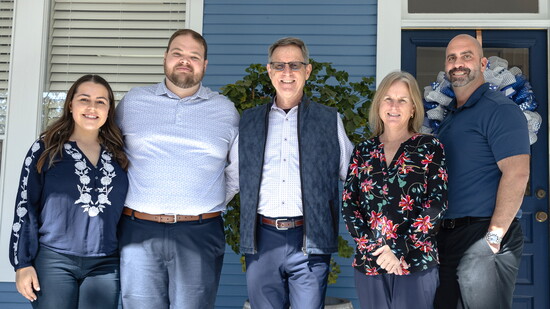
For 40 years, SFG Wealth Advisors has been walking alongside Tampa families as they plan for what is next. Founded in 1985 and celebrating four decades of service in 2025, the South Tampa firm has built its reputation on steady guidance, long-term relationships, and trust. As a firm that is a Registered Investment Adviser, SFG is held to a fiduciary standard to put client’s interest first, a commitment that shapes every recommendation and conversation.
Now led by Don Snyder, a Certified Financial Planner™ and Certified Kingdom Advisor® the firm blends generational legacy with disciplined strategy. Over more than two decades, he has guided families through both prosperity and uncertainty, developing the perspective to anticipate risks and identify opportunities others may overlook.
A graduate of Stetson University, Don began his career in international banking in Miami before transitioning into operational consulting, where he focused on workflow analysis, budgeting, and systems implementation. That early exposure to structure and financial discipline now shapes his approach to wealth management. When he later joined the firm founded by his father, he brought not only technical expertise, but a systems-oriented mindset that continues to define the firm’s methodology today. The mission remains consistent: to help families become more financially content, more generous, and more confident in their financial future.
At the core of that philosophy is a principle Don often shares with clients: “A goal without a plan is simply a wish.” While simple, that statement underscores a common reality. Without a defined roadmap, even high-income households can feel unorganized or uncertain about their long-term direction. A thoughtful plan forces clarity by asking foundational questions-what is this money truly for, and are short-term decisions aligned with long-term priorities?
Clarity, he explained, begins with measurement. As he put it, “What gets measured gets done,” noting that when people take the time to evaluate where their money is going and what they want their future to look like, the conversation changes, Often that pause reveals subtle inefficiencies- parents prioritizing college funding while under preparing for retirement, significant monthly car payments quietly reducing long-term investment growth, or assets scattered across multiple institutions without cohesion. None of these decisions are inherently reckless, but without alignment, they can dilute progress.
The firm’s planning process begins not with projections, but with discovery. It’s, as Don described, about “identifying what financial contentment looks like for the individual or the couple,” asking what truly matters and what the money is meant to accomplish. This qualitative foundation shapes every subsequent decision and often strengthens communication between spouses who may not always share the same financial perspective.
From there comes design, gathering financial statements, assessing risk tolerance, evaluating investment positioning, and outlining recommendations. For some clients, that results in a comprehensive financial plan addressing retirement income, tax considerations, estate coordination, and charitable strategies. For others, it may involve focused consulting around a specific life transition. As a fiduciary firm, SFG Wealth Advisors offers both long-term wealth management and project-based planning, recognizing that not every client requires the same level of engagement.
Implementation follows with intention. Retirement accounts are structured, portfolios aligned with both goals and risk tolerance, charitable strategies refined, and consolidation opportunities identified to reduce unnecessary complexity. Yet the most essential element is review. A financial plan, Don explained, “doesn’t have to be perfect, but it should be revisited regularly because life changes.” Markets fluctuate. Income evolves. Family priorities shift. Ongoing review is intended to keep the strategy aligned with reality rather than assumptions.
When asked what matters most in building a successful financial roadmap, Don emphasized three guiding principles. First, a plan must reflect personal values and family priorities. Whether that includes helping grandchildren with a down payment, supporting meaningful charitable causes, or creating a legacy for future generations, specificity strengthens strategy. Second, consistency in review supports long-term momentum. Regular reassessment minimizes surprises and reduces reactive decision-making. Third, every plan should reflect the client’s stage of life and clear action steps for near-term priorities supporting longer term objectives. As he noted, “There is a paradox of prosperity, the complexity, and thoughtful structure helps simplify it.
Recognizing when to revisit strategy can be equally important. Major life transitions frequently serve as inflection points, the loss of a spouse, divorce, inheritance, selling a business, or early retirement. During these seasons, financial decisions are layered with emotion. Don observed that “if you feel uncertain about whether you’re on track, that’s usually a sign,” added that no one should feel overwhelmed by their finances.
Over the firm’s 40-year history, some of the most meaningful work has involved guiding widows through financial transition. In many households, one spouse manages the finances. When that person passes away, the surviving spouse may suddenly feel unprepared. In those moments, Don said their goal is “to help them regain clarity and confidence” and to provide peace in an already uncertain season.
The firm has also helped professionals transition from corporate roles into nonprofit work, families bridge the gap before Medicare eligibility, and individuals steward significant liquidity events such as business sales or inheritances. In each scenario, the objective remains consistent: to provide perspective so clients can make informed, measured decisions rather than reactive ones.
Choosing the right advisor is central to that experience. Don cautions that trust takes time and emphasizes that clients should never feel pressured into a quick commitment. There should be complete transparency around services and fees, and professional credentials such as Certified Financial Planner designation signal rigorous education and ethical standards. Yet beyond qualifications, there must be relational alignment. Financial planning is not merely transactional; it is deeply personal.
Wealth is not the destination. It’s a tool. When structured intentionally, it helps create freedom, the freedom to retire with confidence, to give generously, to support family, and live without the quiet anxiety that often accompanies uncertainty.
Financial planning, at its best, is not about perfection. It is about alignment. It is about replacing reaction with strategy, anxiety with clarity, and uncertainty with confidence.
It is also about perspective. Thoughtful planning brings context to decisions, helping families weigh tradeoffs, prioritize what matters most, and move forward with intention rather than urgency. In an increasingly complex financial landscape, that steady perspective is what allows progress to feel purposeful — not accidental.
“A goal without a plan is simply a wish.” – Don Snyder