“Simplicity is elegance,” the late Barbara Nobriga would remind the pāʻū princesses in the weeks before Kona’s King Kamehameha Day Celebration Parade. Whether she was serving as a pāʻū princess, the queen, or the parade chairwoman, it’s a philosophy that Barbara embodied.
But confusing “simple” with “easy” would be a mistake for the elaborate arts of pāʻū wrapping and lei making showcased by the parade’s riders. In the hands of pāʻū drapers, colorful fabric is folded and wrapped to form a multi-layered skirt without a single zipper or pin. And tiny shells, berries and kukui leaves are just some of the natural elements used in the handwoven lei for pāʻū riders and their horses. Besides horseback riding, Barbara was deeply committed to perpetuating these pāʻū traditions.
Pāʻū wrapping dates back to the 1800s, when the first horses were introduced to Hawaiʻi and embraced as a mode of transportation. To protect their traditional holokū gowns from dirt and dust, Hawaiian women typically wrapped a 12-yard bolt of fabric around their waists, securing it with six kukui nuts before riding off on horseback.
By the 1900s, however, motorized vehicles were preferred for transportation, and pāʻū would have been a lost art form were it not for the Honolulu Washington’s Birthday Floral Parade in 1906, where pāʻū riders in flowing skirts and vibrant lei made their parade debut.
In 1967, Barbara was asked to be a pāʻū rider in the King Kamehameha Day Celebration Parade as the Princess of Hawaiʻi, which led to her 56-year legacy of organizing the Kona parade and elevating the riding style to the fashionable celebration of equestrian heritage seen in today’s parade. This year, the Pāʻū queen, eight princesses representing each of the major Hawaiian Islands, and their units rode down Aliʻi Drive behind the Grand Marshalls, the Daughters of Hawaiʻi.
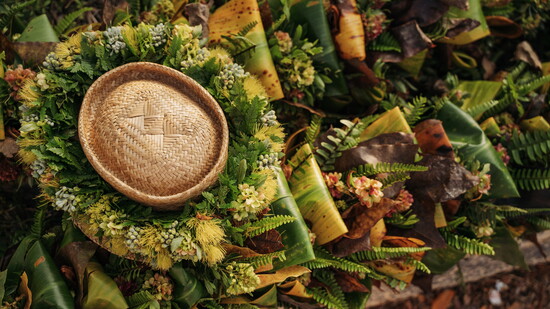
“The Daughters of Hawaiʻi used yellow and green lāʻī (ti leaf), yellow aaʻlii, kukui leaves, ulu leaves, and kupukupu in our lei. We made bundles with these flowers. It takes about 96 bundles to make a horse lei. Our lei papale (hat lei) had yellow lehua, palapalai, and liko (unbloomed lehua),” says Kimi Nagatoshi, Pā'ū Chair and a Daughter of Hawaiʻi. “The week of the parade, we gathered the lāʻī, aaʻlii, kukui, and kupukupu on Wednesday, and the lehua and palapalai on Thursday. On Friday, we assembled it all. There were a dozen of us helping. Although preparation takes a lot of days and hours, the best part is getting together to make the lei, bringing food, and catching up once a year.”
“While the end result on parade day is the most exciting part, there’s something to be said for the time spent together, plugging away at tasks, brainstorming ideas, and pivoting when necessary. It’s during those moments that bonds are formed and strengthened … The sense of connection is half the fun,” adds Ashley Obrey, who represented Niʻihau as the island’s princess.
“We made our lei of at least 84k hala puka (discs punched out of lau hala) and used approximately 10k he‘e berry, 66k shells, almost 650 cornhusks, 576 lāʻī, and about 568 ironwood pinecones. With our horse and rider lei, it totaled about 562 feet made by our hands,” Ashley shares. The Niʻihau women’s lei were made of lau hala, he‘e berry and shells, and their horses wore lei blocked with shells and he’e berry. The men’s lei consisted of lāʻī and shells, and their horses had thick lei made of lāʻī and cornhusk. Ashley’s horse’s lei consisted of nine strands of hala puka, heʻe berry, and ironwood pinecones, and fifteen strands of shells. “We estimate it took eight adults and five keiki about 290 hours to make it all.”
“For Molokai, we used kukui leaves for our lei aʻi (neck lei). My ‘ohana helped prepare the leaves a couple days ahead… The day before the parade, my attendants helped wili (string together) leaves onto lāʻī braids for six horses’ lei, lei poʻo (head lei), and lei papale,” says Melanie Moses, who represented Molokai as the island’s princess, riding on a mule to share the history of how it was used to take supplies to the lepers in Kalaupapa. “Each animal’s lei consisted of about 130 leaves. Although it took us all day to finish, we enjoyed each other’s company, talking story and eating Hawaiian food.”
“Barbara always reminded us of the importance of remembering why we do this, staying true to our culture, and simplicity. In our lei, we were striving for the simple elegance Barbara spoke about,” Ashley says. Barbara’s dedication to preserving the artistry of pāʻū lives on in a parade that she hoped would transport others back to a simpler time. Despite modern conveniences, however, accomplishing this can come with unforeseen challenges.
“The day of the parade, my attendants were on their way to Kona when their trailer’s fender broke. They couldn’t make it, so I rode with my banner person and two outriders,” Melanie recalls. “Aunty Barbara used to say, 'The show must go on,' and that’s what happened.”
“There were moments when it felt like we might not finish everything in time, but somehow it all came together. I can’t help but think Barbara had a hand in that,” Ashley adds. “She was with all the pāʻū units this year, as she always is, just in a different way.”
In loving memory of Barbara Ann Kamilipua Nobriga, March 7, 1938-April 20, 2026
“The sense of connection is half the fun.”