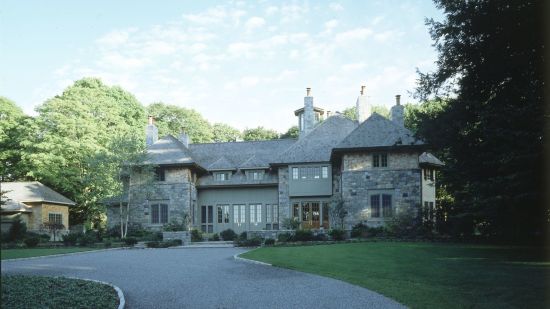
A perfectly tailored suit rarely calls attention to itself. What you notice is the person wearing it. The proportions feel right. The choices seem natural. Nothing looks borrowed.
I have always thought a house should work much the same way.
We tend to begin conversations about houses with descriptions of their appearance. Traditional or contemporary. Formal or relaxed. Lots of glass. Perhaps stone. There are photographs, saved images, rooms someone admired on a trip. All of this is useful. It gives us somewhere to begin.
But it tells us relatively little about the person who will live there.
A tailor would hardly begin cutting fabric after being told only that someone wanted a gray suit. There are measurements to take, certainly, but also questions about how the suit will be worn. For work? For an occasion? Does the wearer move comfortably in it? Does it suit the person, or merely resemble something that looked good on someone else?
A house asks considerably more of us.
Consider the apparently simple request for a dining room. It might mean a place for two people to eat quietly most evenings. It might mean Sunday lunch with children and grandchildren, an expanding table and several conversations at once. Or it might mean an occasional formal dinner, with a very different relationship to the kitchen and the rest of the house.
The room name is the same. The life within it is not.
That is where the architectural work becomes interesting. Before deciding how a room should look, we need to understand what people hope will happen there.
Sometimes that understanding emerges from direct questions. Just as often, it appears in a passing remark: a dislike of overhead light, a fondness for a particular chair, the memory of a grandmother’s kitchen. A collection that has never had a proper place. The admission that, despite a perfectly respectable living room, everyone ends up somewhere else.
These details can tell us more than a folder full of photographs. They begin to explain what makes someone comfortable, what they value and what they would miss.
They also reveal contradictions. Someone may admire the openness of a house in a photograph and still need somewhere to retreat from the household. A couple may love entertaining but mean quite different things by it. One imagines twelve people around a table; the other imagines friends drifting between the kitchen and the garden.
Those differences belong in the conversation early. Architecture gives them physical consequences.
The temptation is to move quickly toward a visible answer. A drawing is reassuring. At last, there is something to react to. Yet a plan can become persuasive before anyone has asked whether it addresses the right questions. Once people begin imagining themselves inside it, reconsidering its premises gets harder.
Time spent understanding the client is therefore part of design itself. It gives the drawing something to respond to.
This is what I mean by Architecture of Identity.
The phrase describes an approach that begins with the people involved: their habits, history, tastes, resources and expectations about the future. Those things meet the particular circumstances of a project—the site, the existing building, the budget—and the architecture develops from that encounter.
There is no predetermined appearance. Two houses can look nothing alike and come from precisely the same philosophy.
Nor does this mean that the architect simply carries out whatever the client first requests. A good tailor brings judgment. So does an architect. A client should be able to say, “This is how I want to live,” without already knowing the best architectural way to make it possible.
Our responsibility is to listen closely enough to understand the intention, then bring imagination and experience to it. Sometimes that means refining an idea. Sometimes it means questioning it. Sometimes it means finding a possibility that neither of us could see at the beginning.
The result should feel personal without requiring an explanation.
You might notice it in the way morning light reaches the place where someone likes to sit. In a kitchen that accommodates the way a family actually cooks. In the distance between a lively gathering space and a quiet room. These are qualities that become apparent through use, sometimes long after the photographs have been taken.
And because lives change, fit cannot be measured only against the present. Children grow up. Work changes. The household may become larger or smaller. A home should have enough latitude to remain useful and comfortable as its owners move into circumstances they cannot yet describe completely.
Of course, beauty matters. Proportion, material and craftsmanship deserve care. They contribute to the pleasure of living somewhere.
But when a house fits particularly well, those choices seem to belong together—and to the people who made a life there. The architecture feels assured without needing to announce whose signature it carries.
A visitor might admire the rooms, the light or a beautifully made stair. Then, knowing the owners, offer a simpler observation:
“Of course you live here.”
That would be a lovely measure of success.