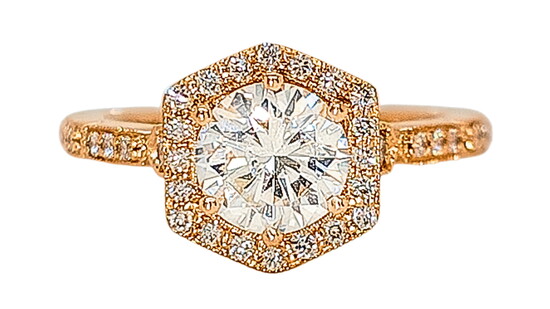
In this season of giving, fine jewelry may be on your gift list, but choosing the right piece can feel overwhelming. We asked Darryl Mackley, a gemologist whose family founded Mackley Jewelers in 1980, to share his perspective on natural and lab-created stones and what to consider when choosing. Drawing on his background in gemology and jewelry design, Mackley discusses gemstone characteristics, the differences between diamond varieties and the craftsmanship behind fine jewelry.
Q: Can you explain what a Gemologist is?
A: A Gemologist is a trained professional in the science and study of gemstones. I am a GIA Graduate Gemologist.
Q: What training does one undergo to become a Graduate Gemologist through the Gemological Institute of America?
A: Earning the Graduate Gemologist diploma through GIA involves extensive study and hands-on training in diamonds and colored gemstones. The program covers diamond grading, including the 4Cs, gemstone identification, treatments and the differences between natural and laboratory-grown stones. It requires a strong foundation in gem science and the ability to accurately evaluate a wide range of stones, quality, rarity and market value.
Q:
When considering diamonds, we see descriptions of natural and lab-grown forms of "diamonds." Can you describe the differences?
A: The only chemical difference between natural diamonds and lab-grown synthetic diamonds is the trace elements that natural diamonds carry in their atomic structure. Lab-grown diamonds are 100% carbon; natural diamonds are 99.99% carbon. This difference allows us to separate the two varieties. Otherwise, all the physical traits are the same. The biggest difference is that lab-grown diamonds are considered to be a disposable product that carries little to no residual value after the sale, while natural diamonds retain resale value due to their rarity in nature. Lab-grown diamonds are sold for less cost than natural diamonds because of this, lab-grown diamonds have developed a strong market.
Q: What are your thoughts on gifting when considering an investment and giving a gift that becomes an heirloom?
A: Heirloom gifts are special gifts of value usually passed down from older generations to newer generations. The debate with lab-grown diamonds is that lab-grown diamonds are mass-produced and don't hold residual value. So does that fact make them special enough to be passed down? Yes, I think lab-grown diamond jewelry can still be an heirloom gift that is passed down, especially if the item was cherished by the person giving the gift. In a similar fashion, costume and inexpensive jewelry is often passed down to very young ladies to dress up and play with. What I've noticed is that natural diamond jewelry is often an heirloom gift given later in life, often well into adulthood when an older person feels a younger recipient is responsible enough to receive an expensive gift.
Mackley Jewelers maintains a blog on its website with information for consumers considering an investment in fine jewelry. One article, “Key Reasons Why You Shouldn’t Purchase Lab-Grown Diamonds,” explores factors to consider when evaluating diamond options. Learn more at Mackley.com