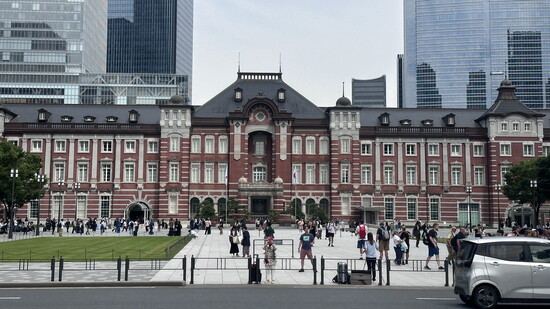
Over the past two years, I have found myself deepening my relationship with two islands.
Mercer Island.
And the island of Honshu.
At first glance, they seem so different.
Yet over time, both islands began revealing a surprisingly similar spirit.
One is quiet and residential, surrounded by freshwater and evergreens in the Pacific Northwest. The other contains Tokyo — the largest city in the world — where millions of people move through stations, streets, and neighborhoods with astonishing speed and precision every day.
And yet, strangely, both islands have slowly taught me many of the same things.
Not about travel.
Not even really about place.
But about attention.
And how the act of truly noticing may be one of the purest forms of care.
In Japan, I began noticing how much care can exist inside ordinary life. The train from Shibuya to Ebisu arrives exactly when expected. Omiyage purchased in the depachika beneath a department store is packaged with thoughtfulness and quiet pride. Chefs adjust presentation carefully before a dish ever reaches the table. Store clerks, servers, station attendants, and strangers move through crowded spaces with an awareness of the people around them that feels increasingly rare in modern life.
Even small acts reflect that awareness. In Tokyo, the polite thing to do is often to make yourself smaller for the comfort of others — turning your backpack around on crowded trains, carrying an umbrella carefully, moving thoughtfully through shared spaces. Quiet consideration becomes part of daily life.
At Shibuya Crossing, thousands of people move through one another with astonishing precision and almost no friction at all. In one of the busiest places on earth, life somehow feels less abrasive.
Yet what deepened my understanding of Japan most was not Tokyo alone, but the contrast surrounding it. Visits to Fukuoka, Osaka, and Kyoto helped anchor the scale and rhythm of the larger city experience, while places like Shirakawa-go, Kanazawa, Hakone, Gifu, and Atami seemed to pull life backward into something slower, older, and more grounded. In many of those places, the culture surrounding onsen revealed something deeper than relaxation itself — a holistic relationship with wellness, restoration, stillness, and the rhythm of daily life.
Some of my favorite moments have happened inside small neighborhood experiences. Sitting quietly at the counter in Ebisu with one of my favorite sushi chefs, Chef Kumakura, I began appreciating the intimacy of repetition and familiarity. Preferences are remembered. The pacing of the meal unfolds naturally. Conversation moves slowly and comfortably without performance. Hospitality begins to feel less transactional and more relational.
None of it is dramatic on its own.
That may be why it becomes so powerful collectively.
Over time, I realized the thing I was responding to most was not efficiency or luxury.
It was care.
And perhaps more importantly, consistency of care.
Japan’s care exists at the societal level. It is woven into the fabric of daily life itself. A shared understanding that individual actions affect the collective experience of everyone. Small courtesies are repeated day after day until they become part of the emotional atmosphere itself.
That consistency changes how people move through their day.
It lowers tension.
It creates trust.
And eventually, whether consciously or not, it allows people to become more present.
Meanwhile, back on Mercer Island, I found myself noticing a different but equally meaningful form of care.
More intimate.
More personal.
Conversations linger longer over coffee. Familiar faces reappear on trails, near the shoreline, and at ballgames at Island Crest Park. Water, trees, and open space quietly soften the pace of everyday life. Even our local cafés and restaurants carry a neighborhood familiarity that feels increasingly valuable — places where owners, staff, families, and regular customers slowly become part of one another’s lives.
This community has also enhanced the way I think about connection itself.
Through this magazine, I have come to realize that stories matter most when they emerge from genuine community.
Perhaps that is what defines Mercer Island most.
Care revealed through community life itself.
Through schools that families rally around. Through orchestra, arts, athletics, and mentorship. Through volunteerism, philanthropy, and neighbors supporting one another in visible and invisible ways. Through volunteers coaching teams, residents preserving parks and open space, and generations investing not simply in success, but in one another.
Countless breakfasts, fundraisers, performances, games, and community gatherings quietly reveal the DNA of Mercer Island. Beneath the surface exists a culture grounded in care, pride, participation, and belonging.
Children may not fully understand it while growing up. But later in life, they often remember the feeling of being supported, encouraged, known, and surrounded by people who genuinely cared about the community and each other.
In many ways, that may be the quiet gift both islands share — the understanding that quality of life is ultimately shaped through human connection, consistency, and care repeated day after day over time.
In Japan, that care often exists societally — woven into the fabric of daily life. On Mercer Island, it feels more intimate and personal.
What I’ve come to realize is that the most meaningful forms of exploration do not simply show us new places.
They return us to our own lives with greater awareness of what deserves our attention in the first place.
"The act of truly noticing another person may be one of the purest forms of care, felt most deeply through the smallest moments of consideration."