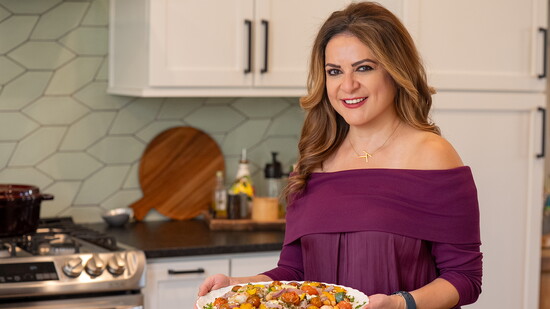
For Karolin Saweres, MS, RDN, LD, her passion for nutrition began long before it became a profession. Growing up in Egypt, she was immersed in a culture where food represented family, tradition and connection. She watched her parents navigate their own health journeys with strength and resilience, which shaped her curiosity about the role food could play in supporting long-term well-being. Inspired by those early experiences, Karolin became determined to understand how food could be used proactively, leading her to pursue degrees in dietetics and nutrition and to establish her practice, My Nutrition & Me.
“My entire approach comes from that early experience: food is powerful, habits matter and personalized nutrition can truly change a family’s story—because I’ve seen it firsthand,” explains Karolin.
To get us started, Karolin shared two of her favorite Mediterranean-inspired recipes: a bright, balanced sheetpan chicken dinner perfect for good weeknight habits and a versatile, high-fiber lentil salad that can be served as an entrée or a vibrant, vegan side dish.
Greek Sheet Pan Chicken with Veggies & Chickpeas
Serves 4
Ingredients
Chicken & Vegetables
2 lbs chicken tenderloins
1 large red onion, sliced
2 bell peppers, sliced
2 medium zucchinis, sliced into half-moons
3 cups cherry tomatoes
1 (15 oz) can chickpeas, drained and rinsed
1/2 cup fat-free feta crumbles (use half before cooking and half after cooking)
1 small bunch fresh parsley, chopped (1/2 bunch for cooking and 1/2 bunch for garnish)
Marinade
3 tablespoons olive oil
Juice of 2 lemons
4 garlic cloves, minced
2 tablespoons coriander
2 tablespoons dried oregano
1/2 teaspoon salt, to taste
1/2 teaspoon black pepper
Instructions
- Preheat oven to 425°F. Line a large sheet pan with parchment paper or lightly coat with olive oil.
- To make the marinade, whisk together all the ingredients.
- Place the chicken tenderloins in a large zip-top bag. Add half of the marinade, seal, and refrigerate for at least 30 minutes or up to overnight.
- Prep and then arrange the vegetables and chickpeas on the sheet pan. Pour the remaining marinade over the vegetables and mix until well coated.
- Remove the chicken from the marinade (discard the marinade in the bag). Nestle the chicken among the vegetables. Sprinkle half of the feta over the top before baking.
- Roast for about 40 minutes (cooking times may vary) or until the chicken reaches an internal temperature of 165°F and the vegetables are tender.
- Once out of the oven, sprinkle with the remaining feta and parsley for a fresh, bright finish. Serve warm with farro or quinoa.
Mediterranean Lentil Salad with Pomegranate
Serves 4–6
Ingredients
1 cup dry brown lentils, rinsed
3/4 cup fresh parsley, chopped
1 bunch green onions, chopped
1 medium cucumber, diced
2 large tomatoes, deseeded and diced
1 cup pomegranate arils
2 tablespoons extra-virgin olive oil
2 tablespoons lemon juice
1 tablespoon white wine vinegar
Zest of 1 lemon
1/2 teaspoon ground cumin
1/2 teaspoon ground coriander
Salt and black pepper, to taste
Instructions
- To cook the lentils, bring a medium pot of water to a boil. Add the lentils, reduce the heat to a simmer and cook for 20 to 25 minutes until tender but not mushy. Drain, rinse with cool water and let cool.
- Chop the parsley, green onions, cucumber and tomatoes. Set aside.
- In a small bowl, whisk together the olive oil, lemon juice, white wine vinegar, lemon zest, cumin, ground coriander, salt and black pepper.
- Add the cooled lentils to a large bowl, then fold in the parsley, green onions, cucumber, tomatoes and pomegranate arils.
- Pour the dressing over the mixture and gently toss until everything is evenly coated.
- Refrigerate for 20 to 30 minutes before serving to allow flavors to meld. Serve cold or at room temperature with pita chips, grilled vegetables or hummus.
Karolin’s culinary inspiration stems from her rich Mediterranean heritage and learning to cook Lebanese dishes with her mother-in-law. She loves that Mediterranean cuisine is flexible, easy to adapt to different cultures and lifestyles and focuses on balanced, enjoyable habits that people can stick with long term.
“The Mediterranean diet is popular because it centers on real, flavorful foods that people genuinely enjoy eating, and it’s backed by decades of strong scientific research,” notes Karolin. “It emphasizes foods naturally rich in antioxidants, omega-3s and fiber. Together, these nutrients create an anti-inflammatory eating pattern that supports heart, gut and brain health.”
Karolin is currently accepting new clients, and many of her nutrition services are covered by insurance, making it even easier for people to access personalized support. In addition to one-on-one nutrition counseling, she also provides corporate health and wellness seminars, visiting local workplaces to share practical, sustainable nutrition habits with employees. To discover more simple recipes, Mediterranean-inspired ideas and everyday nutrition tips like these, follow Karolin on Instagram and Facebook. If you’re looking to start the new year with supportive guidance and sustainable habits, get started at MyNutritionandMe.com.
Tips for Making Good Nutrition Choices
Start with habits, not restrictions. Most people begin the year cutting out foods they love and end up burned out by February. Instead, focus on adding nourishing habits: eat a protein-rich breakfast, drink more water or include one vegetable at every meal. Small additions lead to big changes without the overwhelm.
Make your environment work for you. The easiest choice becomes the healthiest choice when your environment supports it. Keep pre-cut vegetables, fruit, Greek yogurt, nuts or hard-boiled eggs within reach. Stock your freezer with staples like edamame, veggies and frozen berries to build quick, balanced meals even on your busiest days.
Plan just one thing. You don’t need a full meal-prep routine to eat well. Simply planning one meal (like breakfast or lunch) removes decision fatigue and helps you stay consistent. Consistency—not perfection—is what makes a difference.