For years, many people living with chronic pain or neuropathy have been told the same three options: medicate, inject, or operate. At The Wellness Room inside the Neuropathy and Pain Centers of Las Vegas (nvpainrelief.com), Medical Director Robert Odell, MD, PhD, and Director of Health & Wellness Michael Fluhr are working to expand that script with non-invasive tools that focus on restoration rather than just relief. Described as a “clinic within a clinic,” The Wellness Room was created to give patients a relaxing, dedicated space for restorative treatments that help the body heal and strengthen from within. Their latest investment—three new technologies called EXOMIND, EMSELLA, and EMSCULPT NEO—reflects a growing shift toward walk-in, walk-out treatments that support the body, brain, and long-term function.
The team describes these additions as part of a larger commitment to evidence-based care that fits real life. Patients want to feel better without sacrificing weeks of recovery or becoming dependent on medication. Each of the new devices is designed to meet that demand while addressing different contributors to pain: from the way the brain processes stress, to the strength of the pelvic floor, to the stability of the core. Sessions are done in-office, require no anesthesia or incisions, and allow patients to return to normal activities immediately.
Rather than chasing symptoms, the goal is to help patients “invest in themselves” through proactive, restorative care. That might mean rebuilding muscle to take pressure off the spine, retraining neural pathways that amplify pain, or improving bladder control and pelvic stability so daily life feels easier and more confident. The result is a model of pain management that looks less like crisis care and more like long-term wellness, where strength, mood, and mobility are all part of the same plan.
EXOMIND: Training the Brain’s Role in Pain
EXOMIND focuses on the brain, where perception of pain, stress, mood, and focus all intersect. During a typical session, patients sit comfortably in a chair while a device is positioned near the head, delivering a gentle tapping sensation over 20 to 30 minutes. There’s no pain and no downtime, and treatments are done as a series to gradually retrain neural pathways. By helping regulate mood, stress response, and cognitive function, EXOMIND can indirectly ease chronic pain, reduce anxiety, improve sleep, and support clearer thinking, especially when combined with other regenerative and functional therapies.
EMSELLA: Pelvic Floor Strength Without the Gym
Pelvic health is often overlooked in conversations about back pain, balance, and everyday confidence, but EMSELLA puts it at the center. Patients remain fully clothed and sit on the EMSELLA chair for about 28 minutes while the device delivers thousands of supramaximal contractions, often compared to doing over 11,000 Kegels in one session. The experience is described as strong muscle engagement without pain. Over time, this targeted strengthening can improve bladder control, pelvic stability, intimate wellness, and core support, which may translate into less strain on the low back and hips and greater comfort in daily movement.
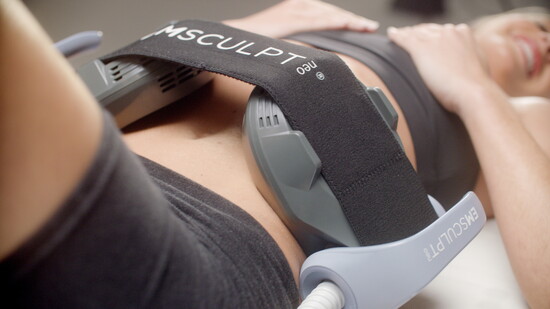
EMSCULPT NEO: Core Strength and Composition in One Step
EMSCULPT NEO blends high-intensity electromagnetic energy with radiofrequency to build muscle and reduce fat in the same treatment. Applicators are placed over areas such as the abdomen, glutes, arms, or thighs, and patients feel intense, rhythmic muscle contractions paired with a warming sensation over roughly 30 minutes. Each session delivers the equivalent of about 20,000 contractions in just 30 minutes, helping enhance strength and tone at a deep muscular level. With no downtime, a series of sessions can help improve core stability, posture, and overall body composition. For patients with chronic low back pain or weakness, stronger muscles can mean less mechanical strain, better support for the spine, and a renewed sense of energy and physical confidence.