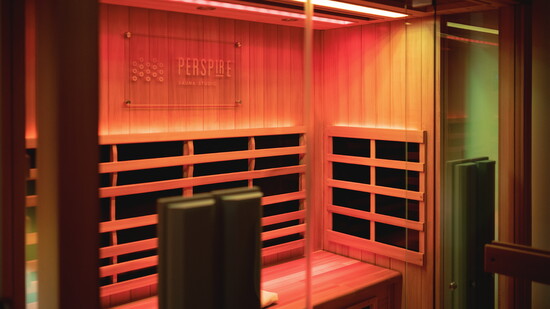
Infrared sauna therapy and red light therapy have become two of the most talked-about wellness tools for people looking to feel better, recover faster, support longevity, and create a more balanced routine. They sound high-tech, but in practice, they’re surprisingly simple, and when you understand how they work, it becomes clear why so many people use them as weekly anchors for their physical and mental health. As Chandler Herdt, owner of Perspire Sauna Studio, puts it, “Infrared allows people to receive deep, therapeutic heat without feeling overwhelmed, comfort creates consistency, and consistency creates results.”
One of the biggest misconceptions is that all saunas are the same. Traditional saunas heat the air, often reaching temperatures of 170–200°F. For many people, that intensity is too overwhelming to stay in long enough to see real benefits. Infrared saunas work differently. They use near, mid, and far infrared wavelengths that warm your body directly rather than superheating the air. The result is a gentler, more comfortable session at lower temperatures, allowing you to stay longer while getting deeper tissue warming. This matters because sauna sessions mimic aspects of light-to-moderate cardio: heart rate increases, circulation improves, and your body activates cardiovascular pathways associated with lower risks of heart disease, stroke, dementia, and overall mortality.
A helpful tip for new sauna users is to breathe slowly and settle into the first 10 minutes, rather than expecting instant heat. Infrared warmth builds gradually, helping muscles loosen, joints relax, and the nervous system shift to a calmer state. Hydration also matters; drinking water before and after sessions helps optimize circulation and comfort. Another practical tip: start with 25-30 minute sessions and gradually increase your time as your body adapts. Most guests find a rhythm of 2-4 sessions per week to be the sweet spot for consistent benefits.
While infrared heat works on the whole body system, red light therapy focuses on your cells, the place where energy, repair, and resilience begin. Red and near-infrared light penetrate just below the surface, where they are absorbed by mitochondria, the “power plants” of your cells. This triggers photobiomodulation, a process that boosts ATP (cellular energy), regulates nitric oxide for improved blood flow, and reduces oxidative stress and inflammation. In simple terms, it helps cells work better, recover faster, and repair more efficiently.
For anyone curious about adding red light to their wellness routine, there are easy ways to maximize results. Go in with clean skin, no heavy lotions or barriers, so light can reach cells effectively. Consistency matters more than intensity, so aim for several short exposures per week rather than occasional long sessions. And because red light therapy supports collagen production and reduces inflammation, people often notice improvements in skin texture, joint comfort, and post-workout recovery after a few weeks.
Where things get especially powerful is when infrared heat and red light therapy are used together. Infrared raises core temperature, increases circulation, and opens blood vessels. Red light provides a cellular-level “nudge” toward repair. Heat drives oxygen and nutrients into tissues more efficiently, and red light tells those tissues to recover more effectively. “You get the sweat, the cardiovascular stimulus, and the deep relaxation, alongside cellular support that boosts energy and repair,” Hedrt explains. It's not about multitasking; it’s about amplifying each therapy by pairing it with the other.
Clients often describe the benefits in everyday language that reflects how the body responds on a deeper level. “My joints feel looser.” “My skin looks brighter.” “My sleep has improved.” “I’m less sore after workouts.” These real-life results reflect what research shows: regular heat exposure supports cardiovascular and metabolic health, while red light therapy reduces inflammation and accelerates cell repair. Mentally, the quiet warmth of a session helps people disconnect from stress, slow their breathing, and enter a calmer, more grounded state, one reason sauna use is associated with improved mood and better sleep.
If you're looking to get the most out of infrared and red light therapy, several simple strategies help shape a sustainable routine. First, schedule sessions consistently, the same way you might schedule workouts. Habit is where the benefits compound. Second, pair sessions with intentional recovery rituals, electrolytes, stretching, or reflection, because your body is in a receptive state. Third, wear minimal clothing so both the heat and the light can reach your skin effectively. Many people also turn sessions into a mental reset by listening to calming music, guided meditations, or simply unplugging from screens.
Another tip: don’t chase extreme heat. It’s a myth that the hotter you feel, the more effective the session. Infrared works through wavelength penetration, not air temperature, and red light works through cellular signaling, not discomfort. “More is not automatically better, what matters is manageable, consistent exposure,” Hedrt says. Sustainable wellness routines work because they feel good, not because they push your limits.
For those who live in Arizona, there’s also a common idea that saunas aren’t necessary in a warm climate. In reality, outdoor heat does not replicate the cardiovascular or cellular benefits of infrared sauna use. The structured rise in core temperature, improved circulation, and controlled sweating environment are what create the therapeutic effects. In fact, some people who struggle with Arizona summers find that consistent infrared sauna sessions actually help the body acclimate more comfortably to hot conditions.
Red light therapy offers its own myth-busting moment. Many people assume it’s only useful for beauty or skin improvements because those results are easiest to see. But research shows remarkable benefits for joint comfort, inflammation reduction, and muscle recovery, effects people often feel before they ever notice changes in appearance. And because red light influences both energy production and nitric oxide signaling, people commonly report better stamina and more stable daily energy.
When it comes to building a long-term wellness routine, combining infrared and red light therapy offers a powerful, approachable option that fits into busy lives. The goal isn’t perfection, it’s repetition. A few sessions each week can create compounding benefits that support heart health, skin clarity, recovery, sleep, mental wellbeing, and overall resilience.
At the end of the day, finding a studio that makes the experience enjoyable matters just as much as the science. Perspire Sauna Studio offers private infrared sauna suites with integrated red light therapy, allowing guests to relax, recover, and recharge in a comfortable, personalized environment. To learn more, book a session, or explore membership options, visit perspiresaunastudio.com or contact your nearest location to get started. Their team is dedicated to helping you create a wellness ritual that truly supports your life.