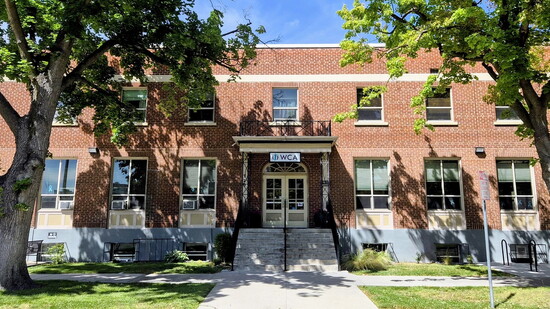
Marnie Nichole has worked as Marketing and Communications Manager for the WCA for four and a half years. The work is personal.
"WCA is a cause that is near and dear to my heart," she says. "I have a family history of domestic violence. The WCA is the best place I've ever worked."
A few years ago, the writer brought a friend and her son to the WCA. She had been in an abusive marriage for nearly 20 years. As they sat in the lobby, the friend gazed at a sign that read "Embrace Change." Her voice barely audible, she said, "I stayed here with my son about 15 years ago." They both knew this visit would be different.
That's what the WCA does. It gives people impacted by domestic violence a safe place to start again — and the support to keep going once they do.
Originally founded in 1910 as the YWCA by nine pioneering women, it offered safe housing for women drawn from rural areas to Boise for work. In the last four decades, the WCA has focused on providing free shelter and supportive services to individuals impacted by domestic violence and sexual assault. Today it serves four counties representing 30% of Idaho's population, reaching men, women, and children at some of the most vulnerable moments of their lives.
Last year alone, the WCA provided 9,778 nights of safe shelter. Their 24-hour crisis hotlines answered 2,618 calls. Licensed counselors delivered 1,860 individual adult counseling sessions and 459 child play therapy sessions. Court advocacy sessions reached 4,546 — their busiest program of the year. The WCA also created 256 safety plans, helping clients navigate a path forward when the road ahead feels impossible to see.
All services are free, for everyone, regardless of race, gender, sexual orientation, socioeconomic status, language or nationality. Interpreters are arranged when language is a barrier.
"Anyone escaping from a crisis doesn't have to worry about paying," Nichole says. "They can start their healing journey without that stress."
This November, the WCA's Giving Tree returns to The Grove Plaza in downtown Boise. On Friday, November 27, a 45-foot Colorado Blue Spruce will be lit, surrounded by 5,000 gift tags representing wish list items from people the WCA serves. Requests range from AA batteries and surge protectors to playpens and car seats — and practical items like bras, underwear, socks, zip lock bags, and mattress protectors that keep the shelter running day to day.
Take a tag and drop off your new, unwrapped gift by Friday, December 18 at 720 W. Washington St., Boise.
"The giving tree helps keep the shelter running and helps provide critical necessities to clients who have escaped a violent or abusive relationship," Nichole says. "We treasure our partnership with the Downtown Boise Association."
You can also carry a WCA wallet card featuring the 24-hour crisis line — 208-343-7025 — with the reminder: if you think you are being abused, seek help immediately. Abuse is not always physical. It can be emotional, too — a pattern of control, jealousy disguised as love, isolation from friends and family. The WCA wallet card puts it plainly: "You may be in an abusive relationship if your spouse, partner, or a family member tells you jealousy is a sign of love."
"Everyone deserves to be in a healthy relationship," says Beatrice Black, former Chief Executive Officer of the WCA.
The WCA is funded half by grants and half by private donations from individuals, organizations, and businesses. Companies can request tags for their own giving tree by contacting the WCA at 208-343-3688.
For more information, visit wcaboise.org.